



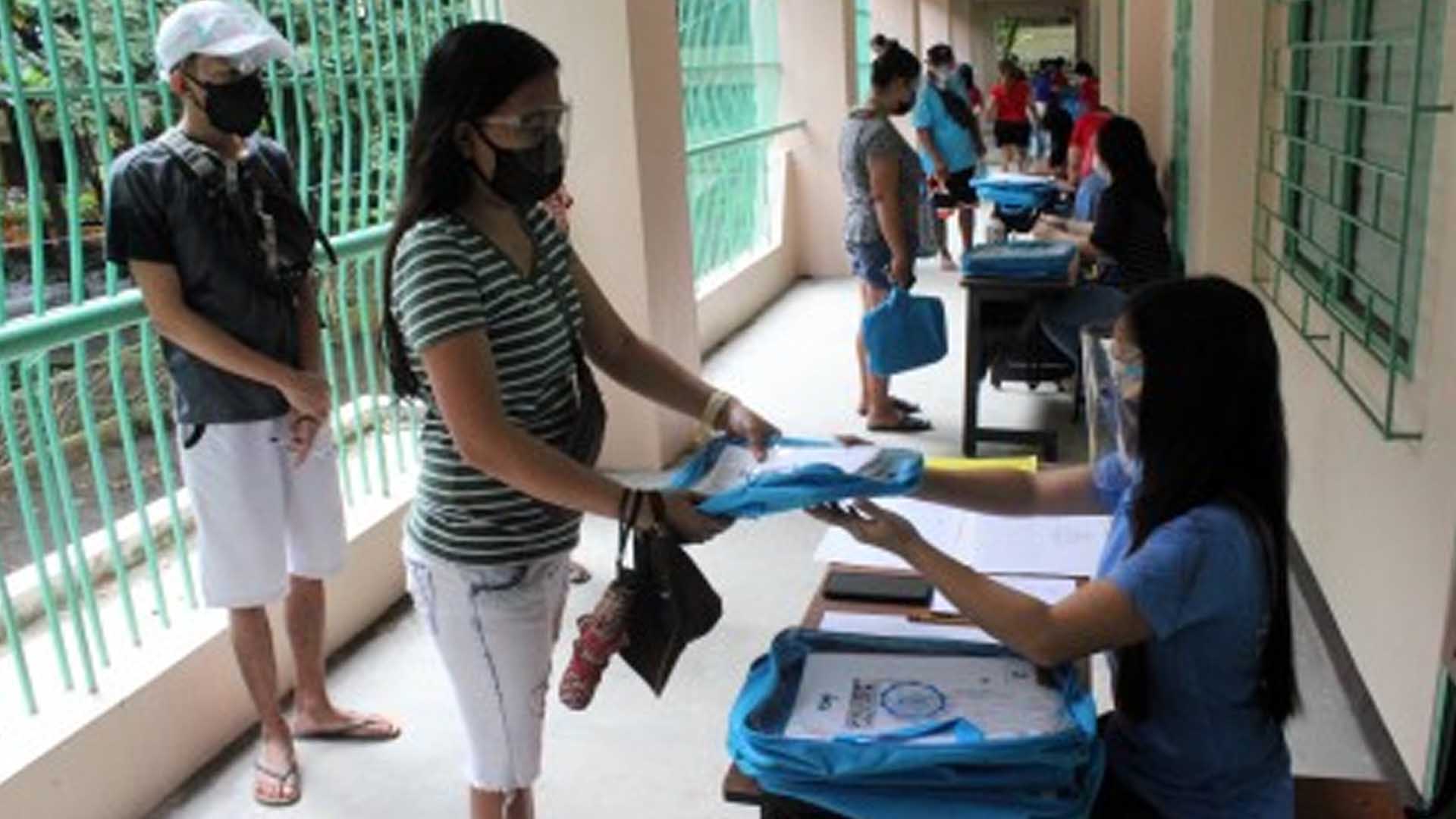







The United Nations Children’s Fund (Unicef), in a recently published report, said the Philippines is one of the countries with the “highest readiness for remote learning.”
The study, titled Ensuring Equal Access to Education in Future Crises, analyzed a total of 67 low- and middle-income countries with available data and ranked them based on their readiness to deliver remote learning in response to events that lead to school closures or disruption of in-person learning.
“Argentina, Barbados, Jamaica, and the Philippines all received five stars, the highest score in the RLRI (Remote Learning Readiness Index),” the report read.
Unicef said these four nations have a “strong policy response for remote learning for all or almost all education levels” supported by “high emergency preparedness, as well as the existence of household factors that support remote learning.”
In a November 4 statement, the Department of Education (DepEd) welcomed the international recognition and acknowledged the teachers, parents, partners, learners, and other stakeholders for the realization of the Basic Education-Learning Continuity Plan.
The agency said more than 27 million students were able to continue education while prioritizing their health and safety during the pandemic.
The RLRI aggregates the three key domains of remote learning – household factors, policy responses, and emergency preparedness, with the five-star rating indicating a country has the highest resilience to crises that lead to disruption of in-person instruction.
‘Only the first step’
Meanwhile, Unicef noted that scoring five stars in the index is “only the first step” and that countries must make sure children are continuously acquiring knowledge from their remote learning program.
It said data available from the Philippines suggest that even if a remote learning policy is in place and a household has necessary assets, “children are learning less under distance learning modalities.”
“Efforts should be put toward developing effective curricula, ensuring the program is actually used, improving the quality of remote teaching, and advancing ways to assess student performance through remote means,” it added.
The DepEd said it has taken note of the recommendation, assuring that the government is working with various stakeholders to address these concerns.
“The department, together with our various partners, is continuously developing strategies to solve these familiar issues also encountered by other countries,” it said.
“With these developments and the upcoming pilot implementation of face-to-face classes, we call on our stakeholders to work with us in maintaining these positive insights from Unicef and furthering our policies and response to school disruptions.”
‘Support for poor households’
Unicef clarified that the RLRI only provides a national-level view of the presence of conditions necessary for children to learn at home and that other factors, such as actual learning or within-country inequalities, are beyond the latest assessment.
It pointed out that even in states with high overall RLRI scores, “within-country inequalities in access to the household assets needed for remote learning pose severe barriers to equitable learning.”
Unicef said special focus is needed for children from rural areas and poorer households who are the most deprived in terms of access to many remote learning tools at home.
“These discrepancies in household asset possession are likely to exacerbate existing inequalities in learning and other labor market outcomes. Therefore, it is imperative that the most vulnerable children receive the support necessary to continue learning,” it said.
To create a “resilient and flexible system,” Unicef said there should be targeted investments to expand digital coverage paired with efforts to facilitate synergy across household factors, policy responses, and emergency preparedness. (PNA)


