



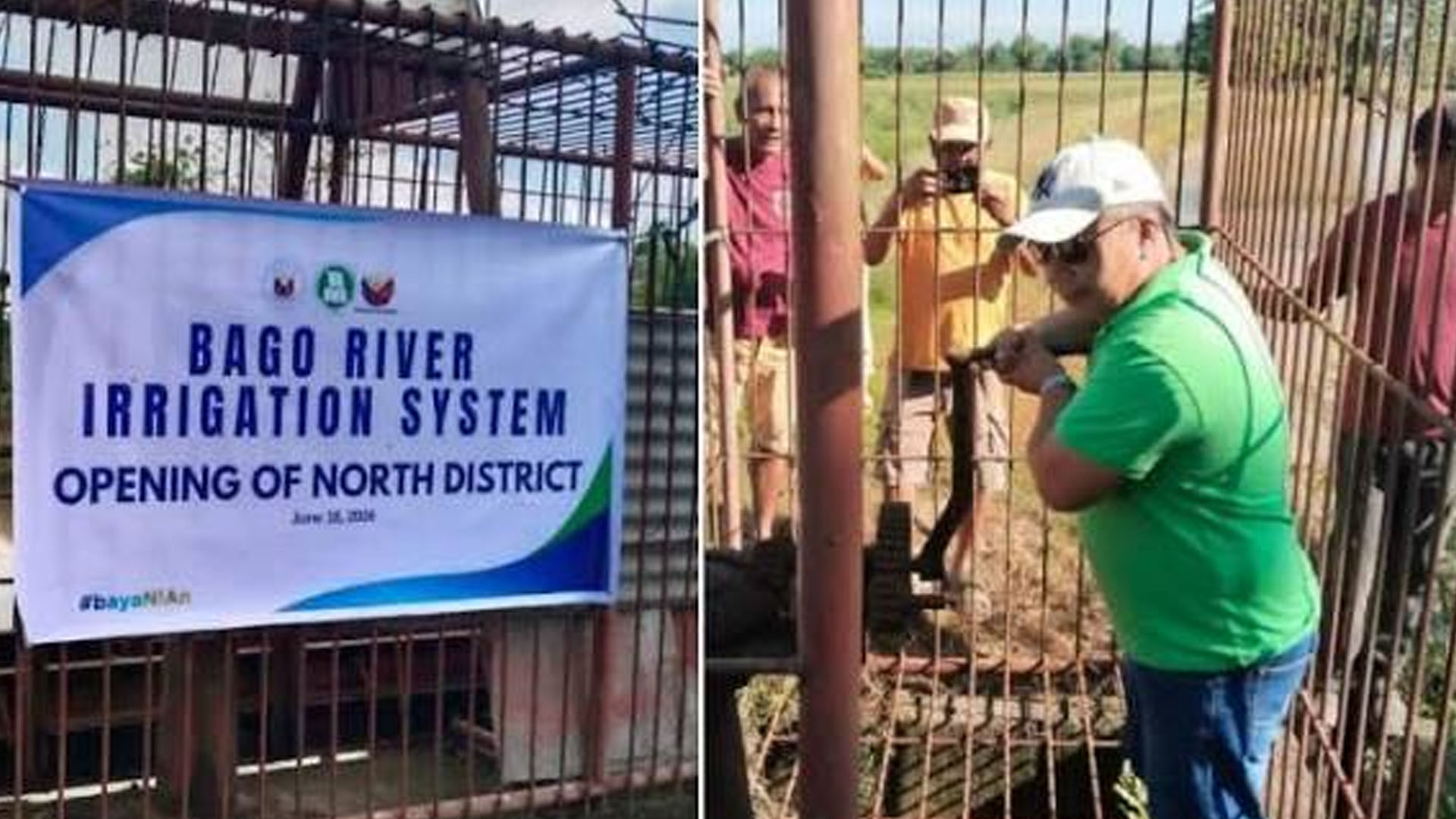






The National Irrigation Administration (NIA) Bago River Irrigation System (BRIS) North District reopened on Tuesday to serve about 6,000 hectares of rice farms in portions of Bago City and Murcia town in Negros Occidental.
Pedro Limpangog, president of the Federation of Irrigators’ Association of Central Negros (FIACN) – BRIS, said the water delivery is expected to enhance farm yields, improve crop sustainability, and strengthen the livelihood of thousands of rice farmers.
“The irrigation network will serve farming communities in portions of Bago City and Murcia, ensuring a more reliable water supply for crop cultivation and providing a significant boost to agricultural productivity across approximately 6,000 hectares of farmlands,” he added.
Limpangog and other local agricultural stakeholders led the reopening of the North District dam, which also serves some rice farms in Bacolod City, after its one-and-a-half-month closure that began on May 1.
“The irrigation system plays a vital role in supporting food production and promoting long-term agricultural development in the region,” he said.
The South District dam closure began on Feb. 16 and ended April 30 for rice farms covering a portion of Bago City, La Carlota City, Pulupandan, Valladolid, and San Enrique.
Negros Occidental Irrigation Management Office Division Manager A Edna Señadoza earlier said the closure of dam gates to suspend water delivery is done to facilitate annual clean-up, desilting works, and minor repairs to the irrigation canal and structures.
It also allows soil to rest, eliminates pests’ cycles, and prepares for synchronized planting patterns to ensure efficient water delivery throughout the cropping year, she added.
The NIA-NOIMO targets to irrigate about 12,650 hectares in the BRIS service area since the South District reopening on May 1.
The BRIS serves 8,014 farmer-beneficiaries organized into 44 irrigators’ associations.
Bago City, located just south of Bacolod City, is considered the “Rice Bowl of Negros Occidental” being the top rice-producing local government unit, yielding about 30 percent of the province’s rice production. (PNA)


