



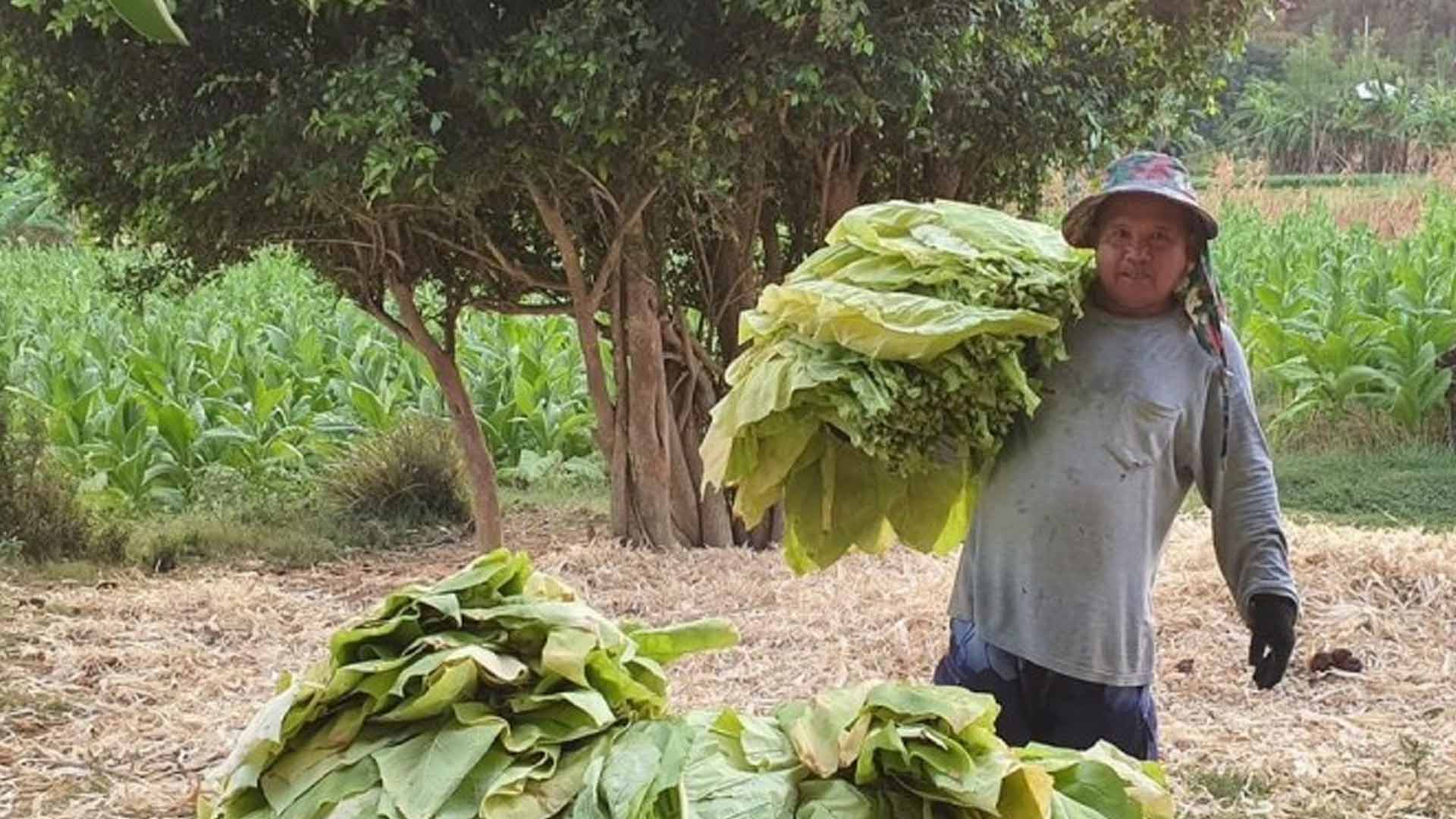







The Department of Agriculture (DA) and local government units (LGUs) of tobacco-producing provinces urged inter-cropping among tobacco farmers to augment their income and compensate for markets lost due to health concerns over smoking.
In an interview on Saturday, DA Undersecretary Deogracias Victor Savellano said high-value crops like rice, corn, garlic, onions, tomatoes, and even bamboo, can be planted alongside tobacco to expand farmers’ income options.
Intercropping also allows tobacco farmers to contribute to the nation’s food security amid recent shortages in certain staple commodities, he added.
The undersecretary stressed that despite changing views towards smoking, the DA and the National Tobacco Administration (NTA) must continue to sustain the domestic tobacco industry as an estimated 2.2 million Filipinos directly or indirectly depend on it for their livelihood.
He noted that tobacco production generates some PHP160 billion in excise taxes for the government annually and a huge portion of the revenues fund the Universal Healthcare program.
“The government cannot allow the tobacco industry to sunset despite changes in consumers’ attitude towards cigarettes. However, we are now focusing on the export market… to make up for any decline in revenues generated domestically,” Savellano explained.
Savellano pointed out that tobacco farmers typically earn around PHP120,000 for every hectare of farmland, which is notably more than what rice and corn farmers make for the same piece of land.
Meanwhile, the NTA leadership is seeking stricter government response against smuggling and other illegal activities involving tobacco, even as the government strives to protect legitimate producers and processors.
In a statement Saturday, NTA regulatory head Robert Ambros reported that the government’s revenue loss due to the illicit tobacco trade is expected to exceed PHP30 billion by the end of 2023.
It can be recalled that President Ferdinand R. Marcos, Jr. made known his administration’s intention to protect the livelihoods of tobacco farmers during the First International Tobacco Summit held in Taguig City in August.
“These past years, we had seen so much change in our health policies that affected the tobacco industry. As such, we must seek ways to protect the livelihood of thousands of our tobacco farmers,” Marcos said in a speech delivered on his behalf by nephew, Ilocos Norte Governor Matthew Manotoc. (PNA)


