



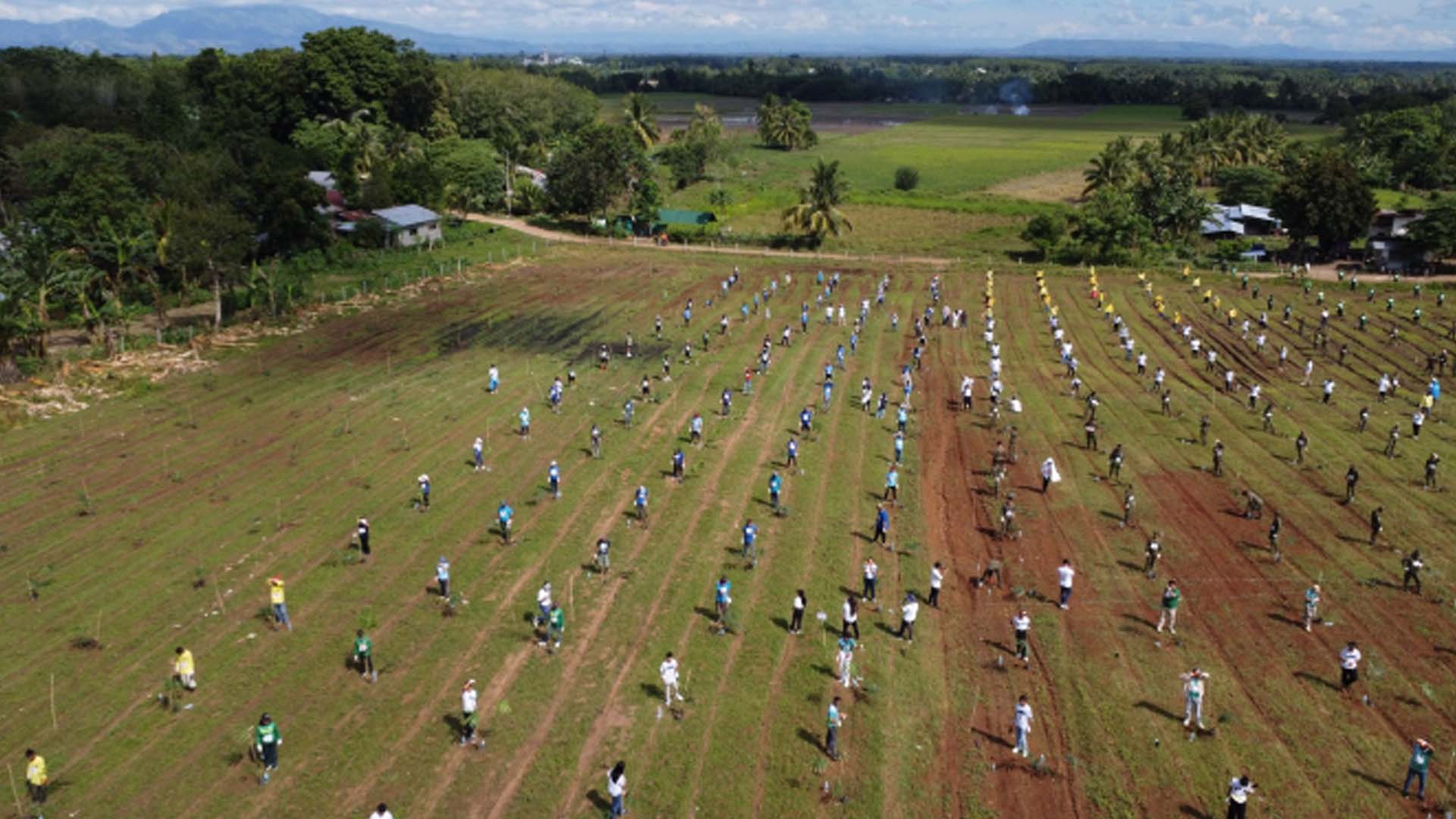







More than 4,000 participants joined the “Kawayanihan” initiative on Friday, planting at least 20,000 bamboo seedlings across Mindanao and parts of Leyte province in the Visayas, in an attempt to set a Guinness World Record (GWR).
Belle Calotes, the information focal person for the Department of Science and Technology (DOST) 10 (Northern Mindanao), stated that representatives of GWR would verify the number of participants to determine if the event qualifies for the title of the most people planting bamboo simultaneously worldwide.
“The GWR attempt focuses on the number of planters, which they are verifying,” she said.
The DOST led the collaborative effort among various stakeholders to demonstrate its commitment to a sustainable, climate-resilient, circular economy.
DOST-10 Director Romela Ratilla said the initiative aligns with DOST’s Science, Technology, and Innovation for Circular Economy (STI4CE) program.
“The Kawayanihan Movement is not the end but the beginning of harnessing bamboo’s potential to generate wealth, create jobs, and promote green and sustainable practices,” she said.
Each bamboo seedling planted will also be recorded in the Bamboo Resource Inventory System (BRIS), developed by researchers at the Bamboo Niche Research and Development Center at the Central Mindanao University in Bukidnon.
This system will monitor the growth of each plant in real time, providing essential data on bamboo resources for informed decision-making, including supply forecasting.
In the coming years, DOST plans to collaborate with stakeholders to develop coordinated local bamboo industry plans that align with the Philippine Bamboo Industry Roadmap. These strategies will emphasize data-driven approaches for pre-processing, enhancing value, developing infrastructure, and providing logistical and marketing support to advance the bamboo industry. (PNA)


