



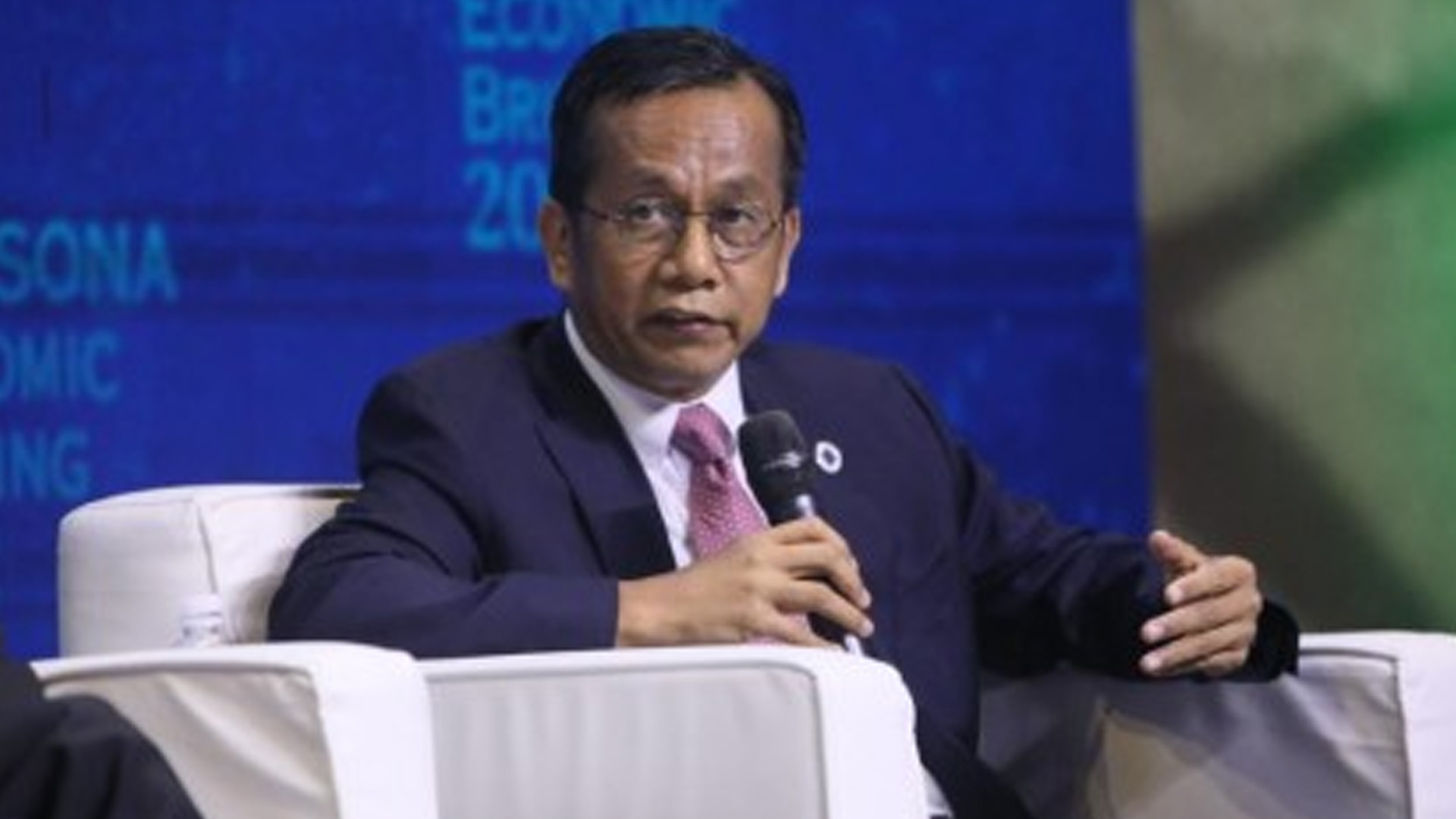







A comprehensive review of the entire tariff structure is ongoing, National Economic and Development Authority (NEDA) Secretary Arsenio Balisacan said on Thursday.
“We are doing a comprehensive review of the entire tariff structure, that’s going to the NEDA Board. So we are done at the technical level and the committee level of this comprehensive tariff review including the tariffs for agriculture,” Balisacan said during the briefing for the first quarter 2024 performance of the Philippine economy.
“It’s a comprehensive review. It’s… the new tariff structure for 2025 to 2028,” he added on the sidelines of the briefing.
Balisacan said the result of the review will be elevated to the NEDA Board in its next meeting in June.
“The overall intention of that review is to further structure the tariff regime so that we can have a more efficient competitive economy, so that we don’t have cases where some industries have low tariffs for their outputs, for the outputs that they produce, but they face high tariffs for the inputs that they use for their production, effectively making them, losing competitiveness,” he said.
He said highly-priced agricultural products due to high tariffs affect food processors especially small and medium enterprises.
“So you know many sectors are affected by highly-distorted tariff structure. So that’s what we are trying to streamline and to restructure so that we can have a much more broad based source of growth so that employment generation and growth in many sectors of the economy can happen,” he said.
He said the review also includes the tariff structure for electric vehicles (EVs) which is currently covered in Executive Order (EO) 12.
EO 12, which became effective on Feb. 20 last year, temporarily reduced the rates of import duty on certain EVs and their parts and components for five years.
Section 2 of the EO provides for the review of the EO after one year of implementation.
NEDA and other agencies earlier initiated discussions on the potential expansion of EO 12 to cover hybrid vehicles.
“There was a consultation done by the Tariff Commission. And they presented to us the recommendations. And then we further discussed it at the Cabinet level. And then there are still some differing opinions so we’ll have to elevate,” Balisacan said.
“There are common agreements in many areas including, for example, if completely e-vehicles should continue to have zero tariff,” he said.
Under EO 12, the most-favored nation tariff rates on completely built-up units of certain EVs, such as passenger cars, buses, minibuses, vans, trucks, tricycles, scooters, and bicycles, would be temporarily reduced to zero for five years. (PNA)


