



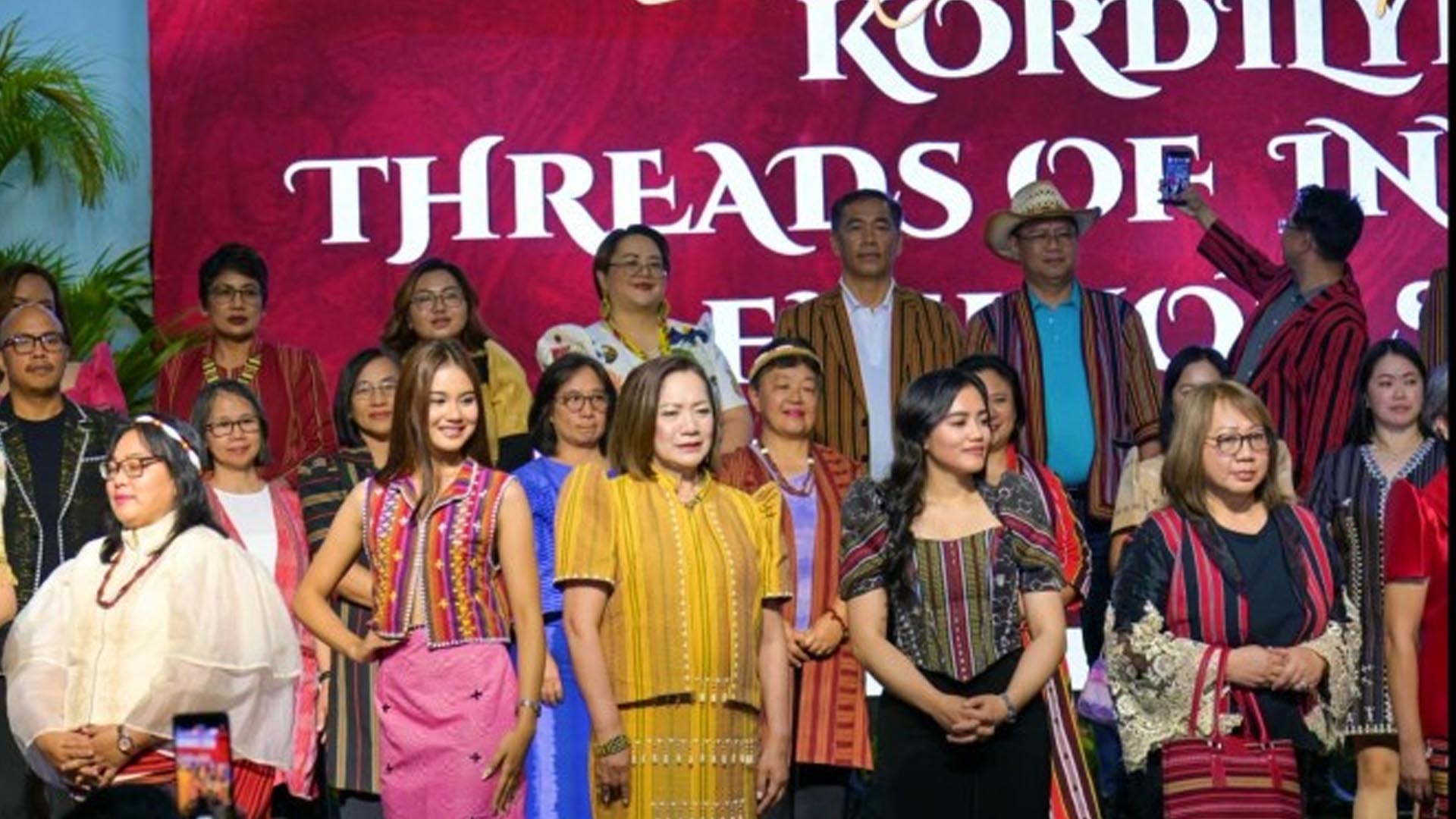







Handwoven textiles of the Cordillera Administrative Region are proving their versatility in donning an OOTD (outfit of the day) — from formal attire and office uniforms to casual wear, vests, wrap-around skirts, scarves and shawls.
In commemoration of the region’s 39th founding anniversary, government officials highlighted the importance of preserving the weaving tradition while promoting its wider use through innovation and sustainable local industries.
“We gather not only to celebrate fashion but more importantly to celebrate our identity, heritage and innovations,” said Dr. Nancy Bantog, regional director of the Department of Science and Technology-Cordillera Administrative Region (DOST-CAR), during the “Kordilyera Threads of Innovation Fashion Show” on July 14.
Under the Philippine Tropical Fabrics (PTF) law or Republic Act 9242, uniforms in government offices are prescribed to use or at least be accented with locally made fabrics.
A wide range of clothing made from authentic Cordillera handwoven fabrics took center stage on the runway, including traditional wrap-around skirts, Filipiniana dresses, formal gowns, business attire, casual wear, vests and office uniforms accented with indigenous textiles. Officials from the region’s provinces and national government agencies modeled the designs.
“These are products of our people, proud of what we have as a region. These fabrics are made of thread woven one over the other, carefully putting together the colors to come up with a cloth, delicately sewn and worn with pride by leaders of the region,” said Bantog.
She said the fashion show embodies the celebration’s theme, “Smart Cordillera: enabling local enterprise through digital transformation and accelerated regional autonomy.”
“This reflects our vision of a Smart Cordillera, one that harnesses our creativity, ingenuity and talent to empower our communities, strengthen global competitive industries and build a region that is more prosperous, resilient and self-reliant,” she said.
The show was divided into three segments — the contemporary Cordillera wear featuring the collections of Cordillera designers for professional, business, formal and casual wear; the Philippine tropical fabrics and the executive fashion walk.
“By blending indigenous craftmanship with contemporary design, they demonstrate that innovation does not replace tradition, it revitalizes it,” Bantog said.
She expressed hope that more institutions will comply with the PTF law and support the local textile industry.
The executive fashion walk allowed local leaders to become ambassadors of the region through the use of the PTF uniforms during official functions, in workplaces, and in daily engagements.
“We help create greater appreciation for Cordillera craftsmanship, support weavers and MSMEs and encourage more institutions and communities to embrace locally developed products,” she said.
She said that every piece featured on the runway is made from authentic Cordillera hand-woven textiles.
“Each design represents generations of knowledge, artistry and craftsmanship that cannot be replicated through sublimation or machine printing. By choosing genuine woven products, we do more than wear our culture, we honor our weavers, uphold the rights of the Indigenous Peoples and ensure that the rich weaving tradition continues to thrive for generations,” Bantog said.
Development plan
The Cordillera Regional Development Council (RDC) passed Resolution 2-2021 or the 10-year Cordillera weaving industry development plan that reflects the shared commitment to preserve heritage, strengthen local industries, empower communities and build a more self-reliant and innovative Cordillera.”
With its passage, the Cordillera weaving industry development council, with the DOST as its chair, 45 regional line agencies, two non-government organizations, 10 higher education institutions and 12 private sector representatives.
This has also encouraged the passage of ordinances and resolutions of the Cordillera provinces to protect the industry – Benguet that enjoin business enterprises from selling machine-made replicas or indigenous woven fabrics and apparels; Mountain Province that prohibits all businesses in the area from manufacturing, distributing, selling machine-made replica of Cordillera Indigenous woven materials and apparels; and Kalinga’s resolution urging the protection against fake fabrics or counterfeit woven products of Kalinga into the local markets from abroad and strengthening the cultural heritage of indigenous communities and indigenous peoples.
“These measures go beyond regulatory compliance but affirm our collective responsibility to protect the intellectual property, cultural identity and traditional knowledge of our indigenous peoples. They also safeguard the livelihood of our weavers by preventing low-cost imitations,” she said.
With supportive national laws, regional development plans and local ordinances in place, officials hope Cordillera weaving will remain an enduring symbol of the region’s identity—preserving centuries-old traditions while creating new economic opportunities for future generations. (PNA)


