



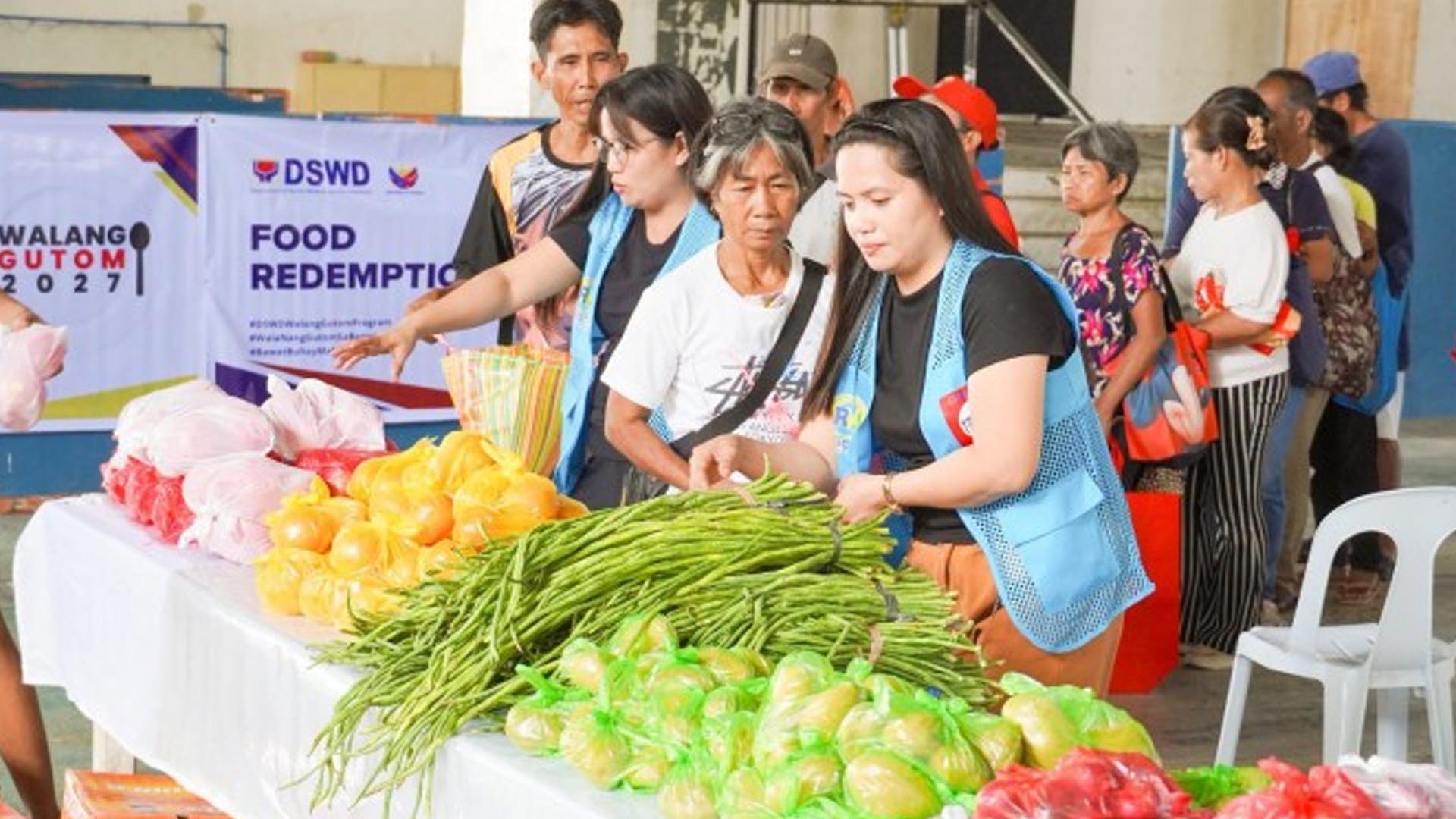






Expanding the Department of Social Welfare and Development’s Walang Gutom Program could help the Philippines achieve its Zero Hunger target within the next two to three years, a National Anti-Poverty Commission (NAPC) official said Tuesday.
In a media briefing, NAPC Lead Convenor Secretary Lope Santos III said increasing the program’s budget would enable it to reach more food-poor families and support the country’s commitment to Sustainable Development Goal 2, which aims to end hunger.
The DSWD is targeting 1 million beneficiary families, citing Philippine Statistics Authority data showing about 760,000 families live below the food poverty threshold.
With each family receiving PHP3,000 a month, the program would require about PHP3 billion monthly, or PHP36 billion annually, he said.
Santos said the funding would create a stable market for farmers, fisherfolk and local food processors, who would supply food for the program.
“It will provide additional economic development for our farmers and fisherfolk,” he said. “Data showed the poorest sector is the farmers, fisherfolk and Indigenous Peoples. This is what we say is very ironic; our food producers are the most hungry and poor.”
He added government spending on poverty reduction continues to increase, with more than PHP700 million worth of projects this year implemented by various government agencies under the national poverty reduction program.
Each agency monitors its own projects and reports the results to the NAPC.
The program is currently being implemented in Iloilo, Antique and Capiz provinces. (PNA)


