



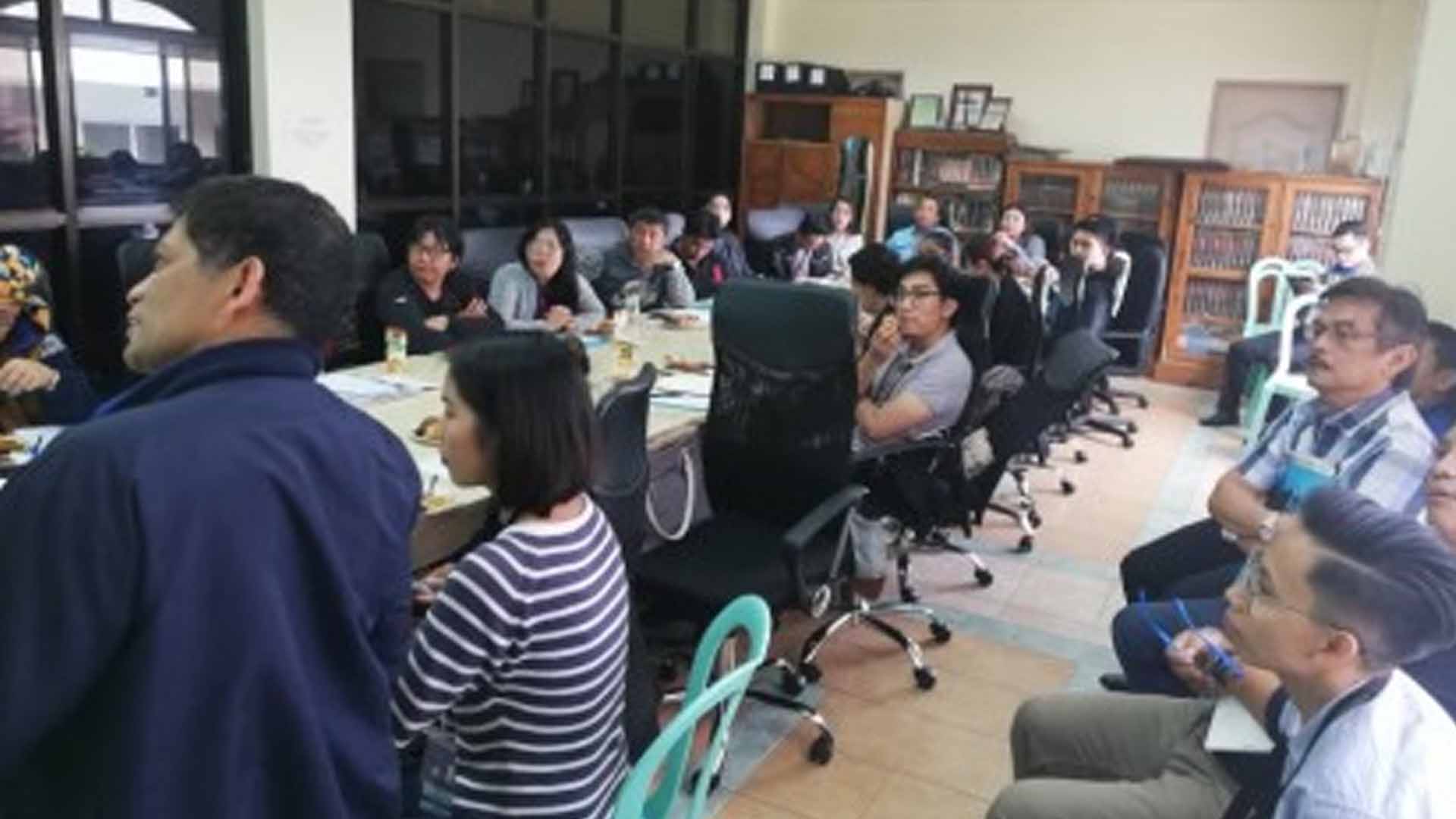






The Department of Labor and Employment in the Cordillera Administrative Region (DOLE-CAR) has reactivated the inter-agency regional child labor committee to look into the almost 2,000 reported cases of child labor.
“This committee will look at possible programs and convergence of different government agencies. We want to know the actual number so that we can identify what we need to do,” said DOLE-CAR assistant regional director Elpidio Jesus Atal on Wednesday.
He said each agency would perform different tasks & would have specific responsibilities aimed at addressing the problem.
Atal said the Duterte administration aims to reduce the cases of child labor by 30 percent or 630,000 from the estimated 2.1 million child laborers nationwide under the Philippine Development Plan 2017-2022.
In 2018, the provincial offices of the DOLE-CAR profiled a total of 1,927 “child laborers” or “children at risk”.
They are distributed as follows: Abra, 341; Apayao, 312; Baguio and Benguet, 495; Ifugao, 126; Kalinga, 341; and Mountain Province, 312.
Based on the survey conducted, it was learned that children aged 5 to 17 engage in work due to several reasons.
Topping the list is helping in household-operated farms or business, supplement the family income, gain experience or acquire training, and to pay for own schooling, among others.
Most working children are between the age of 15 to 17. There are also ages 10 to 14 and a few belonging to the 5 to 9 years age range.
“What we have been doing since after getting the number was to profile them further to find out whether they are engaged in ‘child work’ or ‘child labor’,” said Patrick Rillorta, DOLE-CAR focal person for child labor, in a phone interview on Tuesday.
He defined “child work” as work performed by a child to learn the value of responsibility. Here, the child’s health and education is respected despite doing the task, work is occasional and is legal.
“Child labor” is exploitative and involves hazardous work. It deprives the child of the right to health and education; work is constant and for long hours and is illegal.
Rillorta said in child labor, a child’s education, as well as physical and mental development, is affected.
Rillorta said the regional child labor committee’s reactivation would lead to the signing of a memorandum of agreement defining the function of each agency.
It will be followed by a planning session for a focused intervention to the children and their families, giving assistance under the four aspects defined as H-E-L-P.
H-E-L-P
Atal said “HELP” is about the shout of a child seeking assistance to be saved from exploitation.
He also said HELP is an acronym which stands for “Health and nutrition”, “Education and training”, “Livelihood and employment”, and “Protection and prosecution”.
He said H-E-L-P was initially conceptualized by the DOLE and the Department of Social Welfare and Development (DSWD) as a convergence program by both agencies in aiding the children and their families.
The program will be the focus intervention of the inter-agency regional committee.
On Sept. 17, President Rodrigo R. Duterte issued Executive Order 92 which created the National Council Against Child Labor to be headed by the DOLE Secretary.
Based on the issuance, the council is tasked to formulate a national action plan for the effective enforcement of the Special Protection of Children Against Child Abuse, Exploitation and Discrimination Act (Republic Act 7610), and coordinate and oversee the implementation of the Philippine Program Against Child Labor. (PNA)


