



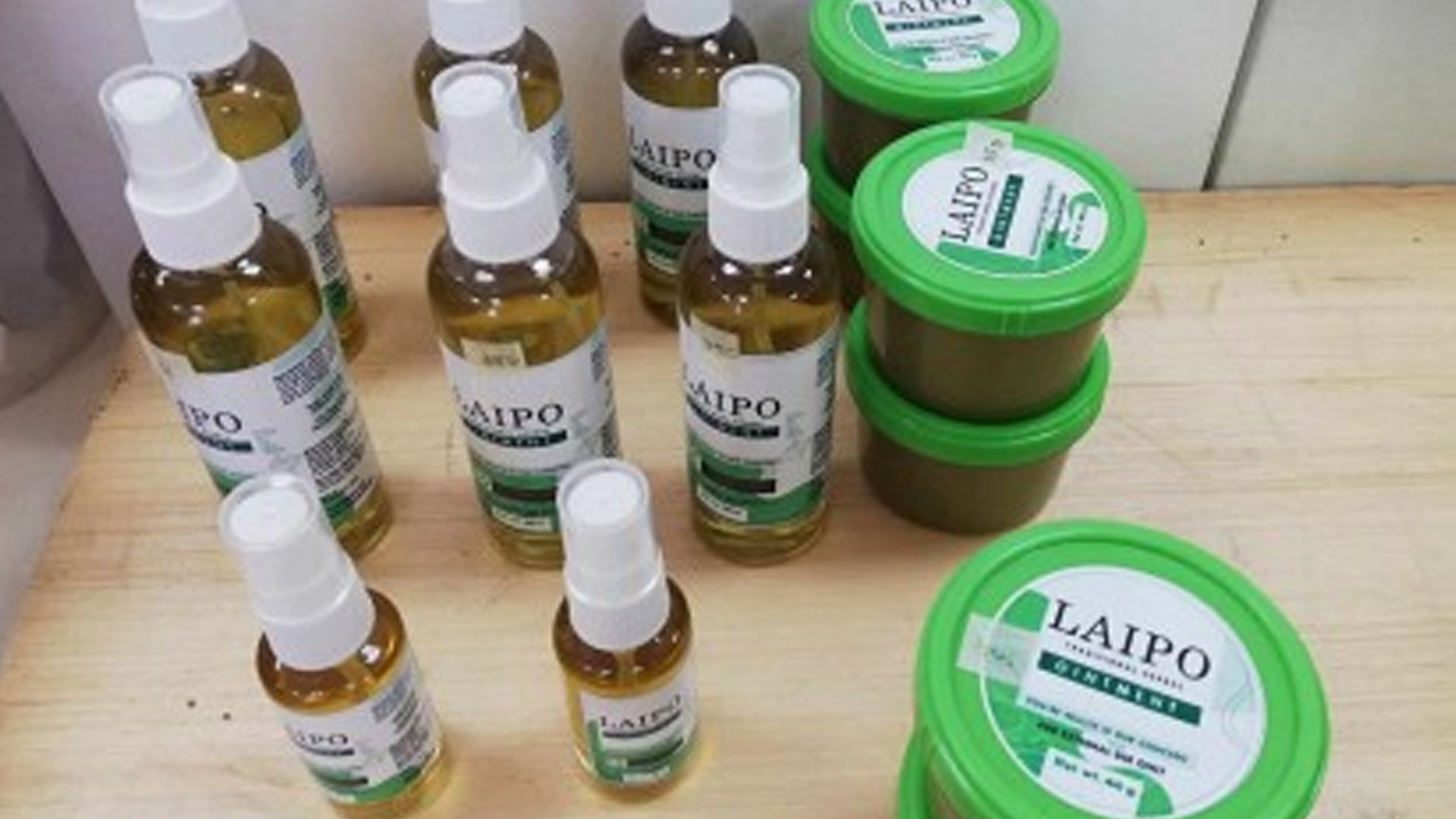







The Latazon Indigenous Peoples Organization (LAIPO) in the municipality of Laua-an encourages more community gardens to support its growing traditional herbal medicine production.
Abel Pedro, Iraynon Bukidnon Antique provincial tribal chairman and LAIPO head, said in an interview on Thursday that they are encouraging more Indigenous Peoples to plant herbs they can use in preparing ointment for skin diseases, liniment, and diuretics.
“We are buying herbal medicine, like herba buena, for PHP50 per kilo,” Pedro said.
He said their production has grown since they received the PHP1.1 million shared service facility (SSF) composed of a greenhouse, cooking ware, working table, and water tank, among others, from the Department of Trade and Industry (DTI) in 2023.
They get orders by joining trade fairs and displaying at the Tindahang Lokal at the Old Capitol in San Jose de Buenavista.
“Many people said that they found the herbal medicines we produce effective,” Pedro said.
From 25 bottles of the 200 ml. liniment when they started, production has increased to 50 bottles.
The production of 200-gram ointment also increased to 60 pieces per month from 20 when it began.
Pedro said they would expand their production center in Barangay Latazon, Laua-an this year to have wider space for processing, packaging, and labeling their medicines and have other amenities.
They distribute seedlings within their community to sustain their sources.
“We are also looking forward that this year, through the help of the DTI, we could already get the Bureau of Food and Drugs Administration approval for our tea and other capsule form herbal medicines, such as for stomachache,” he said.
At present, 12 IPs are directly involved in their production, paid per bottle of the herbal medicine they help process, package, and label.
From what used to be their PHP500 monthly income, they already earn as much as PHP27,000 just by joining a weeklong trade fair organized by the DTI. (PNA)


