



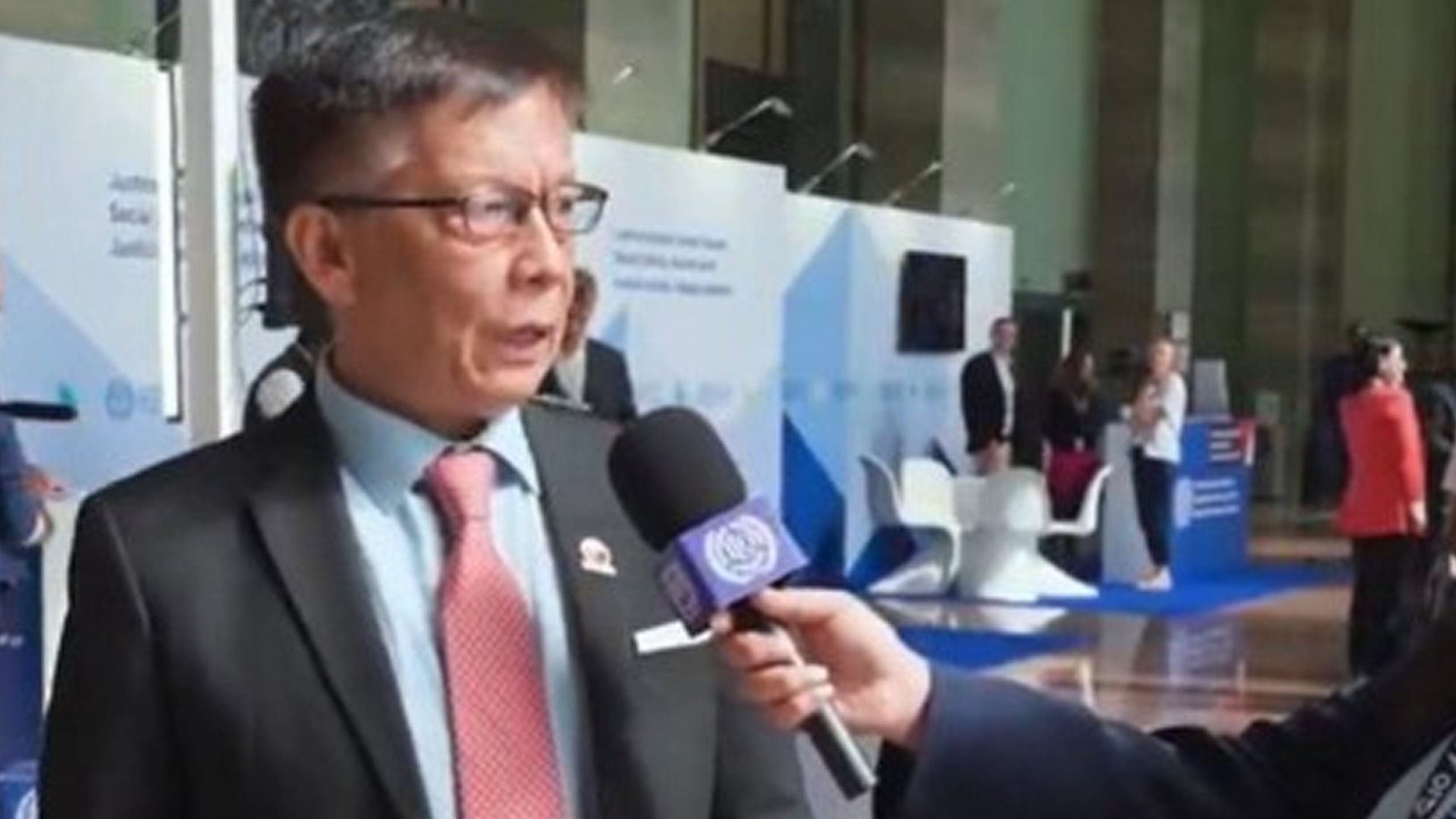






Department of Migrant Workers (DMW) Secretary Hans Leo Cacdac has underscored the importance of international labor standards, including global cooperations and tripartite dialogues, in strengthening global protection for seafarers and domestic workers.
On the sidelines of the 114th Session of the International Labor Conference held in Geneva, Switzerland, from June 1 to 12, Cacdac pointed to International Labour Organization (ILO) Convention No. 189 on domestic workers and the Maritime Labor Convention (MLC) 2006 as landmark instruments that have shaped both national reforms and international cooperation on labor protection.
“Convention 189 laid down a definitive global standard and a shared understanding of how to treat domestic workers, who have historically been trapped in a predicament of invisibility,” Cacdac said as quoted in a news release on Monday.
ILO Convention 189, also known as the Domestic Workers Convention, 2011, is a historic international treaty establishing the first global labor standards specifically for domestic workers.
The treaty affirms that domestic work is real work and guarantees that domestic workers receive the same basic rights and protections as other formal workers.
Cacdac noted that Convention 189 helped bring long-overdue visibility and formal protection to domestic workers, citing two major Philippine developments influenced by the treaty.
This includes the enactment of the Kasambahay Law of the Domestic Workers Act, under Republic Act 10361, which established labor rights, minimum wage standards, and benefits for household workers, and the Philippines–Saudi Arabia agreement, described as the country’s first substantial bilateral arrangement focused specifically on the protection and welfare of migrant domestic workers in the Middle East.
Cacdac also said MLC 2006 is a defining global framework for seafarer protection, setting minimum standards for working and living conditions at sea while reinforcing cooperation among labor-sending and labor-receiving countries.
MLC 2006, or the “Seafarers’ Bill of Rights,” is an ILO international agreement that has benefited nearly 1.5 million seafarers worldwide.
“The MLC provided the ground for standards of protection and global cooperation. It is one of the key examples of why ILO matters and how the ILO makes a difference in the lives of workers around the world,” Cacdac noted.
Cacdac served as the chair of the ILO Committee on Decent Work for Domestic Workers from 2010 to 2011, which drafted and adopted Convention 189, and later as Vice-Chair of the ILO Special Tripartite Committee on the Maritime Labor Convention in 2016. (PNA)


