



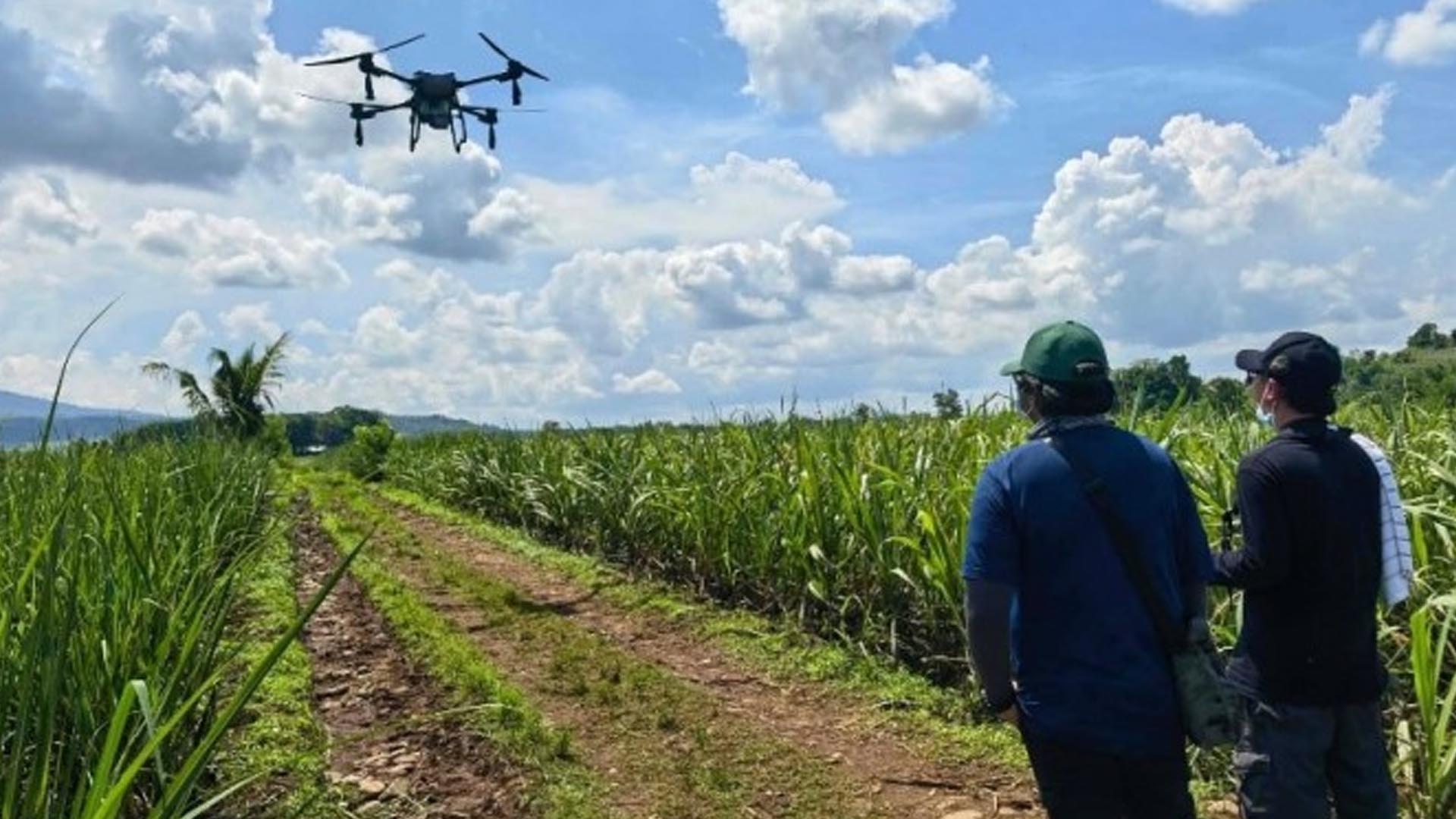






The Sugar Regulatory Administration (SRA) has intensified efforts to prevent further spread of red-striped soft scale insect (RSSI) infestation in Negros Occidental, where sugarcane fields in at least 150 villages have already been affected as of Monday.
In an interview, SRA Board farmers’ representative David Andrew Sanson said they have purchased insecticides for drone application initially in some areas in Isabela and La Castellana towns in central Negros.
“We’re continuing the operation in all affected areas in Negros Occidental. The infestation re-emerged amid the hot weather,” he added.
Insecticides contain the active ingredients etofenprox, a contact and stomach poison, as well as dinotefuran, a systemic insecticide.
According to the SRA report, the active ingredients belong to insecticide resistance action committee groups 3 and 4, respectively, and are effective in controlling insect pests through direct contact and systemic action.
RSSI infestations pose a significant threat to sugarcane productivity, potentially reducing the sugar content of infested canes by up to 50 percent.
By utilizing aerial spraying tools manned by skilled personnel, the SRA “seeks to deliver a swift, efficient, and precise application of control measures.”
The operation results in “reducing pest populations, minimizing crop damage and improving sugarcane productivity in affected areas, while also reducing additional harm to existing sugarcane crops,” it added.
Data released by the SRA-Visayas on Monday showed that as of June 5, the RSSI infestation has reached 460.55 hectares in the Visayas since May 29.
Negros Occidental, the country’s top sugar-producing province, is the most affected, with infestation spreading to more than 2,000 hectares of sugarcane fields in 25 cities and municipalities.
“Negros Occidental remains the epicenter, accounting for approximately 91 percent of the total affected areas in the Visayas. Bago City emerged as the most critical hotspot, contributing the largest single increase in infestation area,” the SRA report showed.
In Bago City alone, the most alarming increase was observed, where the infestation increased from 120.63 hectares to 406.02 hectares, accounting for more than 60 percent of the Visayas total between May 29 and June 5.
La Castellana accounts for 226.36 hectares of infestation; Cadiz City, 216.70 hectares; and Murcia, 193.86 hectares.
“Smaller but expanding infestations are also reported in Negros Oriental, Iloilo, and Capiz,” it added. (PNA)


