



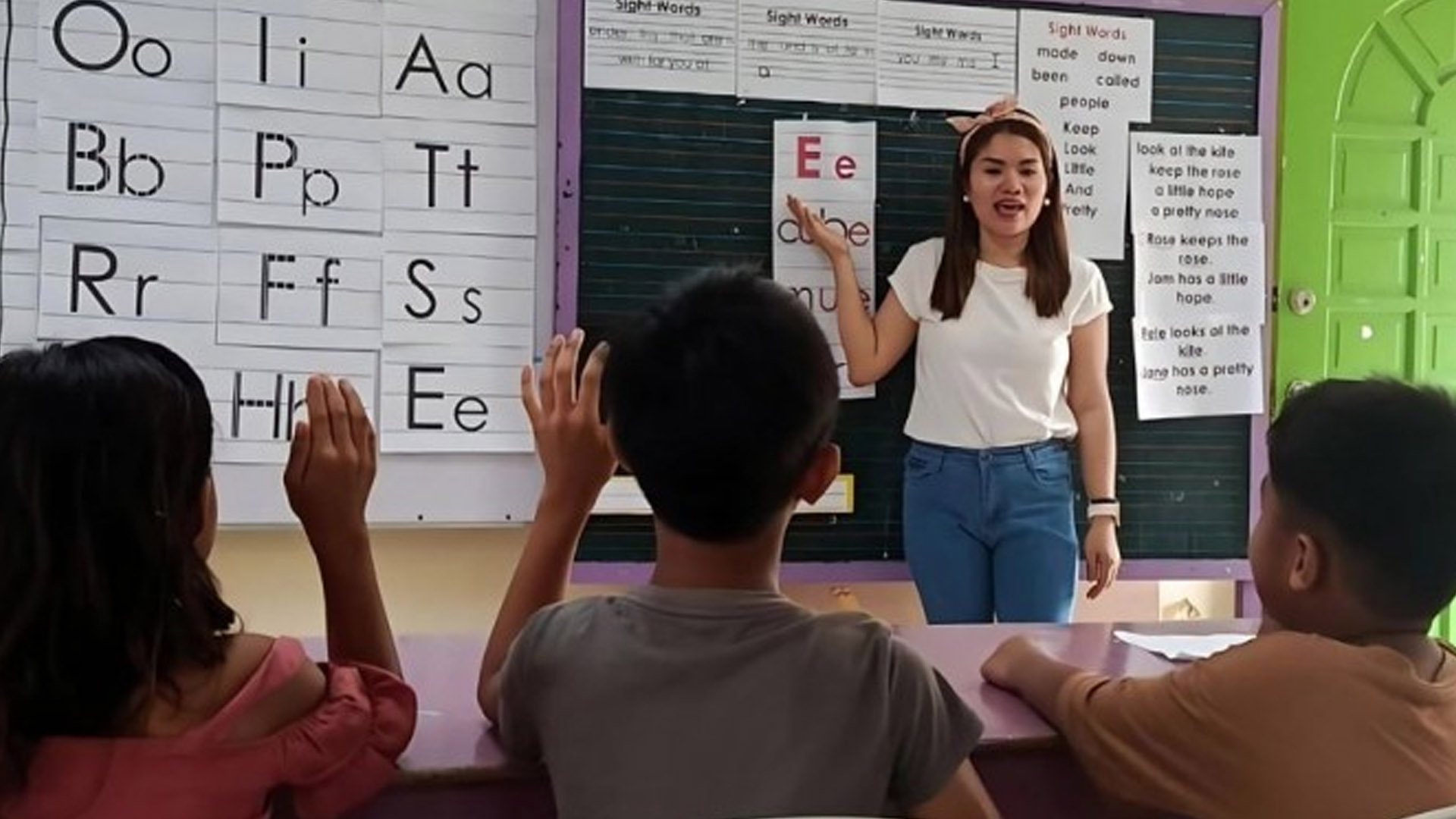






The Department of Education (DepEd) on Monday said it has introduced a simplified and more flexible framework for lesson planning among public school teachers.
The new guidelines on Lesson Planning and Learning Design, which will replace the previous DepEd Order No. 42, series of 2016, is part of the agency’s reforms to help reduce teachers’ workload and promote quality education.
The new policy removes the strict distinction between “Detailed Lesson Plans” and “Daily Lesson Logs,” as it advances a new unified approach focused on instructional thinking, learner needs, and effective classroom teaching.
In a statement, DepEd Secretary Sonny Angara said the simplified framework seeks to shift teachers’ focus to high-quality teaching rather than compliance-heavy paperwork.
“Hindi na dapat inuubos ang oras ng ating mga guro sa pagsusulat ng mahahabang (The time of our teachers should not be consumed by writing up long) lesson plans,” he said.
“Ang mahalaga ay malinaw ang layunin ng aralin, handa ang guro, at natututo ang bata sa loob ng classroom (What’s important is the goal of lessons is clear, the teacher is prepared, and children learn inside the classroom).”
The revised guideline introduces the ILAW Framework, which consists of four essential components, including Intentions, Learning Experience, Assessing Learning, and Ways Forward.
The four components guide teachers in identifying learning goals, designing meaningful learning experiences, checking learner understanding, and determining an approach for learners’ improvement, such as remediation, reteaching, or enrichment.
The policy states that teachers and Alternative Learning System (ALS) implementers shall not be required to include components beyond those prescribed in the framework.
It also prohibits regional and division offices, as well as individual schools and community learning centers, from requiring extra lesson plan templates or supplementary documentation beyond the new simplified standards.
Angara said such a simplified framework demonstrates the agency’s confidence in teachers in coming up with sound instructional decisions for the needs of learners.
“Ibinabalik natin ang tiwala sa ating mga guro. Sila ang mas nakakakilala sa kanilang learners, kaya dapat binibigyan natin sila ng malinaw na gabay at sapat na espasyo para magdisenyo ng lessons na tunay na tumutugon sa klase nila (We are restoring the trust in our teachers. They know better about their learners, that’s why they should be granted a clear guideline and adequate space to design lessons that really respond to their classes),” Angara said.
The DepEd said a lesson plan shall be considered sufficient when the “learning intentions, learning experience, assessment approach, and ways forward” are evident and aligned.
The policy also clarifies that lesson planning guides and sample templates are only reference tools and are the sole required national format, according to the new policy.
The guidelines allow the responsible use of artificial intelligence (AI) –such as for checking grammar or formatting – but stress that it cannot replace a teacher’s judgment.
Teachers remain responsible for determining learning objectives, designing learning experiences and strategies, responding to learner needs, and validating any AI-assisted content before using it in their classrooms.
School heads and instructional leaders are directed to shift from merely checking lesson plan submissions, and are encouraged, instead, to shift toward coaching, mentoring, and providing constructive feedback to help teachers improve their craft.
The policy also supports inclusive and context-responsive instruction by requiring lesson planning to consider learner needs, including learners with disabilities, multigrade classes, ALS learners, Indigenous Peoples Education contexts, and possible learning disruptions during emergencies.
To support the transition, teachers may continue using their current lesson plan formats until the end of the first term of school year 2026–2027.
Capacity building and technical assistance will be provided to prepare teachers and ALS implementers for full implementation of the revised lesson planning guidelines beginning the second term of the school year. (PNA)


