








The Philippines is one of the countries with a self-built pavilion among 192 participating nations in the most digitally advanced World Expo in history hosted by Dubai, United Arab Emirates.
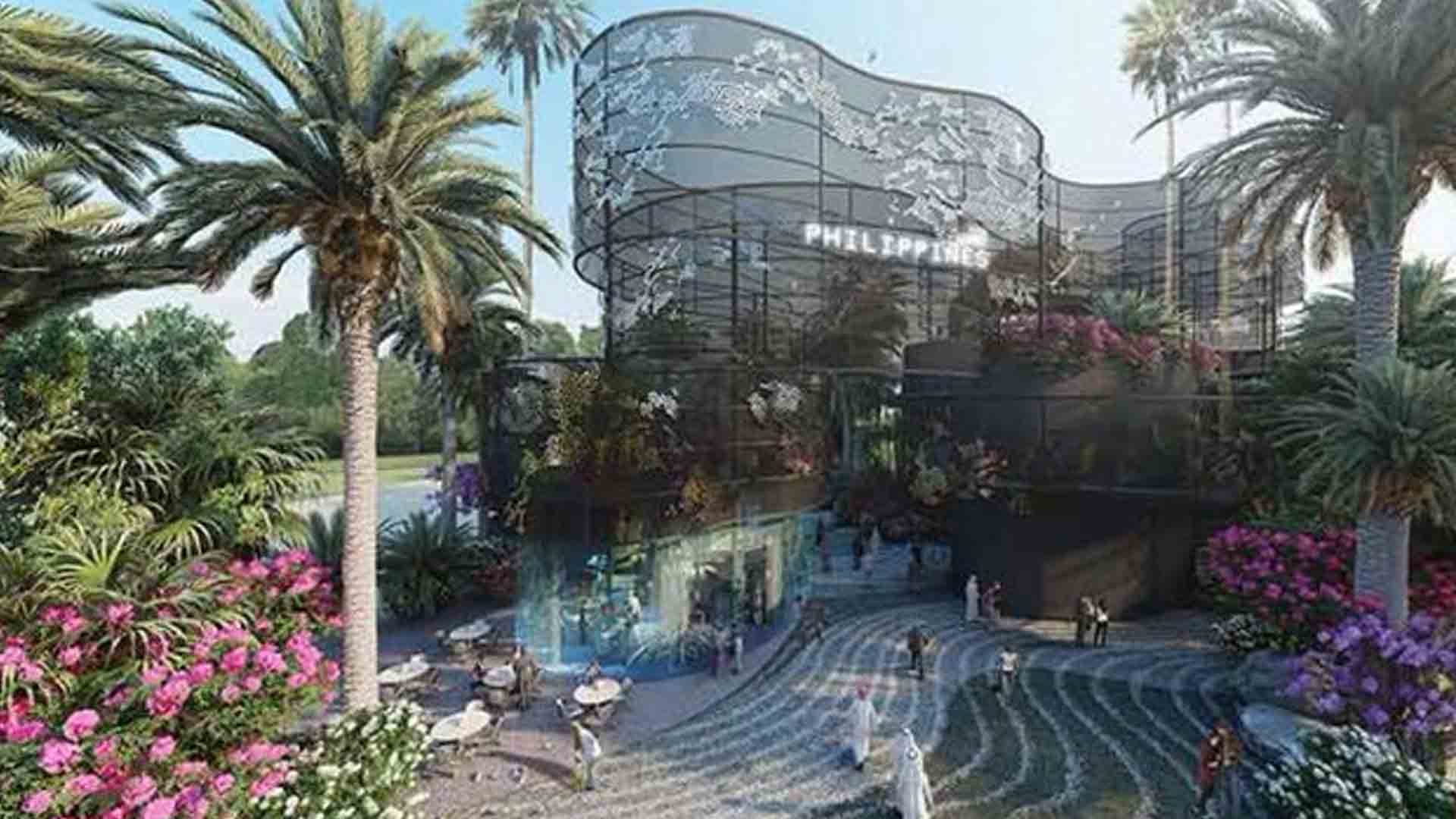
Philippine Ambassador to the United Arab Emirates Hjayceelyn Quintana led the opening of the Philippines “Bangkóta” Pavilion at the fair last October 1. The fair runs until the end of March 2022.
“[A]s we opened the doors of the Bangkóta Pavilion, we have six months to show the world that the time has come for a new way of thinking about who we are as a people. We will see in the thought-provoking halls of the Bangkóta the depth, authenticity, and inherent freedom to create in every Filipino,” Quintana said.
“Indeed, if we want to understand the concepts represented in the curves and lines of the Bangkóta, we have to change old mindsets in looking at ourselves and in the way that we represent ourselves. The Bangkóta finds its place in the World Expo, teaching us new ideas, creating new images that will help us face the future with confidence,” she added.
The country’s pavilion, named after the ancient Tagalog word for coral reef, evokes the idea that “the Filipino, like a coral reef, grows into colonies, spread out all over the world, connected by migration, travel, and technology.”
It aims to represent a “creative and compassionate” nation through an authentic Filipino architecture that draws visitors into defined, free-flowing, open spaces, reflecting an “epic symphony” of nature and culture sustained for 4,000 years.
Through the pavilion, conceptualized and actualized by Architect Royal Pineda of Budji+Royal Architecture+Design, the Philippines seeks to showcase the Filipino identity and its creative industries such as architecture, landscape architecture, content curation, arts multimedia, music, dance, film, fashion, animation, game development, artisanal objects, food, photography and performing arts.
Independent curator Marian Pastor Roces chose the artists and worked with them to develop work that re-stimulated the imagination of the Filipino character.
The country’s Bangkóta is located at the Sustainability District of the Expo site, which as a whole covers an area as big as 600 football fields.
The first in the Arab region where 2 million Filipinos are residing and working, the World Expo 2020 Dubai provides a platform for the Philippines to project a strong presence on the global stage.
World Expos are one of the oldest and largest international events, taking place every five years and lasting six months. The Philippines has participated in previous expos particularly the ones in Seattle, New York, Osaka, Brisbane, Vancouver, Seville, Hannover and Shanghai. (PNA)


