



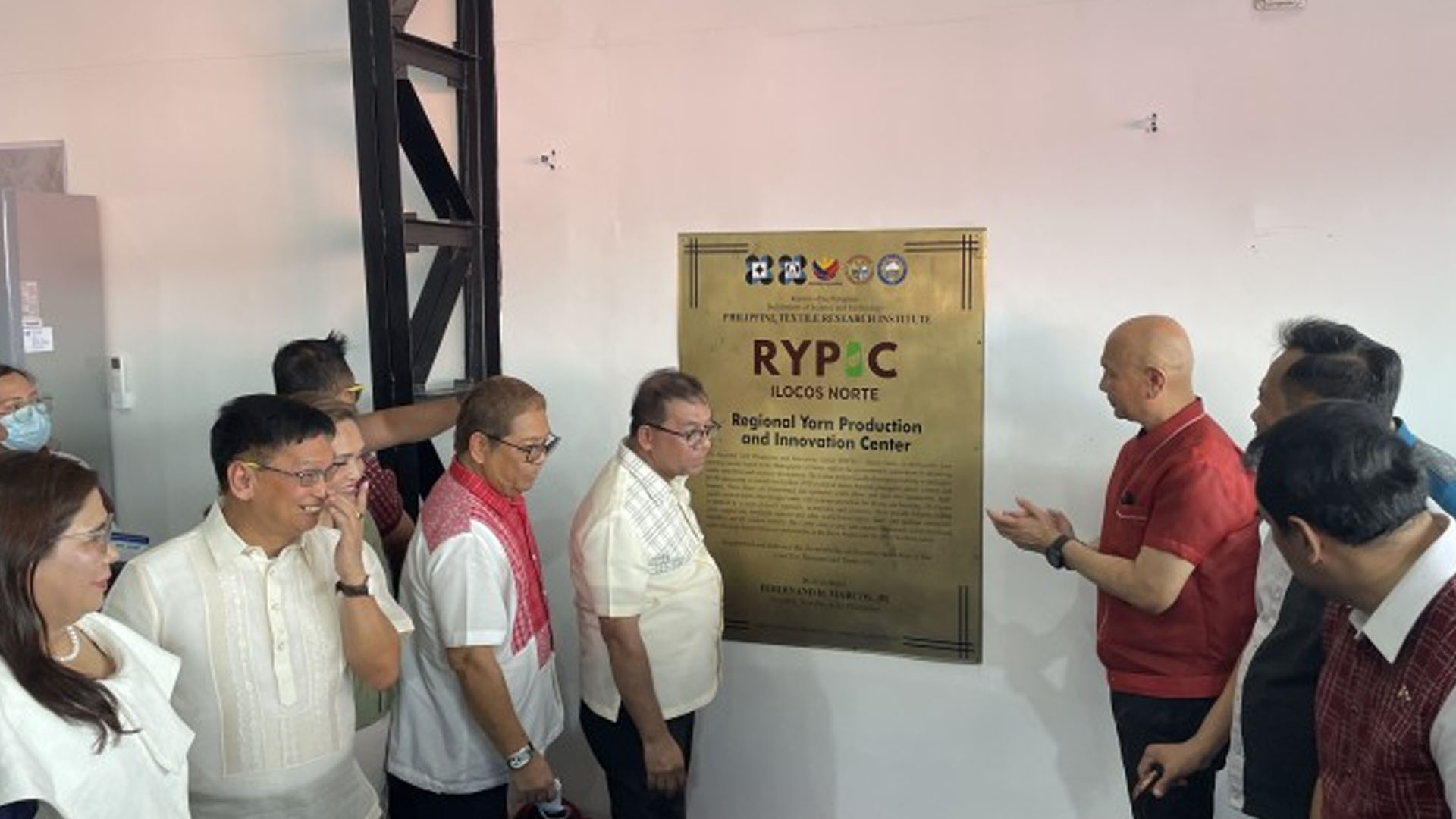







Handloom weavers, farmers, and local artisans on Friday welcomed the establishment of the Regional Yarn Production and Innovation Center (RYPIC) in this town, describing it as a significant step toward strengthening the local textile industry and creating new economic opportunities for communities engaged in natural fiber production.
The project is funded by the Department of Science and Technology-Philippine Textile Research Institute (DOST-PTRI) to spur and support sustainable textile livelihood and technology-based enterprise opportunities.
DOST Secretary Renato Solidum and provincial officials led the grand launch of the RYPIC in Barangay Parut, expected to produce up to 40 tons of natural textile fiber-blended yarns annually.
The center has modern equipment, technical training, research and innovation to improve local yarn production and enhance the quality of textile products made from locally sourced natural fibers such as abaca, bamboo, cotton, pineapple, and banana.
The fibers are abundant in the Ilocos Region and nearby provinces of Cagayan and Apayao.
Local farmers’ organizations said the facility will open up more opportunities for them to grow fiber crops with a reliable market because the facility is accessible to them.
Weavers and textile artisans said access to high-quality locally produced yarn will help improve the craftsmanship, consistency, and competitiveness of their products in both domestic and international markets.
“We look forward to using the locally produced yarn so that we will no longer buy from others,” weaver Perlita Domingo, 66, said.
In his message, Solidum enjoined all stakeholders, both public and private, to ensure the sustainability of the project as it serves as a hub for research, product development, skills training, and technology transfer.
The facility will support farmers, cooperatives, micro, small, and medium enterprises (MSMEs), and weaving communities by promoting innovation and value-added processing.
“I am very impressed with what the good mayor of Vintar (Richard Degala) did to support this facility. He talked to the weavers and farmer-producers of raw materials to plant cotton and other fiber crops like bamboo,” Solidum said.
He said the facility reflects the Marcos administration’s commitment to advancing textile innovation and inclusive development.
Ilocos Norte 2nd District Rep. Angelo Marcos Barba expressed confidence that the center will contribute to job creation, increased incomes and continued development of the natural fiber and textile industry, while helping position the region as a key producer of quality yarn and textile products.
“Through research and development, RYPIC Ilocos Norte is truly an investment in people, creating sustainable opportunities while promoting the growth of the local textile sector and our cultural heritage,” he said. (PNA)


