



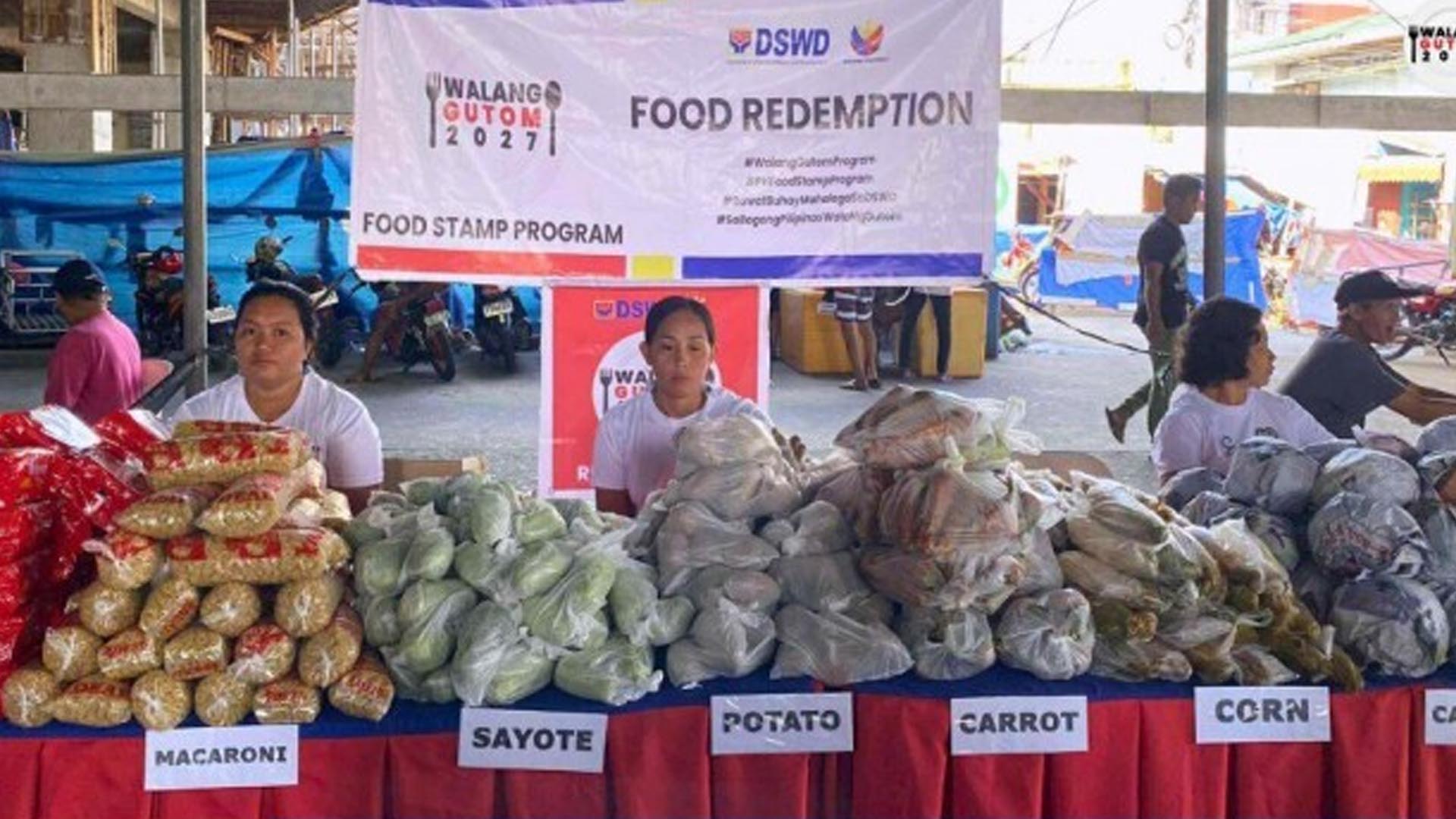






The Department of Social Welfare and Development’s (DSWD) Walang Gutom Program (WGP) not only helps address involuntary hunger by providing food assistance but also transforms the way Filipino families think about nutrition.
The WGP is the flagship program of the administration of President Ferdinand R. Marcos Jr. against involuntary hunger, wherein food-poor families receive PHP3,000 monthly in food credits, which can be used to buy healthy food items from DSWD-accredited stores.
DSWD Assistant Secretary Irene Dumlao said through the WGP, the agency is teaching beneficiaries how to make better food choices and prepare healthy meals for their family through its Nutrition Education Sessions (NES) — a key component of the program.
The activities in the monthly NES include classifying food into “go, grow, and glow” categories and developing affordable menus for families.
The DSWD spokesperson said the NES was deliberately included in the program to promote long-term behavioral change.
“Noong binubuo namin itong programa, isa sa mga importanteng pinagtuunan ng pansin ay paano natin mababago ang pananaw ng mga pamilyang Pilipino na hindi porke mura ay hindi na masustansya at masarap. Kaya kasama ang NES sa kondisyon bago sila makapag ‘redemption’ o yung time na bibili na sila ng food items sa DSWD-accredited retailers (When we were conceptualizing the program, one important focus was on how to transform the mindset of Filipino families that cheap food is not nutritious and tasty. That’s why NES is one of the requirements before they can buy food items during redemption day),” Dumlao said in a news release on Tuesday.
Fifty percent of the food credit is used to purchase carbohydrates such as rice, sweet potato, among others, while 30 percent is intended for protein food items, and 20 percent on fibers such as fruits and vegetables.
WGP beneficiary Renelyn Deramas, mother to seven children, thanked the WGP because it enabled her family to eat a balanced diet of nutritious foods.
“Ngayon nakakain na ang aming pamilya — mga gulay, masustansyang pagkain. Ang ulam lang namin dati isang noodles, isda na isang piraso, hinahati-hati pa namin (Now, our family eats vegetable and nutritious food. Before we share only one pack of noodles, a piece of fish),” she said.
“Nagpapasalamat talaga ako na napakalaking tulong po sa aming mag-anak, na mag-stay ito na programa. Kung ano gusto namin kainin, ’yon ang nakakain namin, tulad ng gulay, masustansya, mga bigas na isang araw lang dati ang nakakain, tatlong beses na namin nakakain (I am really thankful for this program that is a big help to my family and I hope this stays. We can now eat what we want, like vegetables, it’s nutritious, and rice, which we now eat three times a day),” Deramas said.
Another beneficiary, Candice Jhoy Maturan, echoed the sentiments of Deramas.
A solo parent from Washington, Surigao del Norte, Maturan is grateful to the WGP program, which helped her take better care of her children, including the two children who are persons with disabilities.
“Mas nabibigyan ko na ng tamang nutrisyon ang aking mga anak. Ang budget na dati ay para sa pagkain, nagagamit ko na rin sa pagbili ng gamot para sa aking mga anak na persons with disability (I can now give my children proper nutrition. The budget I previously allocate for food can now be used to buy medicines for my handicapped children),” she said.
Currently, the WGP has enrolled 300,000 households. An additional 300,000 food-poor families will be added by the end of 2025.
“The goal is to reach 600,000 food-poor families by the end of 2025. Before President Marcos steps out of office in 2028, we are targeting to reach 750,000 food-poor families,” Dumlao said.
While the numbers are important, the DSWD spokesperson emphasized that the success of the program also lies in changing the beneficiaries’ mindsets and habits.
“Ultimately, ang tunay na laban sa gutom ay hindi lang pagbibigay ng pagkain, kundi pagtuturo kung paano ito gawing masustansya at sapat para sa buong pamilya (the real fight against hunger not only entails giving food, but in teaching how to make food more nutritious and sufficient for the whole family),” Dumlao said. (PNA)


