



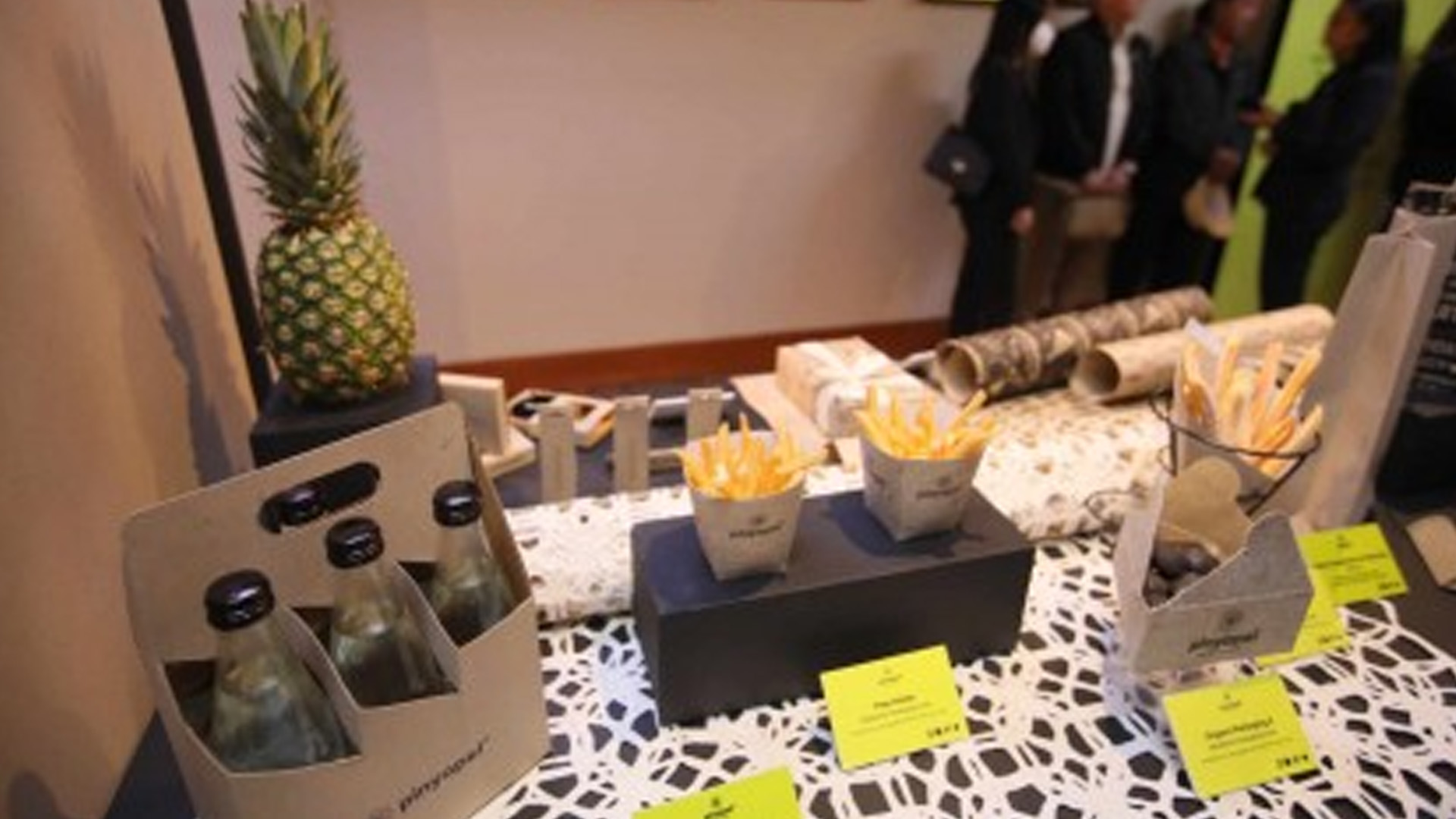







Senate President Pro Tempore Loren Legarda on Monday pushed for the use of agricultural waste and overlooked resources, including “pinyapel” (paper made from discarded pineapple leaves), to protect the environment.
Legarda led the formal opening of the four-day “Pinyapel Special Setting Exhibit” at the Senate building in Pasay City on Monday in celebration of Zero Waste Month.
“It’s crucial to underscore pinyapel’s commitment to closing the waste loop through its quadruple bottom line approach to circular design, deeply rooted in the malasakit (concern) principle of the Design Center of the Philippines, an ethos that embraces compassionate environmental stewardship and sense of accountability towards protecting and preserving the country’s ecosystems,” she said in her speech.
“This endeavor not only raises the bar for the design and value of the Philippine products but also makes meaningful contribution to the global movement advocating for environmentally friendly sound practices and a holistic approach to sustainable development — economic, cultural, social and environmentally sustainability,” she added.
A total of 85 artisanal and industrial products to be used in various settings, utilizing, semi-process materials such as pinyapel pulp, bio-composite pellets, and pineapple fabric, are featured in the exhibit.
The exhibit aims to open an investment opportunity in a pinyapel pulp mill in Northern Mindanao and Soccskargen regions, which produces a yield of a total of 20 metric tons of materials daily.
“Having closely collaborated with the Design Center of the Philippines on various projects, I’ve witnessed firsthand the transformative power of design in ensuring the competitiveness of our products,” Legarda said.
Legarda said pinyapel production supports the zero-waste lifestyle and helps empower Filipinos to adopt lifestyle changes and discourages the use of single-use plastics. (PNA)


