



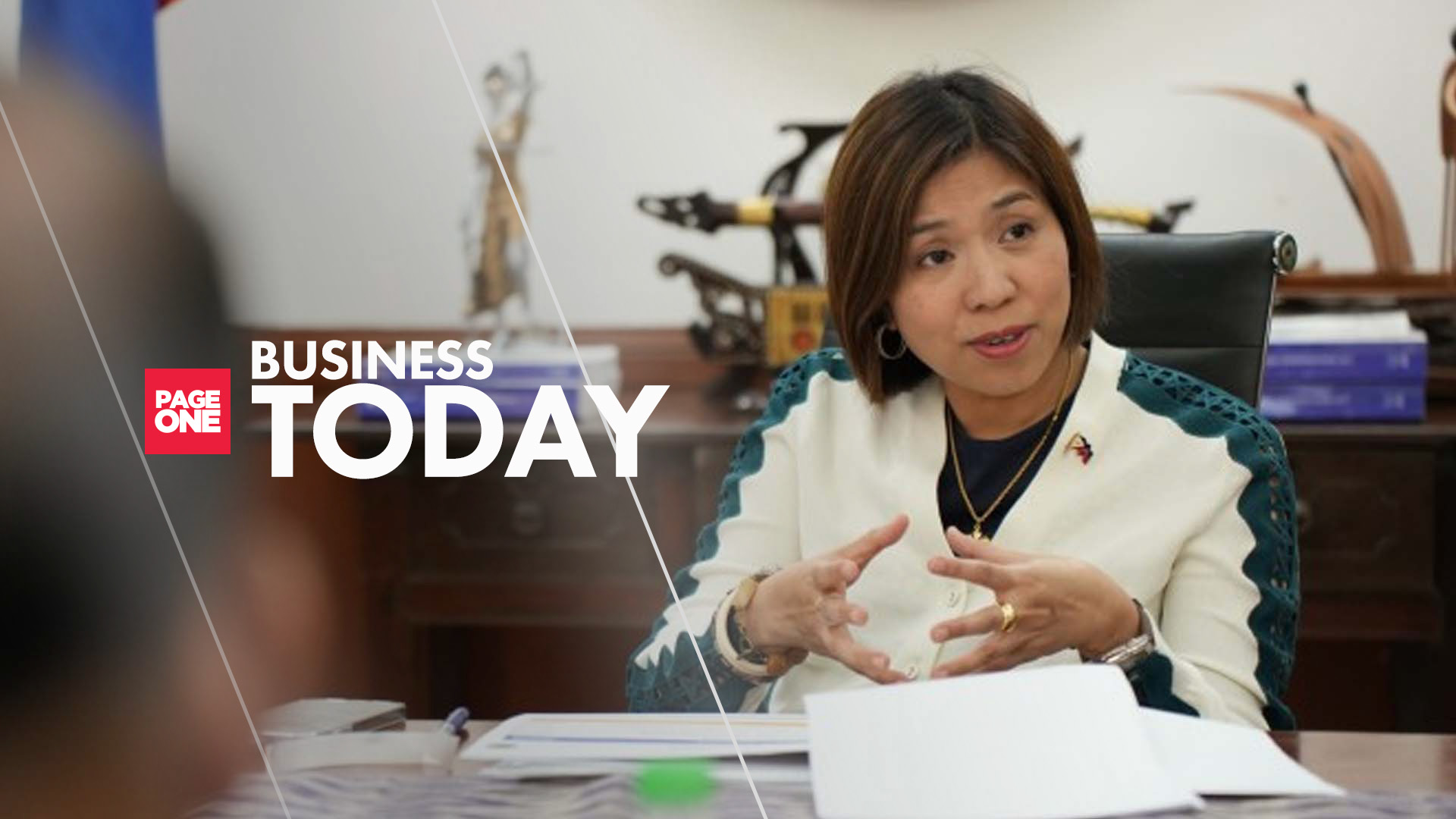







The continued implementation of “strong” economic activities has helped sustain the Philippines’ growth momentum, Budget Secretary Amenah Pangandaman said on Tuesday.
Pangandaman, one of the country’s economic managers, issued the statement after debt watcher Fitch Ratings upgraded the credit rating outlook of the Philippines from negative to stable and affirmed its “BBB” rating.
“Fitch’s improved outlook is a welcome development leading to the attainment of our fiscal consolidation goals and the achievement of more fiscal space for the government’s priority agenda and projects,” she said.
“This development indicates that the country’s growth now stabilizes with continuous strong economic activities and that we are determined to achieve a steady improvement in our growth guided by our Medium-Term Fiscal Framework.”
Fitch attributed the outlook revision to its assessment that the Philippines’ economic policy framework remains “sound” and in line with “BBB” peers.
A “BBB” rating is above the minimum investment grade and indicates that the risks of default are low. It is also a vote of confidence in the country’s ability to fulfill its financial commitments.
Pangandaman said the improved outlook signals the country’s creditworthiness and allows it to access funding from development partners and international capital markets at a lower cost.
“This means that the Philippine credit conditions have already started to firm up its trajectory towards reducing its borrowing cost and likewise lowering its debt burden as percent of Gross Domestic Product (GDP),” she said.
Pangandaman said the Marcos administration would continue to maintain the country’s productivity, consistent with the 2022-2028 Medium-Term Fiscal Framework (MTFF).
“Fiscal conditions are already improving, leading to reduced government borrowing costs. In short, fiscal consolidation is already taking place at this point, early in the first year of President Ferdinand R. Marcos Jr.’s administration,” she said.
Under the MTFF, the government aims to achieve 6.5 percent to 7.5 percent GDP growth in 2022; a 9 percent or single-digit poverty rate by 2028; 3 percent national government deficit to GDP ratio by 2028; and less than 60 percent national government debt-to-GDP ratio by 2025.
According to Fitch’s report, the Philippines is returning to “strong medium-term growth after the Covid-19 (coronavirus disease 2019) pandemic.”
Fitch projects the general government deficit to decline to 2.8 percent of GDP in 2023 and 2024, from an estimated 3.3 percent of GDP in 2022 and 4.6 percent of GDP in 2021.
It said the projection is consistent with the narrowing of the budgetary gap of the central government to 5.7 percent of GDP by 2024, from 7.3 percent of GDP in 2022 and 8.6 percent of GDP in 2021.
“The gradual pace of consolidation reflects the authorities’ focus on fostering economic growth and development,” it said. (PNA)


