



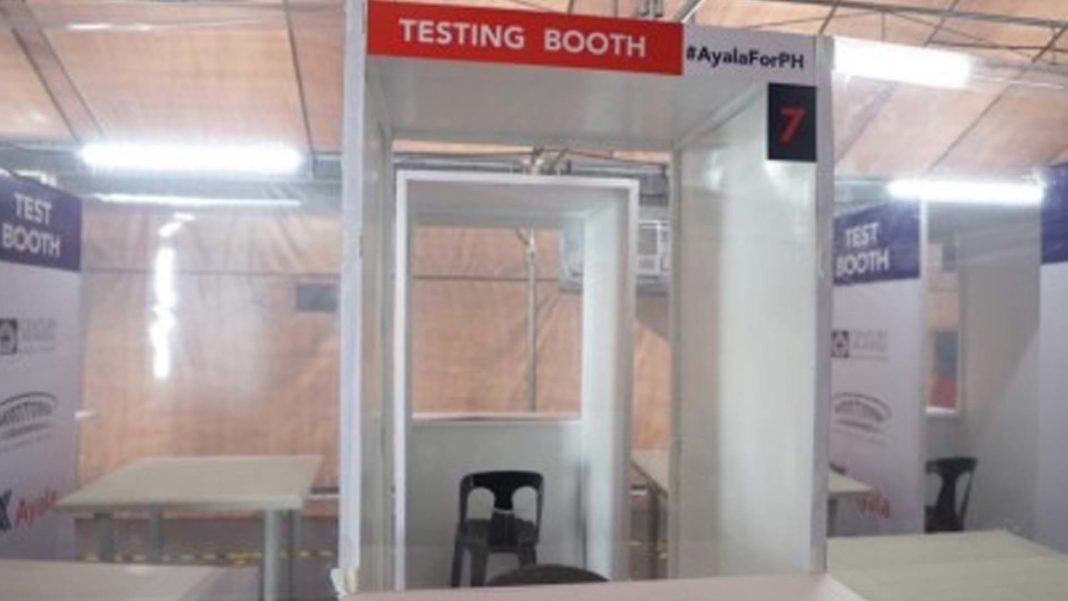







With the pooled testing method approved “in principle”, Malacañang on Wednesday said persons only have to pay as low as PHP300 to get tested for coronavirus disease 2019 (Covid-19).
Presidential Spokesperson Harry Roque said pool or batch testing makes use of one reverse transcription-polymerase chain reaction (RT-PCR) test kit for 10 to 20 persons, which reduces the cost of testing.
“Pool testing will expand our actual testing to at least times 10 become the minimum of the pool that they’re considering. Right now it’s 10, but there’s a possibility that it could be as high as 20,” he said in an interview over CNN Philippines.
Since the average cost of one RT-PCR test kit is around PHP3,000, Roque said 10 persons can split the bill and only pay PHP300 each.
“There will be 10 people using one test kit. So it’s divided by 10, so it will be PHP300. So now, anyone can afford to have a test,” he said.
He described pool testing as a “game-changer”, since health authorities may combine samples from several people and test them together instead of running them individually.
According to Roque, a negative test result will clear everyone in the group but a positive result requires all members to be individually tested.
Currently, Roque said health authorities have concluded pilot study for pool testing. Further pilot testing will be conducted after new quarantine classifications are announced before the end of the month.
The country is now able to conduct 30,000 Covid-19 tests per day, he added.
As for contact tracing, Roque said the government will not only rely on paid contact tracers but also build an army of volunteers to intensify tracing.
More isolation centers will also be built in the following days to accommodate for mild and asymptomatic Covid-19 patients, he added. If these are not enough, he said government may also use school dormitories.
To ensure that there are enough intensive care unit (ICU) beds for Covid-19 patients, Roque said the government is also working to increasing its bed capacity.
“If the hospital beds and ICU beds in Manila are at critical level, we will tap even the bed capacity of neighboring Region 3 and Region 4-A to refer patients to these vacant ICU or hospital beds,” he said.
In the following days, he vowed that there will be a more “invigorated response” to the Covid-19 pandemic.
“It’s not so much the [quarantine] classifications that will matter, but the new invigorated responses we will have on this Covid-19 pandemic,” he said.
President Rodrigo Duterte is expected to announce the new quarantine classifications on Thursday (July 30). (PNA)


