



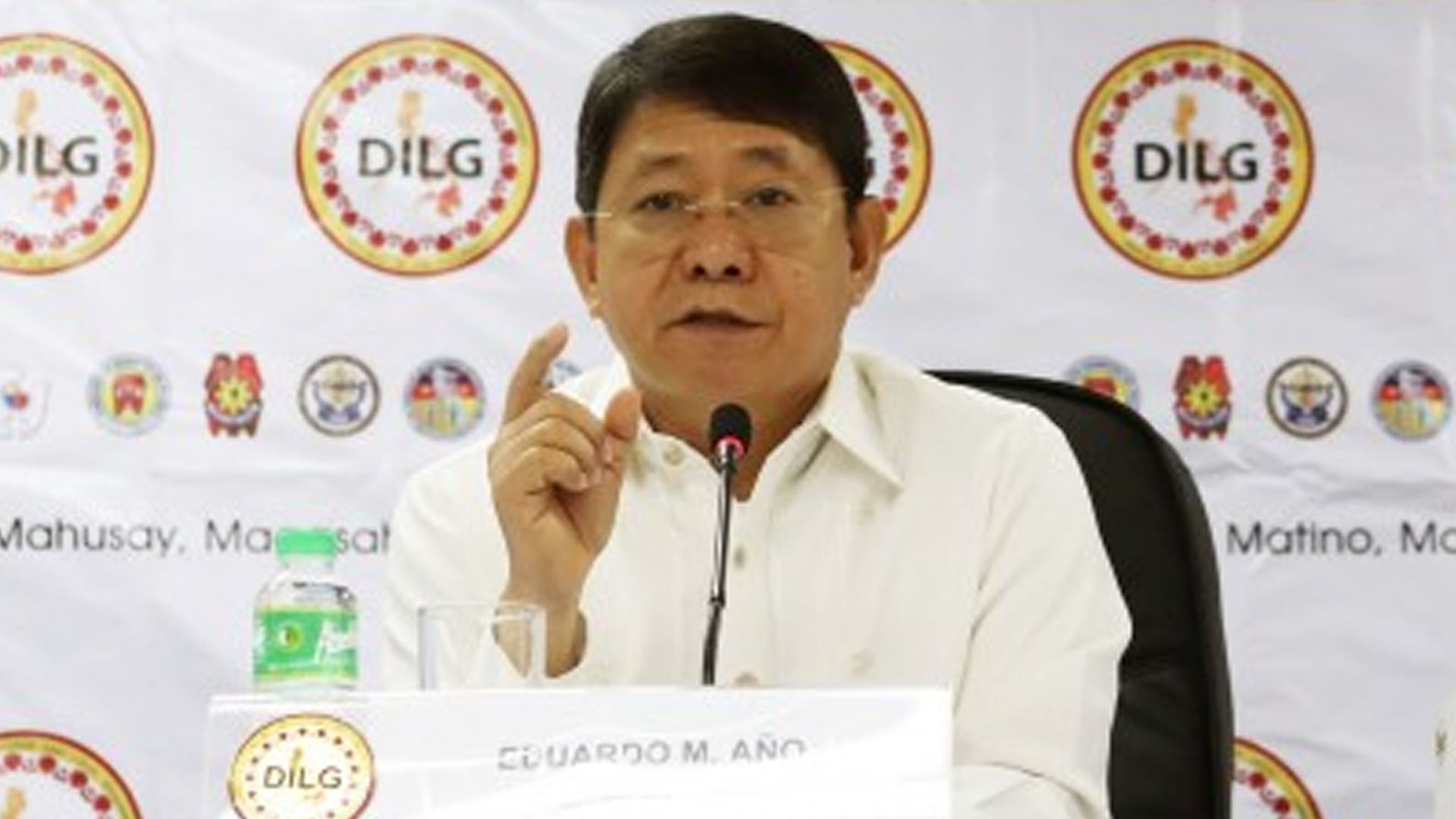







The government aims to bring down further the positivity rate of the coronavirus disease (Covid-19) in the country as it ramps up response efforts to the health crisis, Interior Secretary Eduardo Año said on Thursday.
“But if you look at the positivity rate, we are now at the 6 percent positivity rate, probably hanggang (up to) 7 (percent). Our goal is to bring down the rate to 3 or even 1 percent,’’ Año said in a virtual press briefing.
Compared to other countries, Año noted that the country’s performance in battling Covid-19 is good.
Año cited South Korea as having a positivity rate of 1 to 3 percent which “means they are already winning’’.
“Look at the US (United States), 368 persons per one million population. Sa atin (Ours), it is about 11 per one million population. In Brazil, it’s 127 (per one million), so you will see the difference,)” he added.
He said with the community quarantine measures, the government has managed the severe and critical cases in the country.
“We are able to buy time to increase our testing capacities, build isolation facilities, at tsaka yung mga (and those) healthcare capacities. (So) we are really–very very ready now to fight Covid-19 more than ever,” he added.
Año said the rise of Covid-19 cases in the country is expected because it means the number of people being tested for the virus is also increasing.
He, however, admitted that “no country can say that they are successful in fighting Covid-19’’ without the vaccine.
Meanwhile, Año said he expects Cebu City to shift from the stringent enhanced community quarantine (ECQ) to a more relaxed quarantine protocol after July 15.
He made the assessment after observing that the residents have followed the ECQ protocols which were enforced in the city for being the locality with the most Covid-19 cases in the country.
“We foresee na magkakaroon ng (to have) changes in Cebu City and the province after July 15,’’ Año said.
He said that the deployment of more uniformed men from the Philippine National Police (PNP) and the Armed Forces of the Philippines (AFP) is another factor that made residents adhere to quarantine rules.
In his recent visit to the province, Año said he had a series of dialogues with the local officials, private sector, hospital owners, and residents of Cebu province and Cebu City to synchronize the national government’s thrust in combatting Covid-19 with the local stakeholders.
He also went to the Cebu International Airport which is accommodating the returning overseas Filipino workers (OFWs) from other countries where quarantine protocols have been set up.
“So I can say that we are going in the right direction hopefully by July 15, maka-graduate na ‘yung Cebu from ECQ (Cebu can already graduate from ECQ),’’ said Año. (PNA)


