



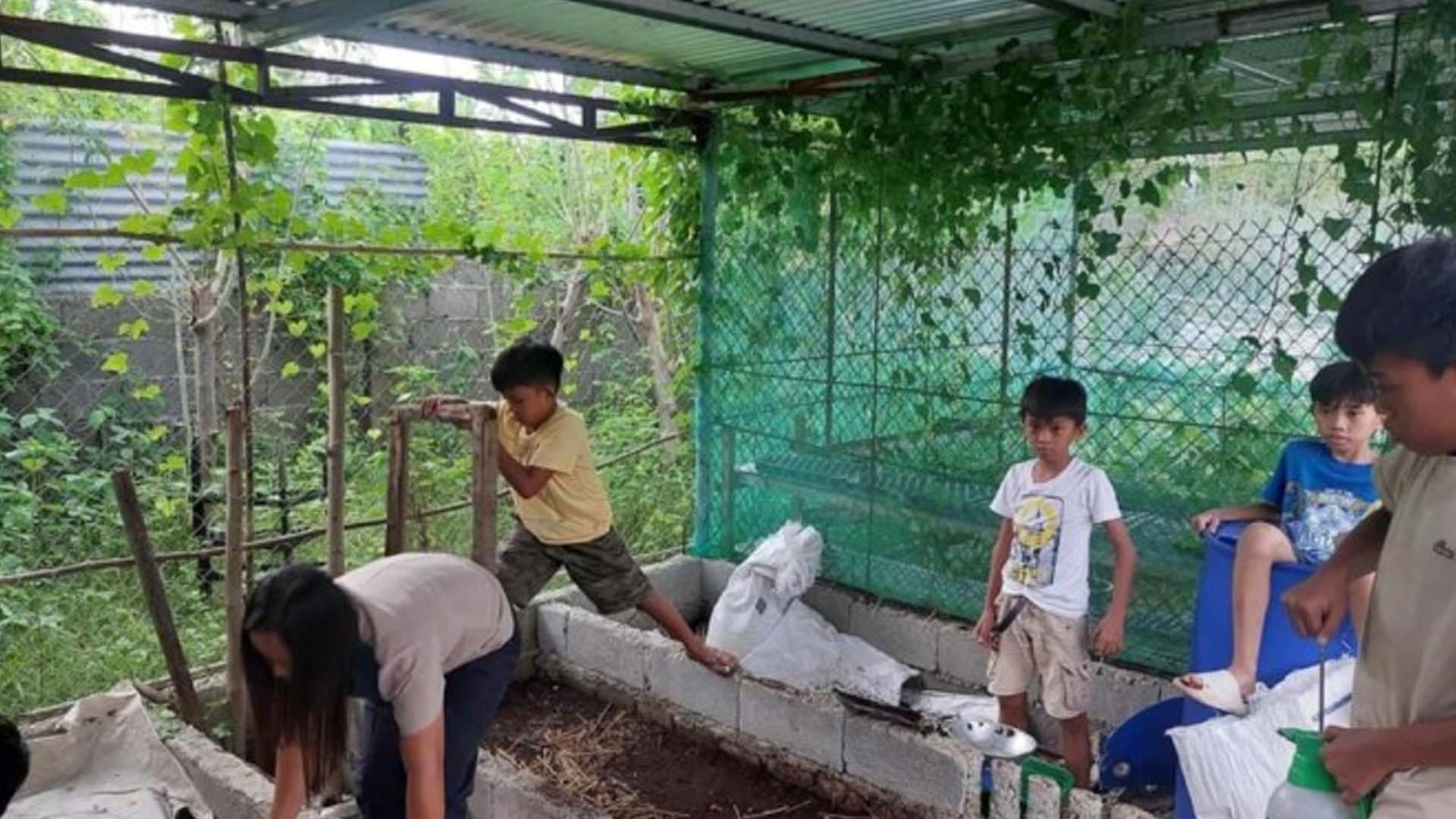







A school garden at the Eulalio F. Siazon Memorial Elementary School in a coastal village of La Paz in this city is nourishing young minds with healthy habits.
The once stony ground is now a haven for African night crawlers or earthworms converting organic waste into high quality compost as food for the plants.
Every corner of the more than one-hectare school compound features vegetable patches maintained by learners with the supervision of their teachers and parents.
“One of the unique features of these pocket gardens and waste diversion program is vermicomposting,” said EFSMES principal Noralyn Dela Cruz.
Dela Cruz said parents and pupils collect farm waste and other organic waste and add it to the vermibeds where it is digested by worms.
The worms’ waste called “castings” create rich, organic compost to fertilize the vegetables that pupils grow in the school garden.
“It was July in 2023 when we launched the vermicomposting project in the school,” Dela Cruz said during a visit to her school on Wednesday.
With the help of the school community, the vermicomposting project is now in full swing, sustaining the growth of their vegetable gardens for the school feeding program.
It also serves as a hands-on training for learners to learn basic gardening techniques while appreciating nature and the value of growing their own food for health and wellness.
According to the pupils, the project teaches them lessons on composting and water conservation.
Every day, they are excited to go to school, water the plants and check if the friendly earthworms have something to eat.
Ruth Pascual, income generating project coordinator of the school, said they have so far harvested a total of 278 kilos of vermicast, or fertilizer that came from the worm castings.
These are mixed with garden soil to enhance plant growth.
Extra compost are sold to plant enthusiasts at an average price of PHP50 per kilo.
“The community is very supportive. As a proof, they are the ones who are providing us with cow manure to be used for the vermicomposting,” said Pascual.
By involving the learners in these activities, which connect the school garden with learning inside the classroom, Dela Cruz expressed optimism that this will give them a life long experience to become good stewards of nature. (PNA)


