



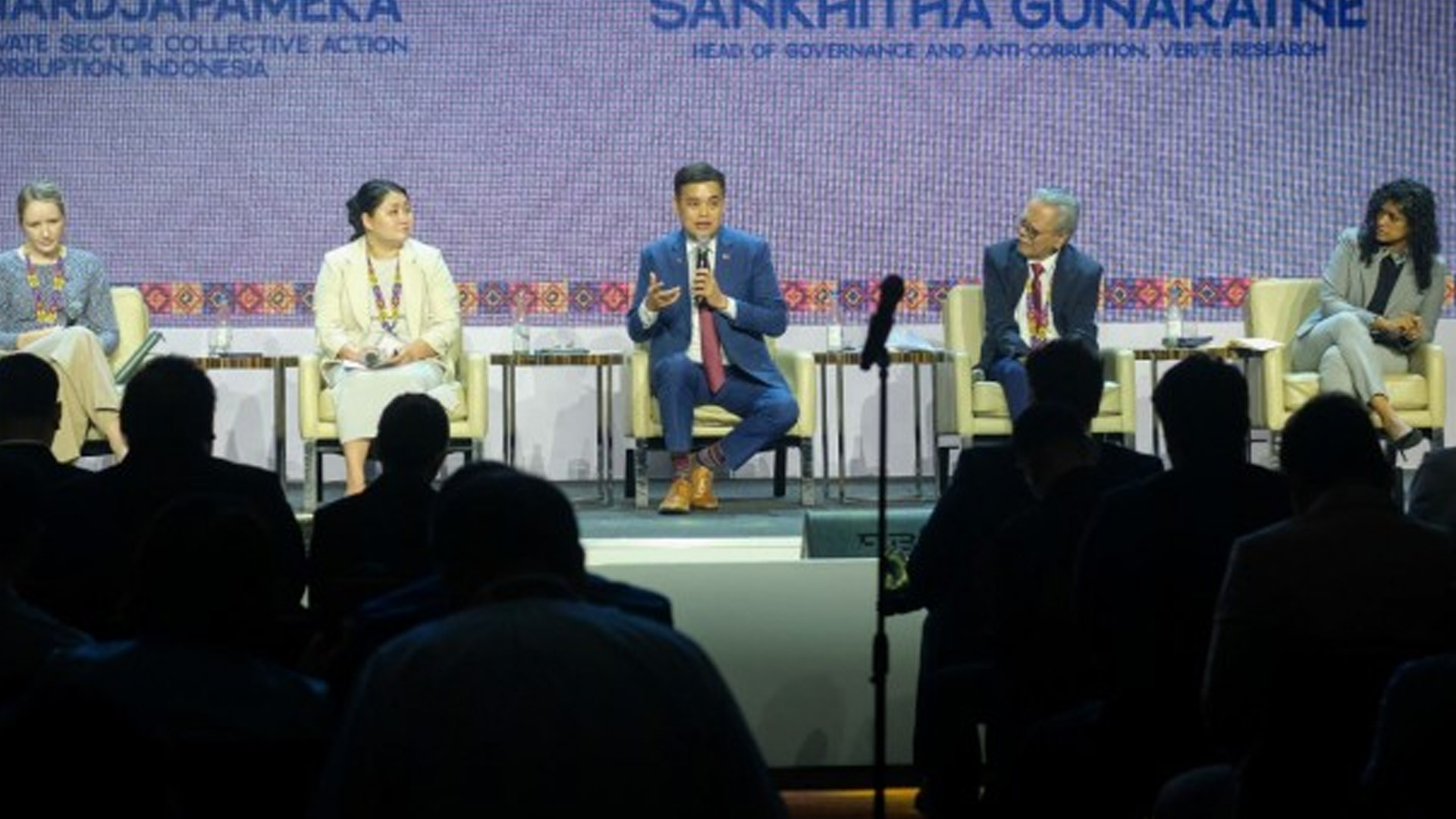







The Philippines highlighted the importance of transparency, accountability, and collaboration in addressing climate challenges across social and national boundaries during a high-level meeting in Manila.
In a news release on Tuesday, Climate Change Commission Vice Chairperson and Executive Director Robert E.A. Borje reiterated the country’s commitment to open and inclusive climate governance, emphasizing its role in strengthening climate resilience and sustainable development at the Open Government Partnership Asia-Pacific Regional Meeting held on Feb. 7.
“Governments must not work in silos. Meaningful participation leads to stronger policies, better implementation, and greater public trust,” he said.
“Our commitment to open governance means breaking down barriers and equipping communities with the knowledge and tools to take action so we can build a culture of appreciation for open climate governance mechanisms that drive real, lasting resilience across the Asia-Pacific.”
Underscoring the need for a strong governance framework to effectively address climate challenges, Borje cited the Philippines National Adaptation Plan (NAP) and the Nationally Determined Contribution Implementation Plan (NDCIP) as prime examples of collaborative policymaking under President Ferdinand R. Marcos Jr.’s administration.
He said that under the current leadership, climate action has been prioritized through clear governance structures that encourage broad stakeholder participation.
“The NAP was completed in under 10 months, and the NDCIP in just five months, demonstrating that when governance frameworks are in place and stakeholders are actively engaged, we can achieve both strong outputs and impactful outcomes,” Borje said.
A key focus of the discussion at the meeting was climate finance transparency, as Borje highlighted the Climate Change Expenditure Tagging (CCET) mechanism.
He explained that the CCET system tracks the allocation of climate-related funds, allowing the public to monitor financial flows and ensuring that investments translate into meaningful and measurable outcomes.
Meanwhile, Borje also proposed the creation of an ASEAN-wide open governance framework for climate finance and carbon markets to foster regional cooperation.
He also emphasized the need to balance high-quality deliberation with high-quality investment, citing the Philippine Energy Plan (PEP) 2020-2040, which outlines the country’s transition to renewable energy while ensuring financial transparency and public trust.
Borje also called on civil society organizations, research institutions, and advocacy groups to play an active role in monitoring climate finance and shaping policies.
The event brought together government officials, civil society leaders, and policy experts to explore how open governance can accelerate sustainable development in the region.
Experts from Australia, Indonesia, Mongolia, and Sri Lanka tackled pressing issues, such as artificial intelligence governance, anti-corruption efforts, misinformation, and public finance reforms.
The CCC, meanwhile, affirmed its commitment to integrating open governance principles into climate policies, ensuring that adaptation and mitigation efforts align with national and global goals while fostering transparency and public engagement. (PNA)


