



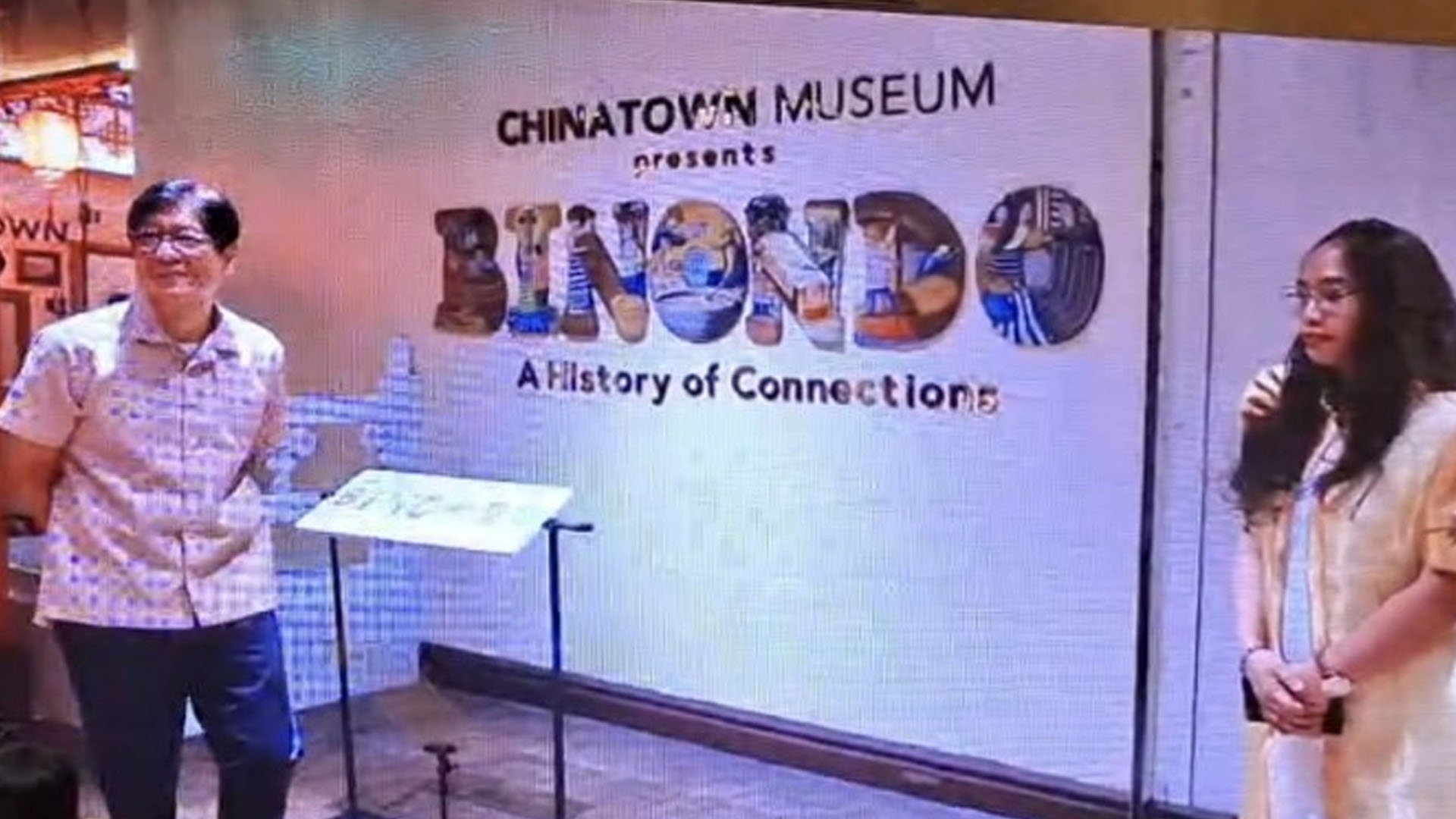







President Ferdinand R. Marcos Jr. on Friday expressed optimism that the revitalization of Binondo, the world’s oldest Chinatown, would boost local tourism and economic activity.
Marcos led the walkthrough of the second phase of Binondo’s revitalization project through a ceremonial lighting of key cultural and historic sites aimed at strengthening cultural pride, promoting heritage tourism and supporting sustainable urban renewal.
The Manila Chinatown Revitalization Project Phase II illuminated La Madre Filipina, MacArthur Bridge, Sta. Cruz Church, the Four Gates of Chinatown, and major streets such as Quintin Paredes, Ongpin and Sabino Padilla.
The event also showcased the projection mapping at Binondo Church.
“This way, Binondo becomes more accessible and more appreciated by more people, especially the younger generation. These efforts will reinforce the district’s historical role as a center of trade, of faith, and community, and support culture-based tourism and local economic activity,” Marcos said.
“This project is for the benefit of Chinese-Filipinos who call Binondo home, and for every Manileño who visits and travels through its busy streets every day. Moreover, it is for every Filipino and for anyone who wishes to gain a better understanding of our culture and our history,” he added.
The sites in Binondo celebrate over four centuries of Filipino-Chinese heritage, allowing this legacy to be seen, appreciated and shared by current and future generations.
Marcos pledged to further develop Ongpin Street into a cultural and economic hub, as well as enhance key historical landmarks with lighting and thematic presentations, including along Escolta Street.
The initiatives complement the progress made under the Pasig Bigyang Buhay Muli Program, Marcos said, noting that the Pasig River Ferry system would be developed to link Manila Bay and Laguna Lake.
“From reclaiming public spaces such as Plaza Mexico and expanding pedestrian corridors towards Arroceros Forest Park, to modernizing river transport and clearing our waterways, we are restoring life to the river and the communities beside it,” Marcos said.
“Now, people can walk, can jog or bike from neighboring Intramuros, pass the Manila Central Post Office, cross Jones Bridge, and arrive here in Binondo,” he added.
The Chinatown Revitalization Project Phase II followed the success of the ceremonial lighting of iconic Jones Bridge, which formed part of the project’s first phase.
Marcos expressed optimism that the undertaking would yield favorable outcomes.
“Beyond its age, what makes this place special is its long story of commerce, faith, and culture between Filipinos and the Chinese community. This initiative is all about honoring shared histories and giving the district the much-needed attention and respect that it deserves,” he said.
Founded in 1594, Binondo is a historic hub for trade and cultural exchange, positioning the district as a prime destination for culture, tourism and economic activity in the heart of capital Manila. (PNA)


