










A partnership with the private sector and local government units (LGUs) is key to increasing forest plantations, rather than relying on the national government for funding for tree-planting initiatives.
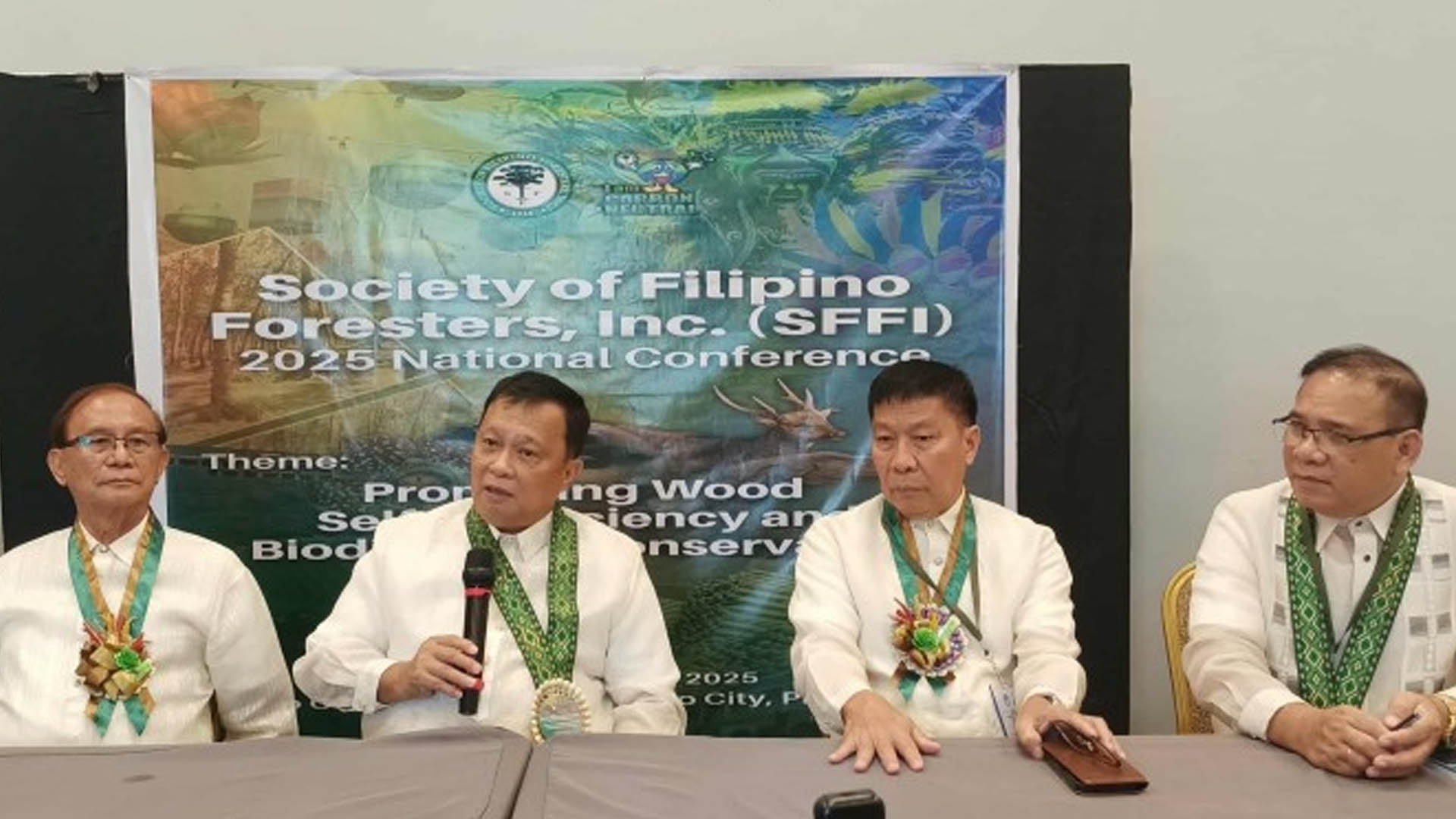
In a press conference on the sidelines of the national conference of the Society of Filipino Foresters, Inc. (SFFI) in this city, its president, Roberto Oliva, said the dream of the provincial government of Iloilo to make it a forest province is a very strong statement.
“We are very happy that both the province and the city are coordinating with the DENR (Department of Environment and Natural Resources) to really make the province of Iloilo green again,” he said.
He said one innovative strategy to establish more plantations is to involve local governments and the private sector.
Planting more trees in protected areas, doing eco-tourism, and compatible uses help promote biodiversity, he said.
“The Philippines is one of the 17 megadiverse countries in the world,” he said.
DENR 6 (Western Visayas) Executive Director Raul Lorilla said the region has about 400,000 hectares of forest land and 12 percent forest cover.
“We still have a long way to go to achieve the 48 percent requirement. But we are continuing the efforts – the tree planting, the tree-growing of LGUs, and other rehabilitation efforts, including the forest protection of the existing plantation,” he said.
The ideal forest ratio is about 48 percent to 52 percent.
He added that through the National Greening Program, they have already planted 11,000 additional trees in Western Visayas.
Nearly 1,500 foresters across the country gathered in Iloilo City for the national conference of the SFFI, which is anchored on the theme “Promoting Wood Self-Sufficiency and Biodiversity Conservation.”
The conference, which began at the Iloilo Convention Center here on Wednesday and will continue until Sunday, will have discussions focused on the role of foresters in promoting balance between wood sufficiency and biodiversity conservation, biodiversity on energy business operations, and simplifying policies on wood sufficiency and biodiversity conservation.
They will also visit the award-winning Katunggan Integrated Ecopark in Leganes town, the Bulabog Putian Natural Park in Dingle, the Forest Management Project Site in Janiuay, and the Taklong Island Marine Reserve in Guimaras.
Katunggan Ecopark used to be an abandoned fishpond turned into a mangrove forest, while Bulabog Putian is a protected area. (PNA)


