



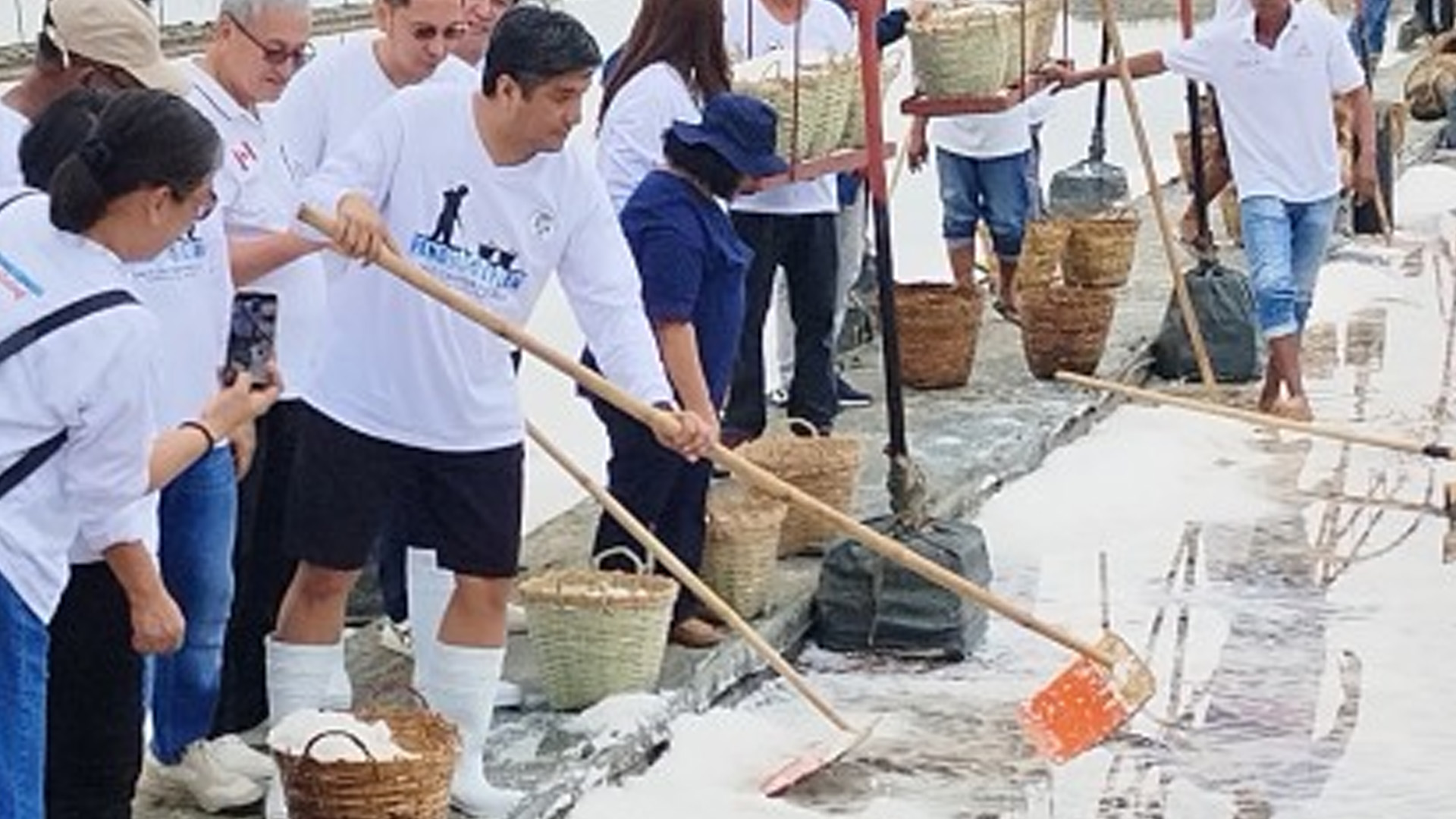







The Pangasinan Salt Center at Barangay Zaragosa in Bolinao town targets to produce 8,000 metric tons of salt in 2025, depending on weather conditions.
Assistant Provincial Agriculturist Nestor Batalla, in a phone interview on Friday, said they allocated around PHP50 million for the salt center next year, and have benchmarked in China for possible adoption of its technologies on salt-making.
“The provincial government of Pangasinan is seriously committed to the salt production since the province’s name was derived from Panagasinan or salt-making,” he said.
Batalla said they have established a storage area in the center and road networks have been ensured.
“We are planning to establish a processing center and aquaculture project and tourism program in the coming years,” he said.
“Despite the challenges, the salt farm was able to produce 6,400 metric tons and more than half of the production was procured by the Philippine Coconut Authority (PCA),” he noted.
The province’s salt industry got a boost after the Pangasinan State University’s (PSU) Accelerating Salt Research and Innovation (ASIN) program was awarded an initial PHP90 million grant through the Niche Centers in the Regions for Research and Development (NICER) by the Department of Science and Technology’s Philippine Council for Industry, Energy, and Emerging Technology Research and Development (DOST-PCIEERD). (PNA)


