










The Negros Oriental Chamber of Commerce and Industry (NOCCI) is supporting decarbonization efforts across the country as it advocates for a Philippine carbon credit law.
In an interview on Monday, NOCCI president Edward Du said they are aware of activities and practices that reduce the carbon footprint and greenhouse gas (GHG) emissions, whether by individuals or groups, but these are only minor contributions.
“We must encourage our members to actively participate in reducing their emissions at the source, but many still require education on the advantages of backing a low-carbon economy,” Du said.
“Should we establish a carbon credit law detailing the specifics of carbon trading, we might engage in such initiatives soon, but for the moment, our capabilities are limited,” he added.
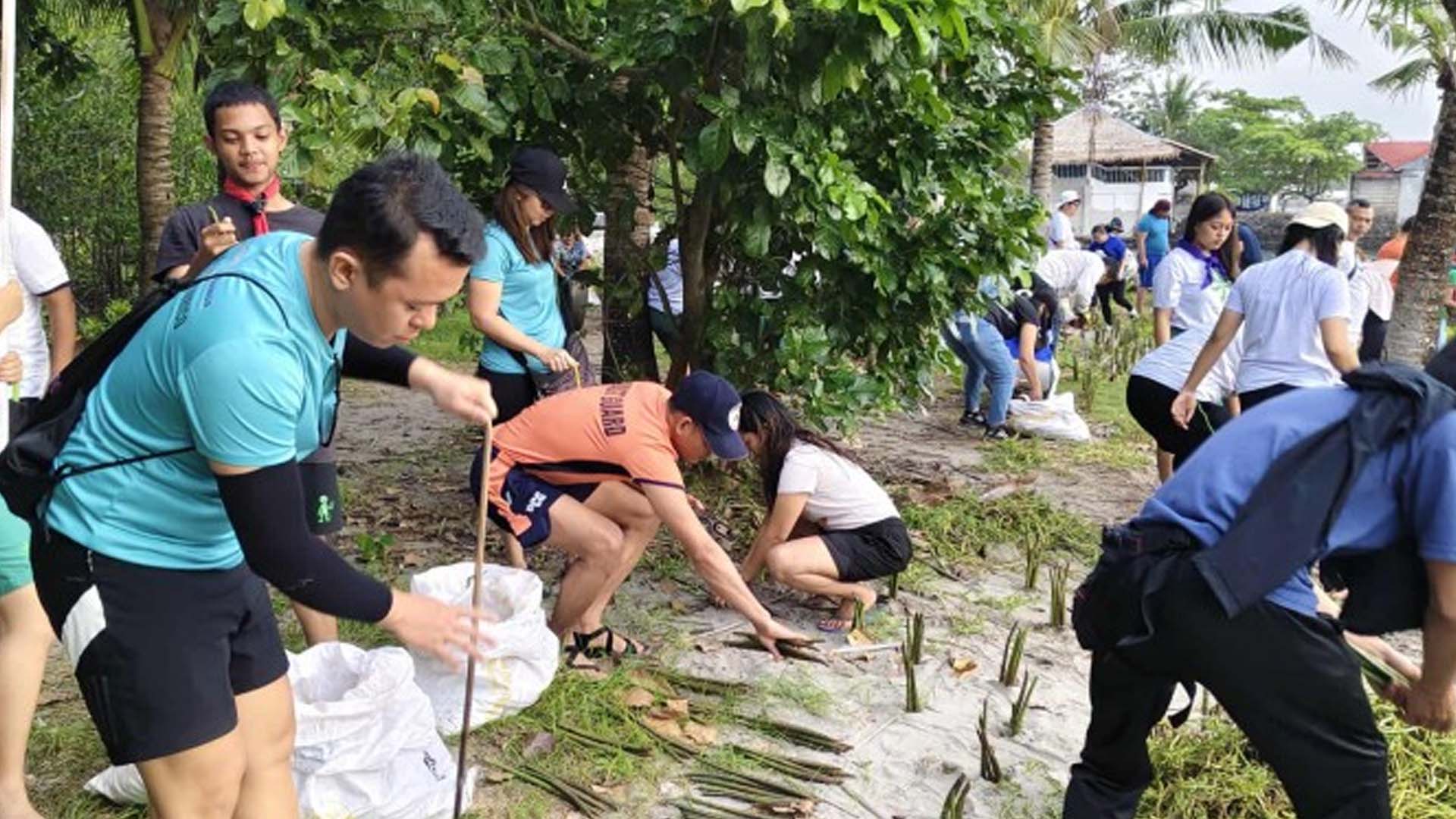
He emphasized that their contribution primarily involves a four-year continuous planting of mangrove trees, which follows a major reforestation initiative on Negros Island.
NOCCI supported the “10 Million in 10 Years for a Greener Negros” (10 M in 10), a regreening initiative that successfully planted 10 million native trees across the island in just six years, in partnership with the Energy Development Corporation (EDC) and the Department of Environment and Natural Resources (DENR).
After the sixth year in 2021, when the initiative met its goal of planting 10 million trees, Du emphasized that NOCCI and its affiliates, including the Alliance of Mangrove Planting Organizations (AMPO) and New Bian Yek Commercial Inc. (NBYCI), continue mangrove planting efforts.
AMPO planting coordinator Sidney Lee said the alliance has planted over 1.3 million mangrove seedlings at several sites in the province.
Lee said mangrove planting is done every three months, with different AMPO members like NBYCI and NOCCI taking turns in leadership roles.
However, he admits that there are no current efforts to document or collect data on how these mangroves contribute to carbon sequestration.
Du mentioned they would check with EDC to see if they can assist in connecting with a third-party expert for calculating the carbon dioxide sequestration of the mangroves they have planted.
He also mentioned that they will request assistance from the DENR for calculating the carbon sequestration of these mangroves.
Du noted that a third-party evaluator confirmed that the trees planted in the 10 M in 10 initiative, achieving a survival rate of 79 to 85 percent, resulted in a total of 307,552 metric tons of carbon dioxide emissions avoided through the initiative.
In the meantime, Du said it is too early for them to participate in carbon trading, as it is a complicated issue and there is currently no legislation in the Philippines on the matter.
He believes, though, that a bill pending in Congress will soon be passed and that they will support it.
The Philippines lacks a comprehensive “carbon credit law” but is developing its legal framework with initiatives like the proposed House Bill (HB) 11375 for national carbon pricing, and the ongoing work of the Department of Energy and Natural Resources to create a carbon credit registry and platform.
HB 11375, also known as the proposed “Low Carbon Economy Investment Act,” authored by Rep. Jose Manuel Alba of Bukidnon, aims to establish a national carbon pricing system and implement measures to reduce carbon emissions and promote climate-resilient economic growth. (PNA)


