



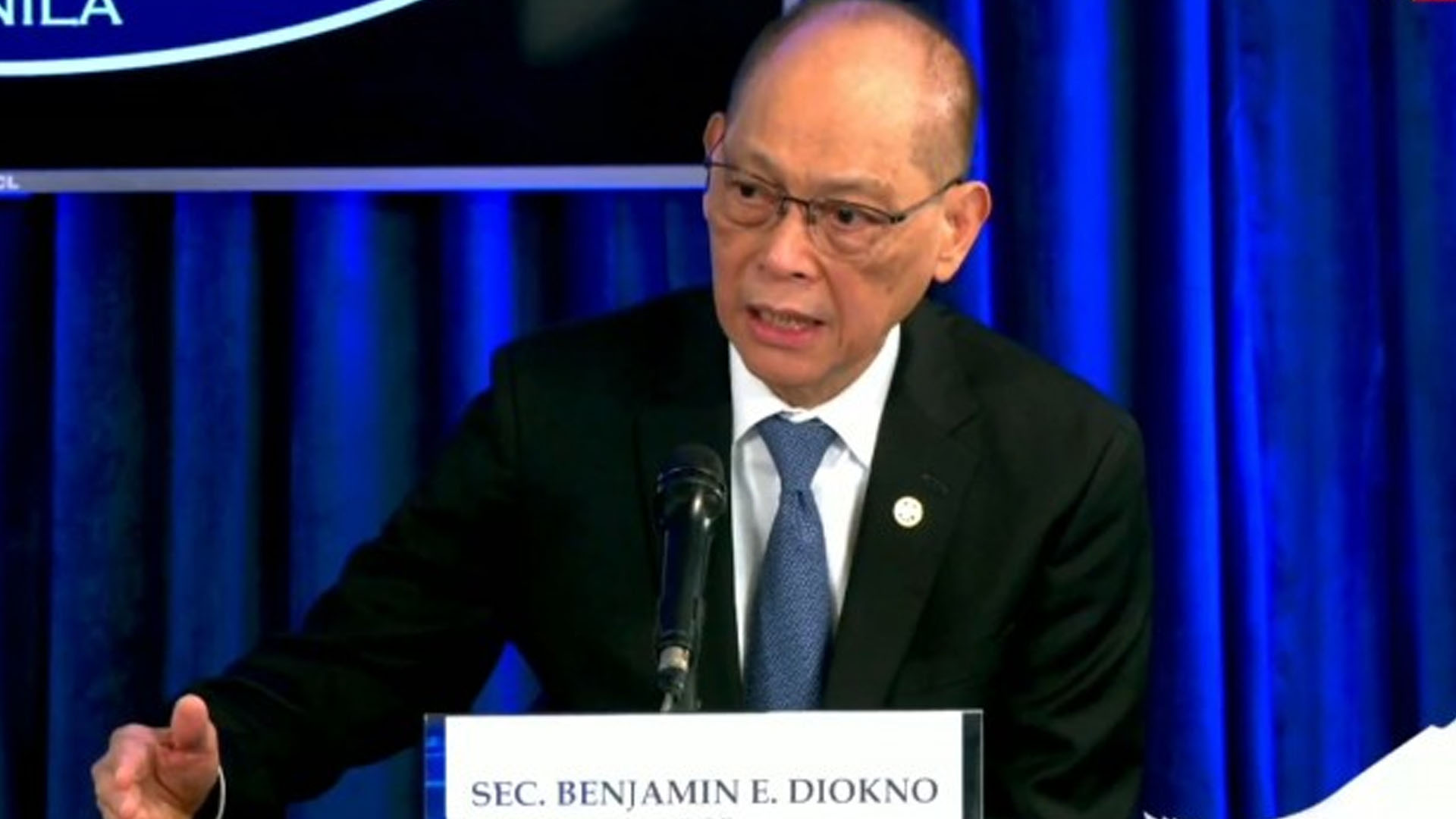







Finance Secretary Benjamin Diokno has called for reforms and increased concessionality in the financing models of multilateral development banks (MDBs) to address ongoing global challenges.
In a statement, the Finance department said Diokno made the call during the Intergovernmental Group of Twenty-Four (G-24) Ministerial Meeting in Morocco on Oct. 10, 2023.
“The response of multilateral development banks to the [coronavirus disease 2019] pandemic and post-pandemic recovery has stretched their lending capacity. This threatens their ability to respond to ongoing crises, including climate-related hazards, food insecurity, public health risks, and learning poverty,” Diokno said during his intervention.
Diokno welcomed proposed additional measures that could further increase the financing capacity of MDBs.
The Finance chief acknowledged the World Bank’s (WB) successful implementation of recommended measures by the G20 Capital Adequacy Framework —creating up to USD50 billion of additional lending capacity over the next 10 years.
While there are innovative solutions such as guarantee facilities to enhance MDB lending capacities, Diokno cautioned the use of hybrid capital on the borrowing cost of member countries in consideration of the high interest rates globally.
“In this context, we welcome the proposed additional measures that could further increase the WB’s financing capacity, especially towards providing concessionality for low- and middle-income countries,” he said.
To scale up support for emerging and developing economies (EMDEs), Diokno proposed that MDBs make available better financing terms especially amid rising interest rates and increasing costs of international borrowing.
“The rapid increase in the level of the Secured Overnight Financing Rate (SOFR) poses significant risk burdens to IBRD countries such as the Philippines,” he said.
Due to the intensifying climate crisis, Diokno also urged MDBs to provide more concessional financing for climate adaptation and mitigation projects in support of the USD4 trillion to USD6 trillion investment requirement for the global transformation to a low-carbon economy.
“Better concessionality in climate finance is a necessary step towards climate justice,” he added.
The G-24 coordinates the position of developing countries on monetary and development issues in the deliberations and decisions of the Bretton Woods Institutions, namely the WB and the International Monetary Fund (IMF).
In particular, the G-24 focuses on issues on the agendas of the International Monetary and Financial Committee and the Development Committee, as well as in other relevant international fora.
G-24 members include Algeria, Argentina, Brazil, Colombia, Congo, Côte d’Ivoire, Ecuador, Egypt, Ethiopia, Gabon, Ghana, Guatemala, Haiti, India, Iran, Kenya, Lebanon, Mexico, Morocco, Nigeria, Pakistan, Peru, Philippines, South Africa, Sri Lanka, Syria, Trinidad and Tobago, Venezuela and China (special invitee).
During the meeting, Diokno was also introduced as the new chairperson of the G-24 for 2023 to 2024.
The Finance Secretary served as the first vice-chair of the G-24 Bureau in 2022-2023 and second vice-chair in 2021-2022.
“Together with the First Vice Chair, represented by Argentina, and the Second Vice Chair, represented by Nigeria, I look forward to putting our thoughts together and building consensus on the most pressing development issues confronting the world today, considering the diverse contexts of our respective countries,” Diokno said. (PNA)


