



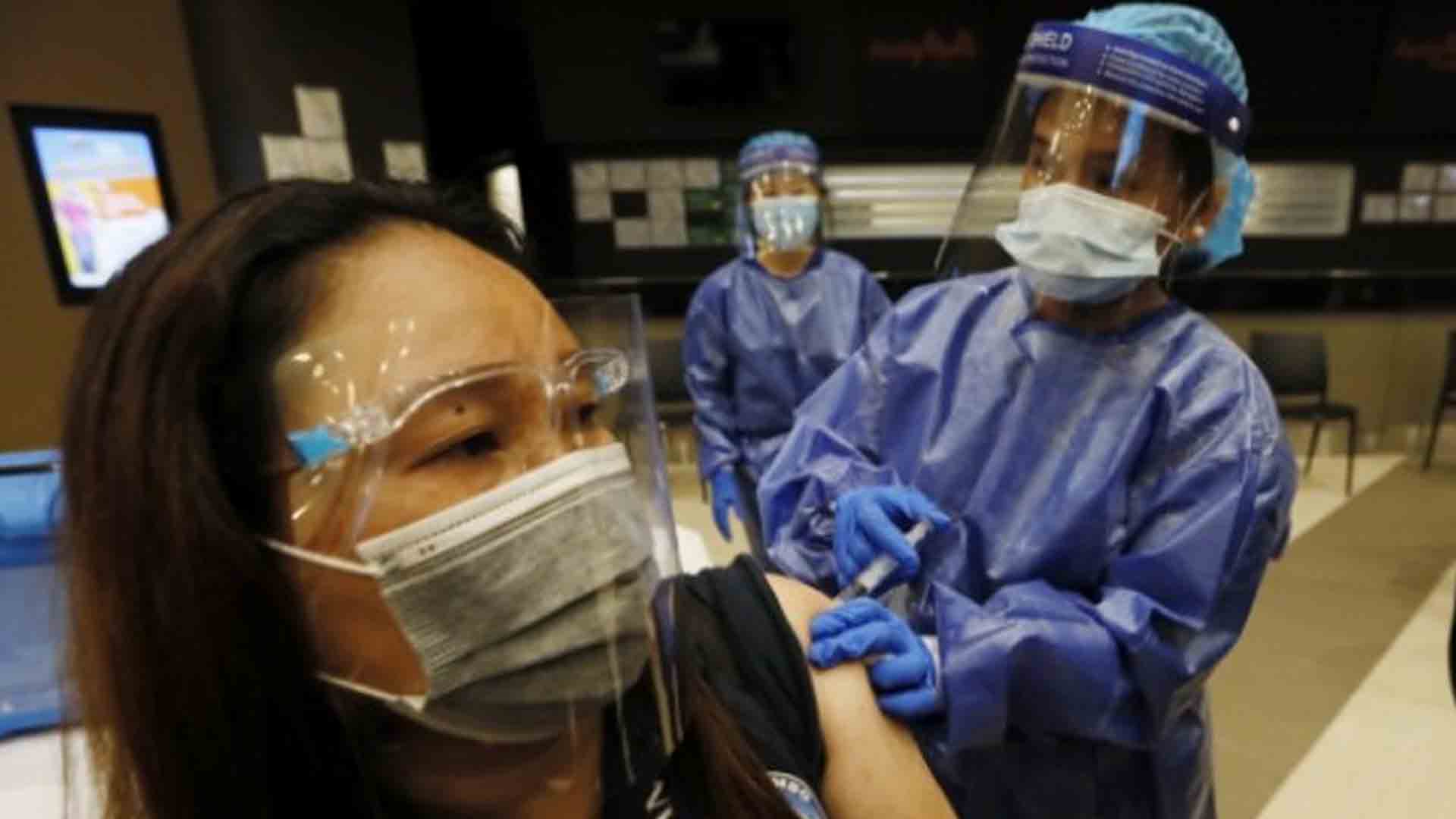






Malacañang on Thursday said it supports the proposal to use China’s Sinovac-made “CoronaVac” vaccines on Filipino senior citizens despite earlier recommendations to limit its use on healthy individuals aged 18 to 59.
Vaccine czar Carlito Galvez Jr. earlier raised the possibility of using CoronaVac vaccine on the elderly since it has so far shown minimal adverse effects.
Presidential Spokesperson Harry Roque backed Galvez’s statement, saying that other nations have also started using CoronaVac for their senior citizens.
“[We are] very supportive po dahil alam natin na napakadaming bansa na sa daigdig ang gumagamit ng Sinovac para sa senior citizens (because we know that many nations around the world are using Sinovac for senior citizens),” Roque said in a virtual presser.
Galvez said around 4 million senior citizens are currently in the government’s masterlist for inoculation, but the number could eventually reach 9 million.
The Food and Drug Administration (FDA) previously granted Emergency Use Authorization (EUA) to CoronaVac but recommended its use on clinically healthy individuals aged 18-59 due to its low efficacy rate.
On Feb. 26, the Inter-Agency Task Force for the Management of Emerging Infectious Diseases (IATF-EID) approved the recommendation to use CoronaVac on healthcare workers.
Roque said additional data may be presented to the Food and Drug Administration (FDA) for possible changes to the EUA.
“I think steps will be taken to ask the local representative of Sinovac to present additional data sa FDA para mabago po yung EUA na inissue ng FDA. Ang kailangan lang naman po ng FDA additional data (to the FDA so that they can modify the EUA being issued by FDA. All the FDA needs is additional data),” he added.
Last month, Sinovac released Phase 1 and 2 clinical trial data which showed that its CoronaVac vaccine will be safe and stable in healthy adults aged 60 years old and above.
Vaccine efficacy is usually reduced in older adults due to their declining immune systems, but findings showed that CoronaVac is well tolerated by the body and immunogenic in healthy adults aged 60 and older.
Health authorities have assured that CoronaVac is still effective in preventing moderate and severe Covid-19 symptoms as well as death.
Currently, frontline healthcare workers, who are in first in line to receive jabs, have the freedom to choose which vaccine brand they will receive.
The national government aims to finish the inoculation of medical front-liners by next month, with senior citizens next in line.
Aside from CoronaVac, the only available vaccine in the country is the United Kingdom’s AstraZeneca. The bulk of vaccine doses are expected to arrive by the second quarter of the year.
To date, 97 percent of Covid-19 vaccine doses have been distributed to around 956 vaccination sites throughout the country. (PNA)


