



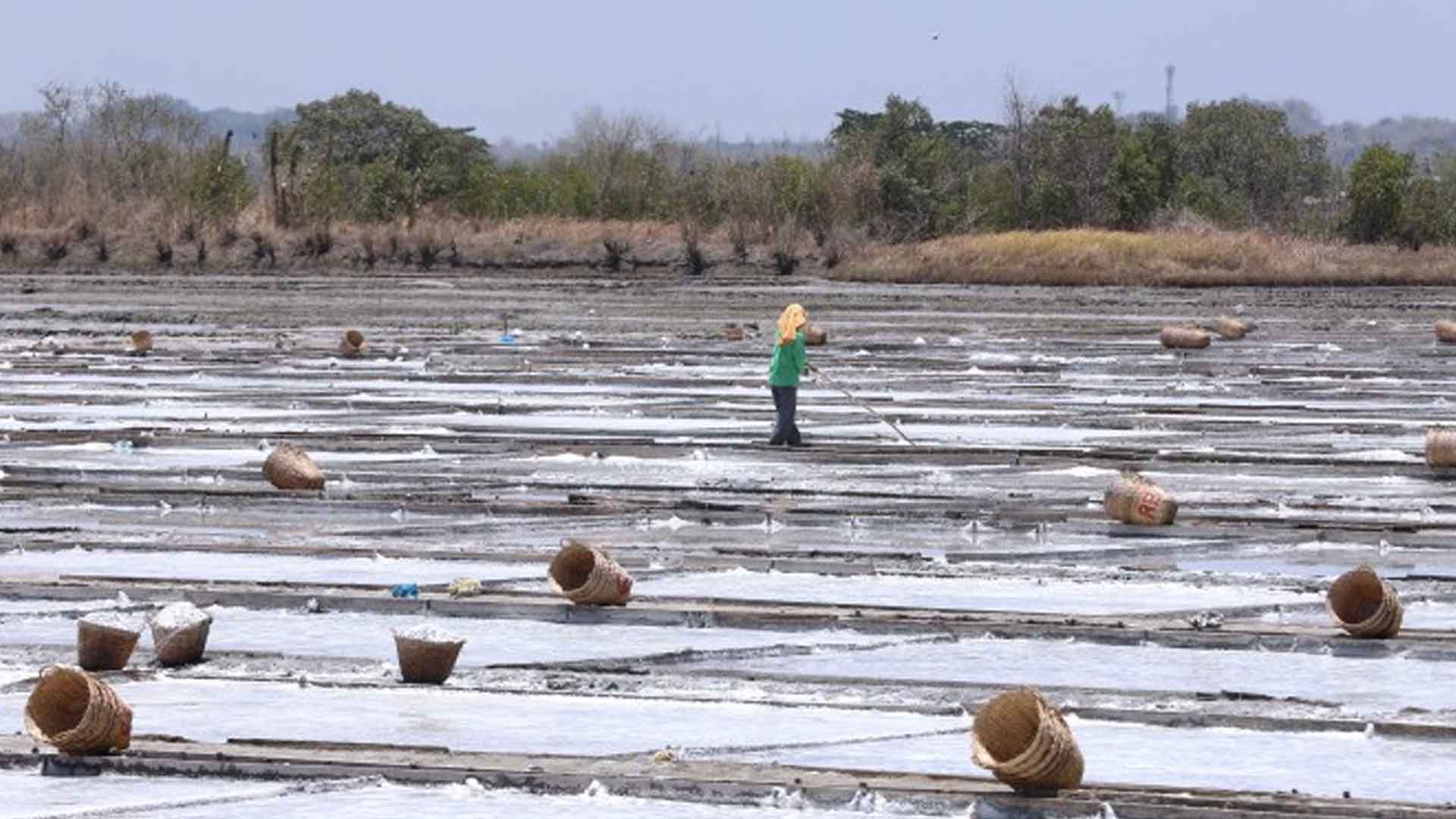







The Department of Agriculture (DA) on Monday said the passage of Republic Act No. 11985 or the Philippine Salt Industry Development Act poses favorable benefits to farmers amid efforts to boost local production.
Among the key areas in the priority regions for implementation are Ilocos, Cagayan Valley, Central Luzon, Western Visayas and Zamboanga Peninsula.
DA Assistant Secretary Arnel de Mesa said the law enables the DA to allocate a fund to strengthen the industry.
“Malaking tulong para sa mga salt farmers natin… So, mayroong particular na pagtutok ngayon para palaguin iyong salt industry development dito sa bansa kasi napakalawak ng coastline natin (It’s a huge help to our salt farmers… So, there’s a particular focus to boost salt industry development in the country because of our vast coastlines),” he said in an interview.
Besides fund allocation, the law also instructs the formulation of a five-year roadmap for the salt industry and the creation of a council headed by the DA, among others.
“Ngayon, may mga specific programs pa na dapat gawin (Now there are some specific programs needed to be established) on mechanization, post-harvest, development, and maraming ahensyang (there are many agencies) involved,” De Mesa added.
De Mesa said tariffs from imported salt shall be utilized for the Salt Industry Development Competitiveness Enhancement Fund (SIDCEF).
Under SIDCEF, 50 percent of the tariffs will go to mechanization, 40 percent for post-harvest, 5 percent for extension, and 5 percent for research and development.
De Mesa underscored the need for such a law considering the minimal salt production, which is significantly low compared to the 600 million metric tons of actual demand for edible salt.
In 2022, the country reported over 90 percent salt importation, equivalent to 550 million metric tons per year. (PNA)


