



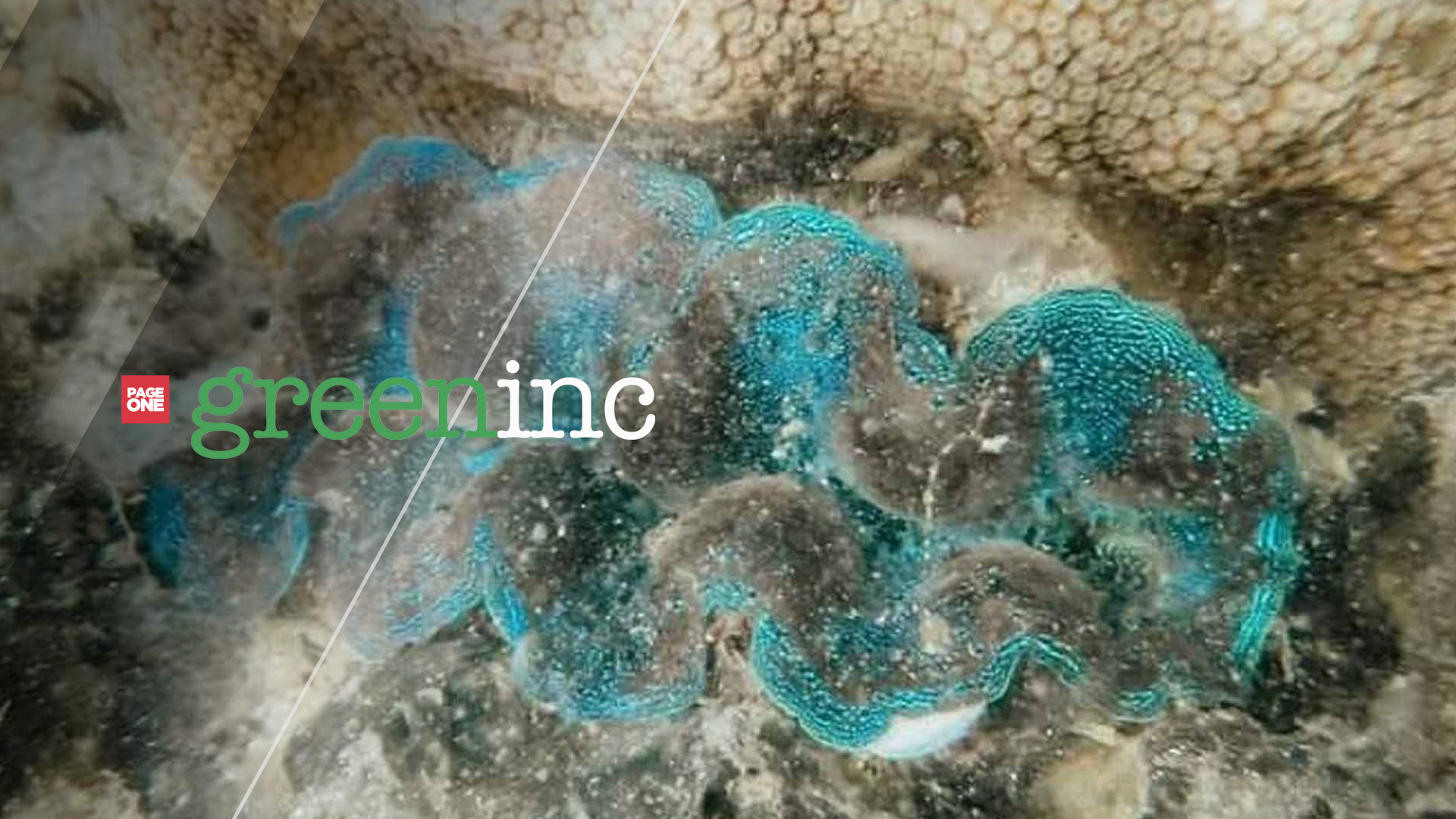







This city in northern Negros Occidental is showcasing its marine conservation efforts through the Giant Clams Village or G.C. Ville, a 1.3-hectare mollusks habitat adjacent to the famous Lakawon Island Resort in Barangay Cadiz Viejo.
Positioned as the city’s next major ecotourism attraction, the G.C. Ville now has about 2,050 clams after more than two years of spawning.
Mayor Salvador Escalante Jr. said on Sunday afternoon that following the observance of Earth Hour over the weekend, they will help raise awareness to preserve and protect the environment through the G.C. Ville.
“Based on our research, there is nothing like this in other parts of the country,” he added.
Started only in 2020, the G.C. Ville was one of those inspiring stories that came out of the Covid-19 lockdown.
In 2019, months before tourism was put to a halt by the pandemic, resort staff Yhen Osorio, 36, and her friends have been gathering seashells as a pastime.
It was during one of their outings that she found three giant clams, became fond of them, and decided to take care of the mollusks.
When the pandemic struck, the Lakawon Island Resort had to close down and she then planned to return home to Sara, Iloilo.
Not knowing who will watch over the mollusks, she approached the Office of the City Agriculturist (OCAG), which eventually realized the importance to preserve the giant clams and to rehabilitate the marine area.
“I didn’t know what kind of shells they were, I just collected them. They were multiplying. They have different colors. I’m happy when I see them,” Osorio said.
She said that when the OCAG decided to take in the giant clams, OCAG head Enrique Escares III asked her to be the caretaker.
Osorio, without a background in marine conservation but with a passion for giant clams, accepted the challenge and stayed on the island.
The G.C. Ville came to life, with all its “streets”, one of them named after the mayor, known to Osorio, who snorkels and dives with her team to check the area practically every day.
Four species of giant clams populate the G.C. Ville: the Tridacna squamosa or the fluted giant clam; Tridacna crocea or the boring giant clam; Tridacna maxima or the small giant clam; and Hippopus hippopus or the Horse Hoof clam.
Escalante described Osorio as “heaven sent,” whose passion and interest in the giant clams are aligned with the city’s marine conservation efforts.
He said a local ordinance has already been passed declaring the area marine reserve.
Ressa Deldo-Tabigo-on, aquaculturist I at the OCAG, said giant clams are considered an endangered species.
“They need to be protected. Although we can say more than 2,000 giant clams are already many, but we still need to know if there are more in other areas,” she added.
Giant clams serve as filter feeders, cleaning the water of pollutants as they ingest algae or plankton, according to Endangered Species International.
“Fishing or taking of rare, threatened or endangered species” is prohibited under Republic Act 10654 or “An Act to Prevent, Deter and Eliminate Illegal, Unreported and Unregulated Fishing”. (PNA)


