



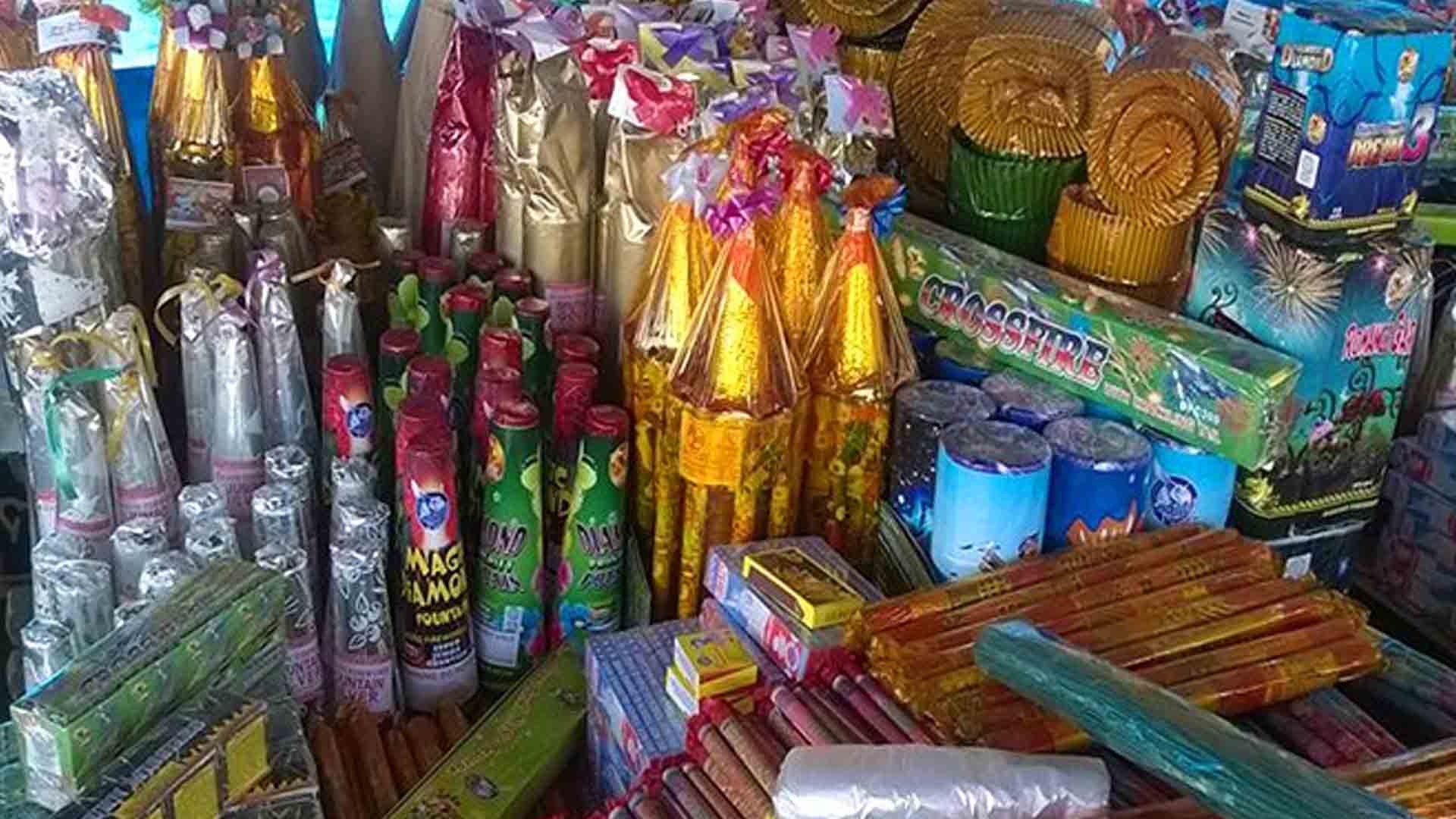






The public interest group EcoWaste Coalition said they believe breaking with the traditional New Year’s Eve merrymaking, which uses firecrackers and fireworks, would be a good thing.
EcoWaste campaigner Thony Dizon said Thurday aside from preventing spikes in air pollution and accidents nationwide, discontinuing such kind of celebration would help curb the spread of the coronavirus disease 2019 (Covid-19).
“People tend to congregate where firecracker use and fireworks are. That doesn’t promote social distancing,” Dizon said.
He noted that people could still welcome the New Year with a bang through alternative and physically distanced activities, such as blowing horns and playing upbeat music.
Social distancing, wearing of face masks, and frequent washing of hands are the government’s basic health protocols against Covid-19.
The government came up with such protocols to help mitigate the spread of the Covid-19 virus, which lurks in droplets expelled by infected persons through coughing, sneezing, and speaking.
The Department of Health reported 28,789 active Covid-19 cases nationwide as of November 26.
Last week, EcoWaste proposed to the Inter-Agency Task Force for the Management of Emerging Infectious Diseases (IATF-EID) a nationwide ban on the use of firecrackers and staging fireworks in welcoming 2021.
Firecracker use and fireworks displays endanger the environment and public health, EcoWaste said.
“Money for firecrackers and fireworks can otherwise be used for truly important purposes instead,” Dizon said, noting that it could be spent to provide necessities for victims of disasters, hazard pay for front-line workers, or seed capital for employees retrenched amid the onslaught of Covid-19.
EcoWaste, he said, is hoping the government would eventually make the proposed ban permanent.
He, however, pointed out the need to help manufacturers of firecrackers and fireworks paraphernalia shift to other businesses.
Dizon reiterated that lighting firecrackers and fireworks emit air pollutants that weaken the immune system, raising people’s risk for respiratory ailments, such as Covid-19.
“Exposure to toxic pollutants emitted from the bursting of firecrackers and fireworks is dangerous to everyone, especially the elderly and people with underlying medical conditions, including those afflicted with chronic obstructive pulmonary disease, heart problems, diabetes and other illnesses as they tend to develop more severe symptoms of Covid-19,” EcoWaste said in a news release on November 20.
Dizon said EcoWaste is looking forward to soon receiving the IATF-EID’s feedback regarding the proposed ban, particularly as people this time of the year generally begin preparing for the New Year’s Eve celebration.
“We’re hoping IATF-EID’s decision on our proposal will be favorable,” he said.
Dizon said it is possible for the IATF-EID to break with tradition again by instituting the proposed ban as a further precaution against the spread of Covid-19.
“(The) IATF-EID was able to restrict people’s traditional visitation activities during ‘Undas’ this year due to Covid-19,” he said, adding that restricting the people’s entry to and movement in public and private resting places of their departed loved ones helped prevent the spread of Covid-19 from worsening.
In its Resolution 72 series of 2020, the IATF-EID ordered all public and private cemeteries, memorial parks, columbaria, and similar resting places nationwide closed to visitors during “Undas” from October 29 to November 4 this year. (PNA)


