



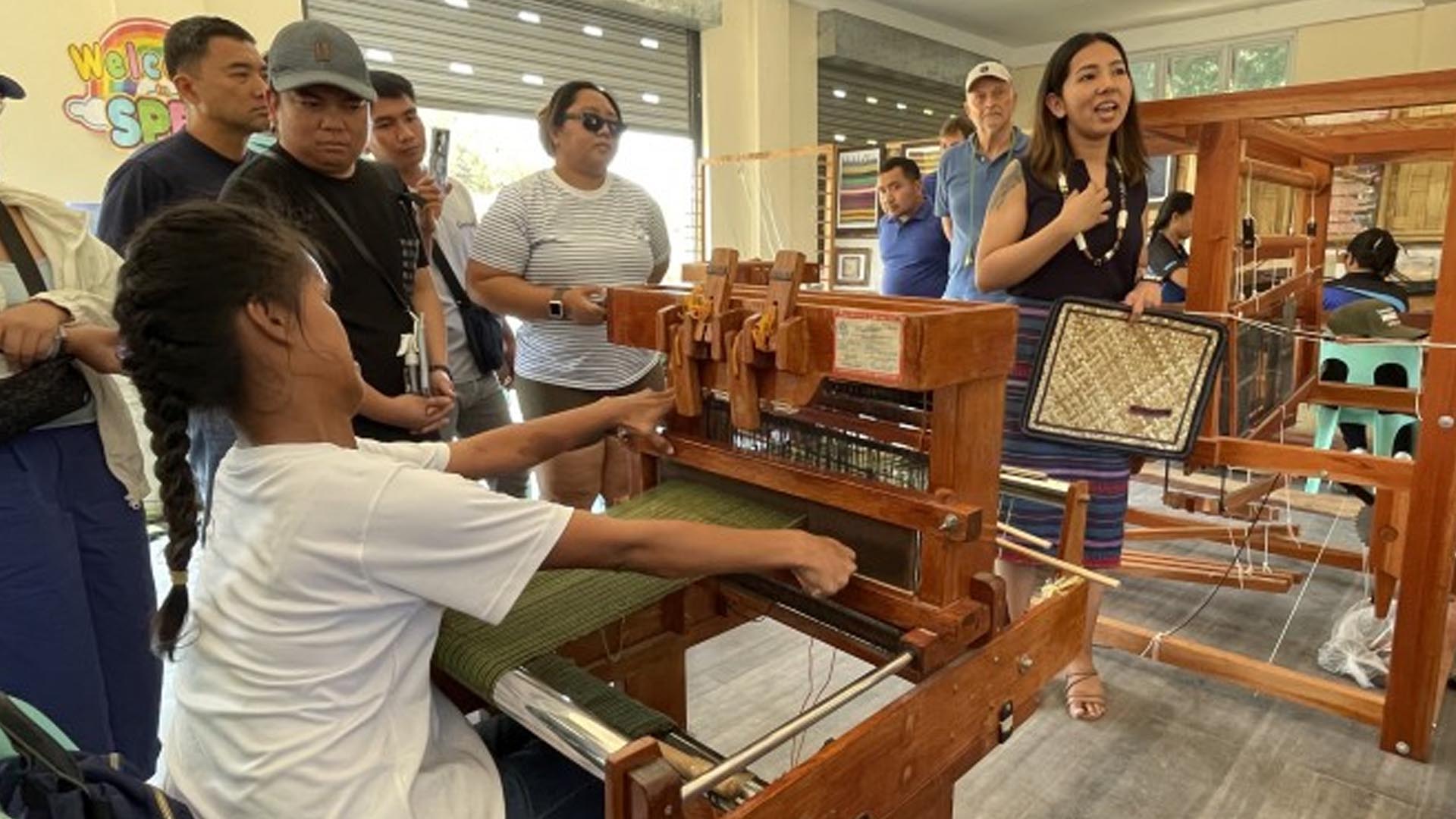







Students with special needs and some members of the Isneg community here get to promote their unique culture and artistry while earning for a living, thanks to modern machines given by the government.
The modified handloom weaving machines, given by the Department of Science and Technology (DOST) in 2020, have been useful in creating unique inabel products such as “aken,” the native cloth attire of the Isneg tribe.
Janice Pagon, 37, a resident of Barangay Quibel in this town, told the Philippine News Agency in a recent interview that weaving “aken” gives her a sense of pride and identity.
“I learned to weave with the help of the DOST,” she said in her local dialect. “I am happy that I am now a part of the weavers of ‘aken’ in Dumalneg.”
Aside from “aken,” Dumalneg weavers have come up with other unique inabel designs, transforming them into other products such as leis for guests and visitors, and place mats, among others.
The livelihood was made possible through Project INABEL (Innovations on Native Attires, Bracing and Encouraging Livelihood), which is a product of DOST’s collaboration with other government agencies to promote the culture of the indigenous peoples (IPs) and communities through weaving of ethnic attires.
This resulted in the formation of the Dumalneg Weavers Association composed of at least 17 individuals who underwent training on the use of traditional handloom weaving equipment.
Participants were also taught how to formulate designs and later on awarded with TheraLoom machines to be used by the weavers.
Students with special needs who found weaving therapeutic are also actively involved in Project INABEL, according to the Dumalneg Weavers Association.
“We thank all the people behind, for this chance to promote inabel not just as a product but weaving as a therapeutic activity specially to the SPED (Special Education) students,” the group said in a statement.
The weavers are hoping that one day, the culture, treasure, artistry and passion of the people of Dumalneg will become more established through weaving.
In support to the loom weaving industry of Dumalneg town, the Department of Tourism in Ilocos Region (DOT-Region 1) recently purchased “abel”-inspired place mats as souvenirs to visitors.
“This is our simple way of promoting their products and empowering local communities,” DOT-Region 1 chief tourism officer Gaye Acacio told the Philippine News Agency on Monday. (PNA)


