



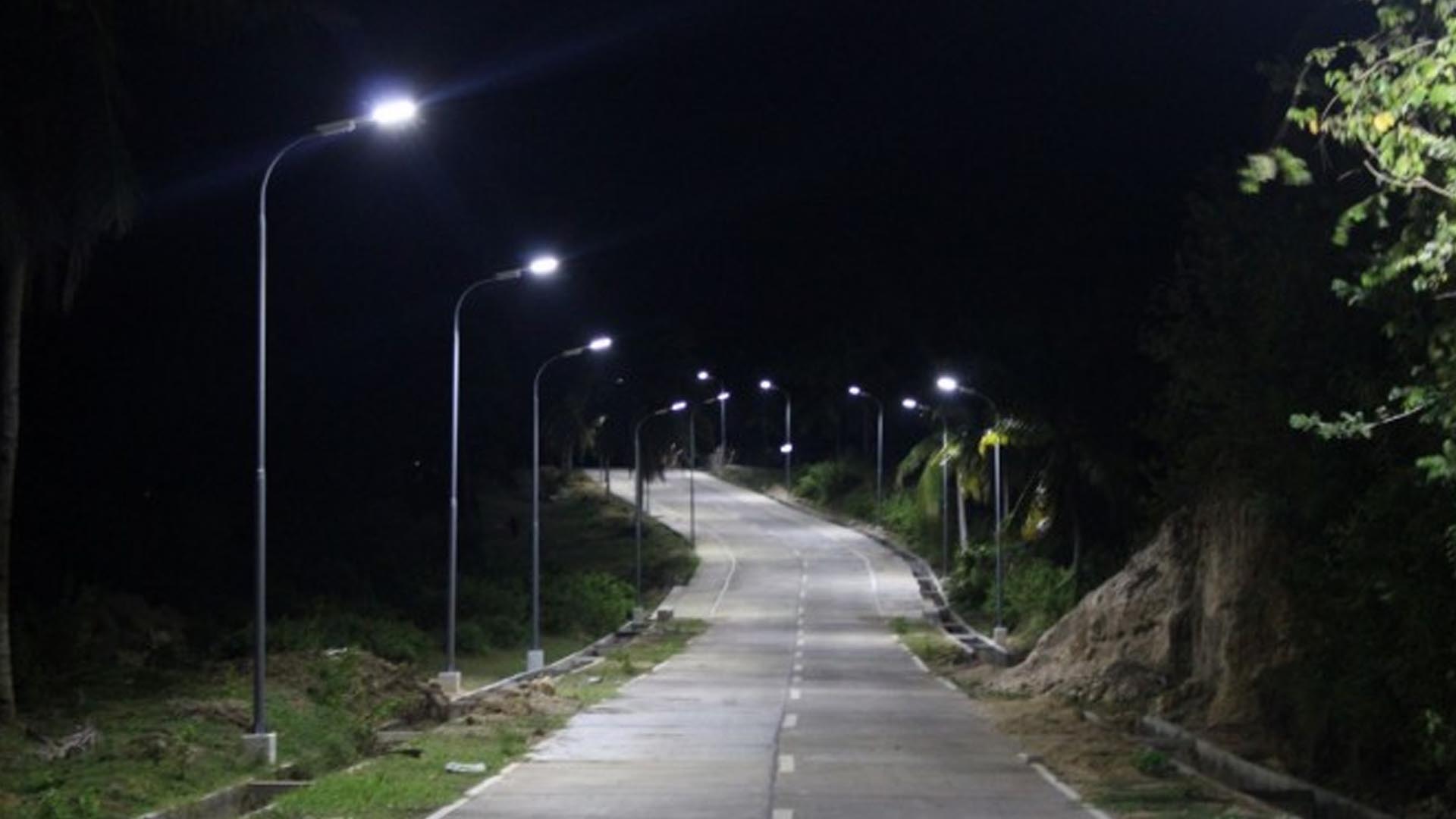






The Department of Public Works and Highways (DPWH) on Thursday released guidelines on the general designs for solar-powered roadway lighting along national roads.
In Department Order (DO) No. 19, series of 2023, Secretary Manuel Bonoan issued the standard design drawings, following the approval of the use of solar-powered street lights on public works projects.
“In future DPWH projects with street light components, we hope to utilize solar-powered roadway lightings considering its stability, long service life, ease of installation, safety, and of course, energy efficiency, making it ideal for use alongside both new and existing roads,” he said in a statement.
The DPWH chief added that the DO 19 will serve as the reference of DPWH Regional Offices, District Engineering Offices, Unified Project Management Office Clusters, and DPWH consultants in the preparation of design plans on road projects.
Among the technical requirements under the guidelines include: street lights must be uniform and free from dark bands or abrupt variations; could be high pressure sodium (HPS) or light emitting diode (LED) lighting.
Also, the color temperature can vary between warm white and warm yellow and the use of ultraviolet light is prohibited; suitable for outdoor use and rated as ingress protection (IP) 65 per International Electrotechnical Commission (IEC).
As for primary national roads, the DPWH said light arrangement may vary from single, axial, opposite, or staggered; secondary roads may use single, opposite, or staggered lighting arrangement; while tertiary roads may use single or staggered lighting arrangement.
The order also sets lamp wattage, mounting height, spacing, and use of pole arms, depending on road classification, width, and number of lanes, and taking into consideration intersections and merging sections that require a higher level of illumination to ensure there is enough light sources on the traveled path. (PNA)


