



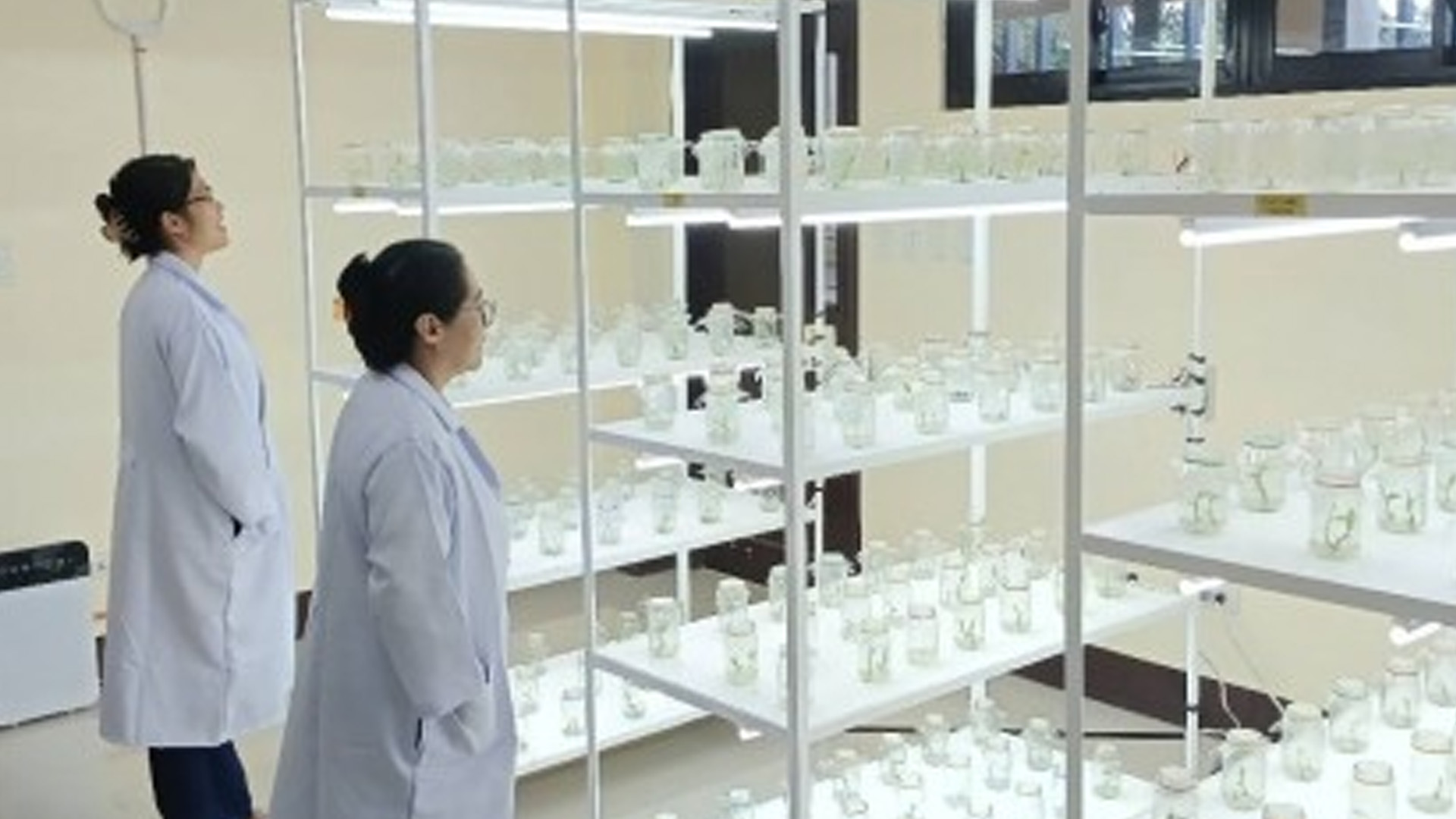







The Department of Science and Technology (DOST) launched on Thursday an abaca tissue culture laboratory inside the Southern Leyte State University (SLSU) – Hinunangan Campus to improve the production of high-value crops in the province.
The project, with funding of PHP1 million under the DOST Grants-in-Aid (GIA) program, aims to produce high-quality, disease-free planting materials to enhance crop yield, DOST Secretary Renato Solidum said in an interview with the Philippine News Agency.
“These are technologies that make sure that starting planting material is healthy. Good production is necessary for any commodity, and it starts with good planting materials produced in a tissue culture laboratory,” Solidum said.
The facility will also serve as a hub for research and development on indigenous and high-value crops, supporting innovation in sustainable agricultural practices.
The laboratory initially focuses on the Inosa variety of abaca, a crop identified as highly prolific in Southern Leyte’s native environment.
Through tissue culture techniques, researchers aim to accelerate the propagation of abaca and improve planting material quality for local farmers, according to Solidum.
SLSU officials said additional Inosa abaca specimens have been successfully cultured after the recovery, allowing the project to regain momentum and continue its goal of expanding the production of the high-value crop in the province.
The establishment of the tissue culture laboratory is expected to significantly enhance SLSU-Hinunangan’s role in advancing scientific research and innovation. (PNA)


