



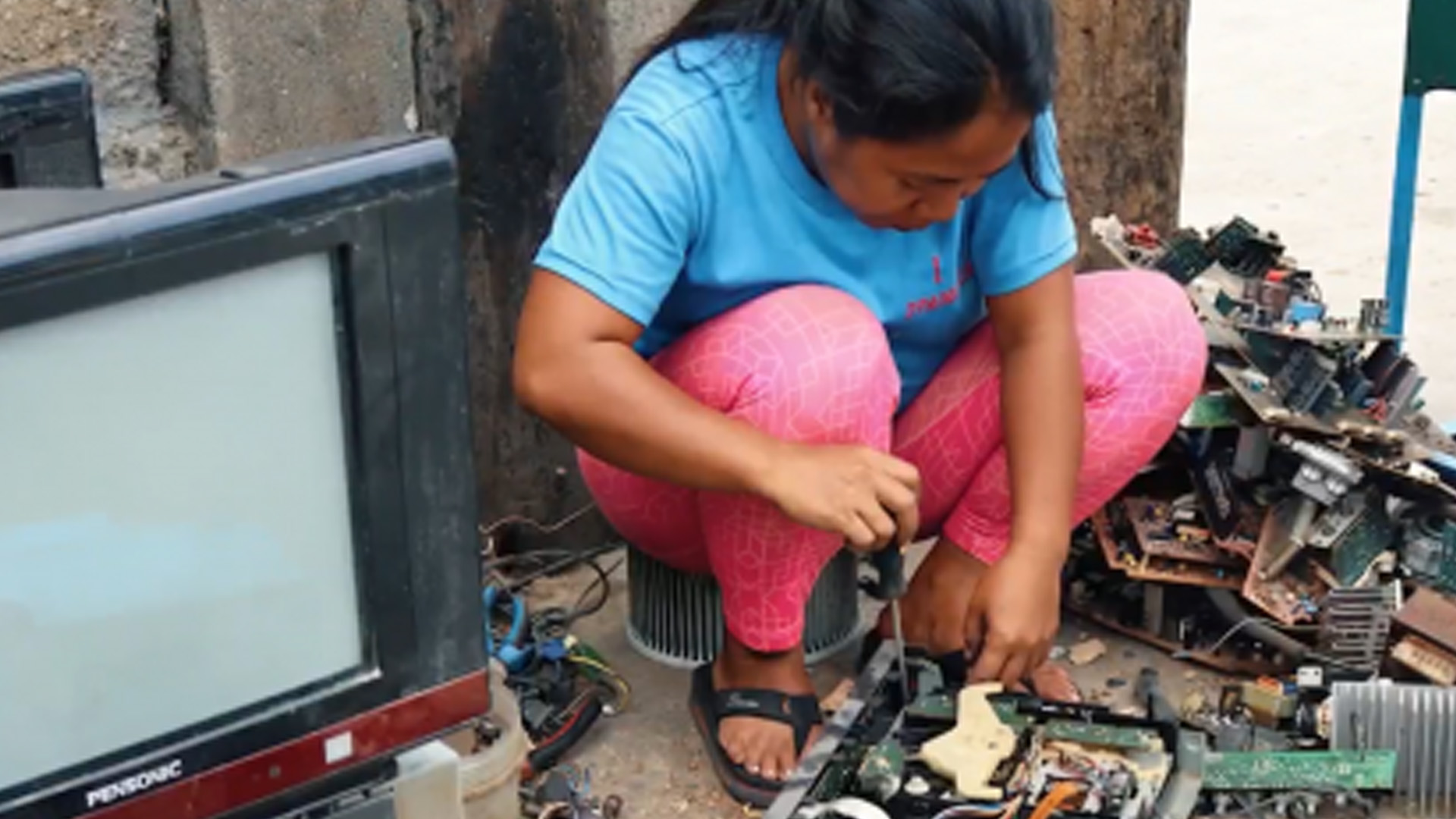







The Department of Environment and Natural Resources- Environmental Management Bureau (DEN-EMB) has collected 2,350 tons of Cathode Ray Tubes (CRTs) or electronic waste found in electrical and electronic appliance, including television sets, during the past seven years.
At the Polychlorinated biphenyl-Waste Electrical and Electronic Equipment (PCB-WEEE) Project Closing held at the Manila Hotel on Wednesday, DENR Undersecretary and Chairperson of the PCB/WEEE Project Steering Committee Jonas Leones shared a positive outlook of the project.
The project aimed to get the cartridges from electronic appliance like TV sets, known as persistent organic pollutants that are detrimental to health, according to Leones.
“Itong project natin ang target sana natin makakuha tayo ng cartridge dun sa tv natin, pag binaklas natin, mga 50,000 units ang kailangan natin makuha at dun natin kukunin yung led. Kailangan natin ma-resolve yung POPs (persistent organic pollutants) natin because these substances or wastes ay very detrimental sa health natin (Our target for this project is to get a cartridge from TVs, when we disassemble it, we need to get about 50,000 units, and that’s where we’ll get the led. With this project, we need to resolve our POPs because these substances or wastes are very detrimental to our health),” Leones said.
He said that studies have shown that chemicals and substances from e-waste are carcinogenic or cancer-causing agents.
“Ngayon katapusan ng project natin (Now that the project has ended) we have accomplished more than the targeted amount or volume that we need to collect,” he said.
The PCB-WEEE Project, which started in 2017, has collected and processed a total of 107,000 units of CRTs TVs and monitors.
From this, 145 tons or 131,542 kilograms of recyclables were generated, 900 tons of lead-containing glass from the CRTs, and 1.12 tons of Polybrominated Diphenyl Ethers (PBDEs) were disposed of.
The DENR said that the established materials recovery facility (MRF) used to segregate and store wastes was upgraded into treatment, storage, and disposal (TSD) facilities, renovating the space to collect and treat e-waste properly.
This has also resulted in the creation of green jobs for residents coming from the four focus areas including Bagong Silang and Camarin in Caloocan City, Longos in Malabon, Capulong in Tondo, Manila, and Baguio City.
Aside from television sets, e-waste also includes other appliance such as refrigerators, freezers and other cooling equipment, computers, telecommunications equipment such as cellphones, consumer electronic devices, solar panels, and monitors and screens, among others.
Meanwhile, Carmela Centeno, chief of the Responsible Materials and Chemicals Management Unit of the United Nations Industrial Development Organization (UNIDO), which serves as co-implementor of the project, said the country is very new in e-waste management and has a long way to go.
However, she said that UNIDO sees a lot of hope in the Philippines in terms of e-waste management as local government units respond positively.
She also noted that more Filipinos, and even producers and manufacturers from the business side, have become aware of the issue.
UNIDO Chief for the Division of Circular Economy and Green Industry Smail Alhilali said that e-waste is one of the fastest waste streams in terms of generation as there are many ICT (information and communication technology) products in the market.
“In terms of e-waste generation on the global level, around 50 to 60 million tons per year,” he said. (PNA)


