



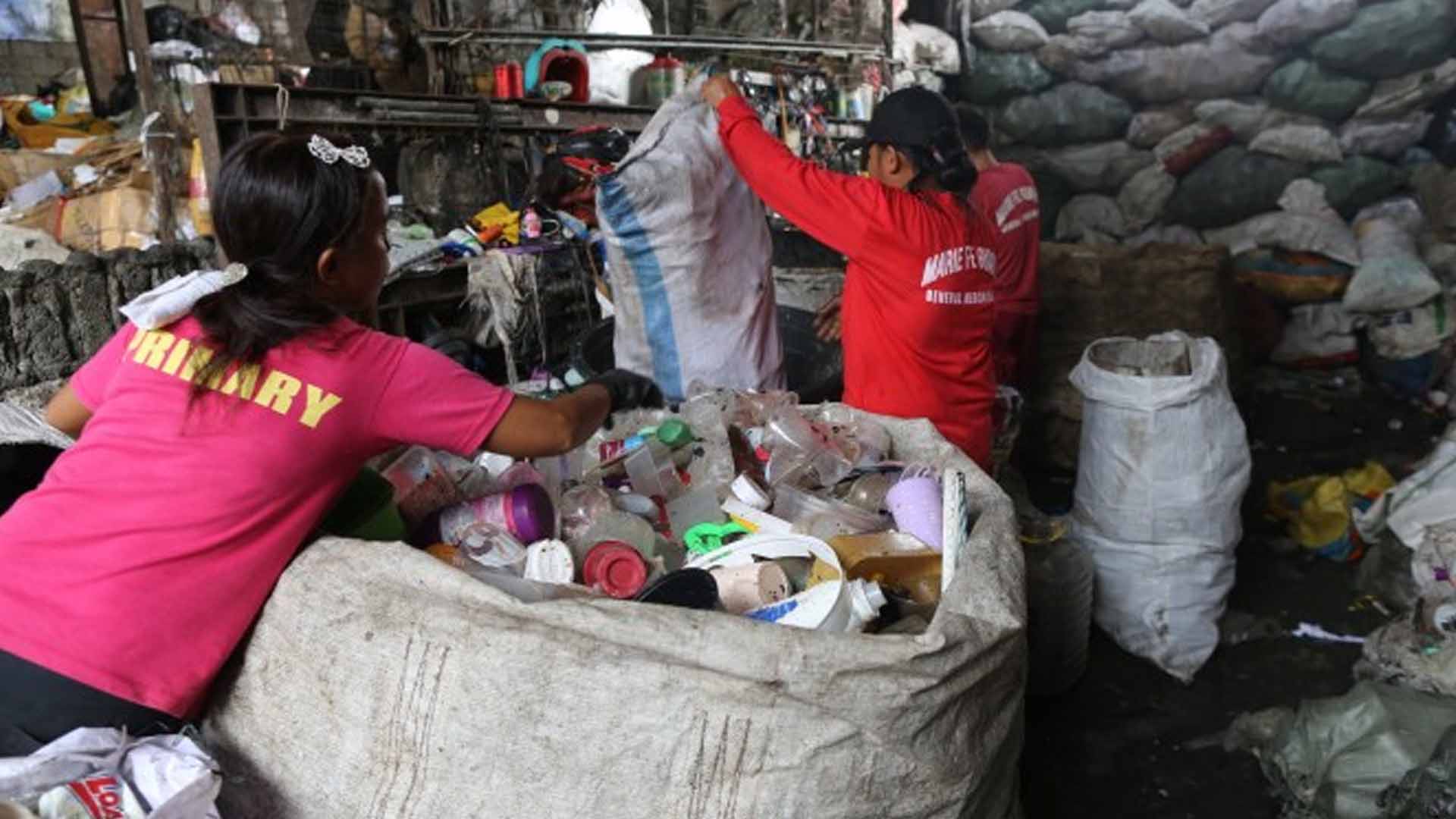







The Philippines is currently generating about 160 million plastic sachets daily, according to the Department of Environment and Natural Resources (DENR).
In a press briefing in Malacañang on Wednesday, DENR Secretary Maria Antonia Yulo-Loyzaga said this is part of the 61,000 metric tons of solid wastes daily, of which some 24 percent are plastic wastes.
“We consume and utilize, actually, over 60 million plastic sachet packets — daily po iyon — and, of course, over 40 million shopping bags and thin film bags. So lahat po ng mga plastics iyon, sinisikapan po natin (All of those plastics, we strive hard) that they will not reach our marine areas and our coastal areas,” she said.
Loyzaga admits that many things still need to be done in terms of prevention of solid waste so these plastics do not end up in an open environment and ultimately, in oceans.
She said that among those that need to be prioritized in solid waste management include the reprocessing and repurposing of plastic wastes.
Moreover, she said that many of the plastic wastes could actually be transformed for economic value.
“Iyong (The) economic value calculated by the World Bank, about 79 percent of the value of these plastics is lost; they could be repurposed to the Philippine economy each year. And that value associated with the 70 percent material value of the plastics can generate, by calculation of the World Bank, about USD790 to USD890 million per year,” Loyzaga said.
“In order for us to generate that economic value, we do need to make some ways (on how) we collect, recover and repurpose itong mga plastic wastes na ito (these plastic wastes),” she added.
In the Green Economy Program of the Philippines (GEPP), Loyzaga said the DENR is looking at the environment policy included in the Extended Producer Responsibility (EPR) law, and the role of the local government units, the private sector, obliged enterprises, and innovators and entrepreneurs in terms of their contributions on how these plastic wastes may be repurposed.
On Monday, President Ferdinand R. Marcos Jr. signed an agreement with EU Commission President Ursula von der Leyen for the GEPP.
Under the agreement, the EU promised a grant worth 60 million euros, which aims to support the Philippines in areas such as circular economy, renewable energy, and climate change mitigation. (PNA)


