



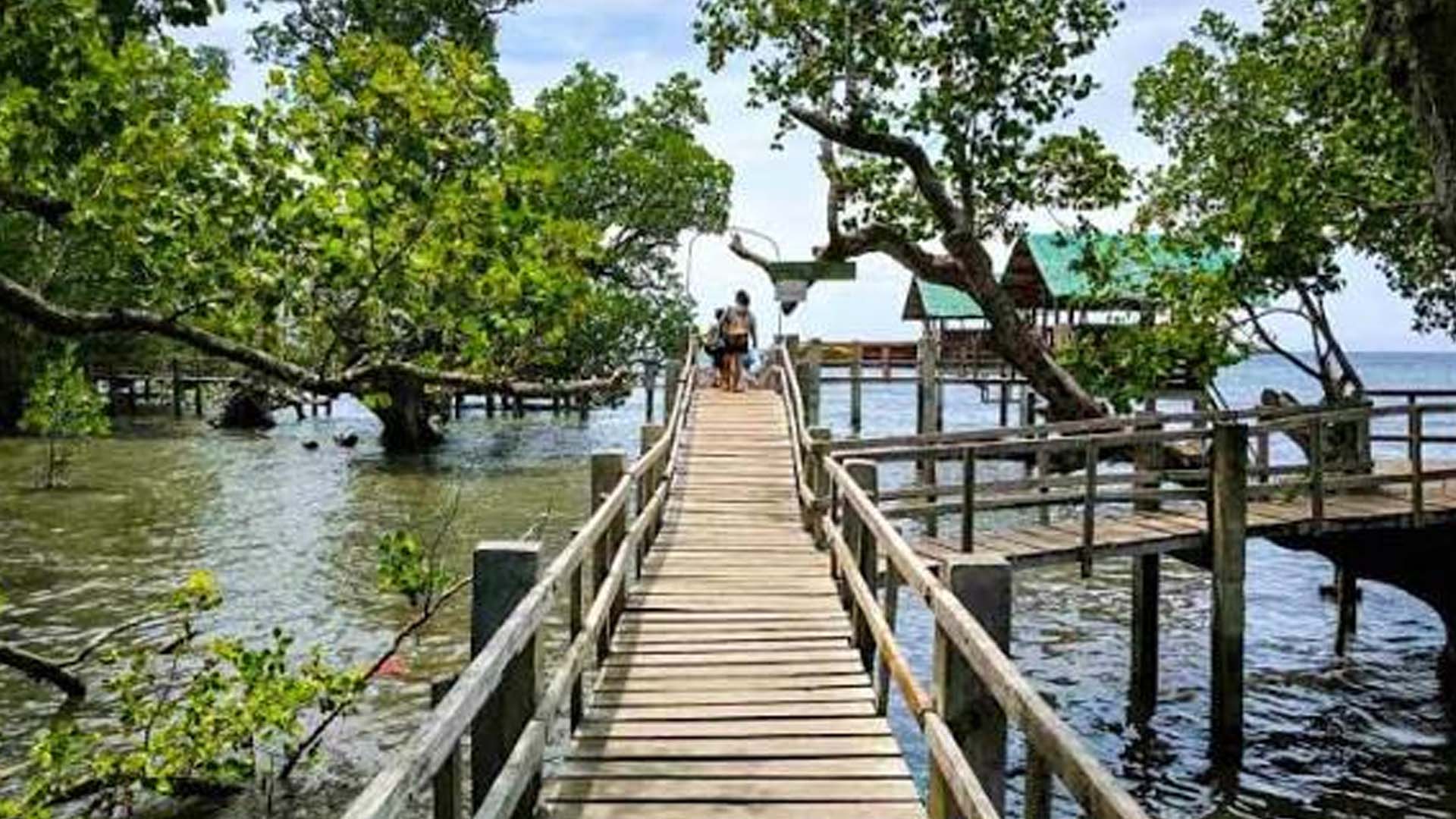







The Department of Environment and Natural Resources (DENR) has formally adopted the International Union for Conservation of Nature’s (IUCN) Global Standard for Nature-based Solutions (NbS) that puts ecosystem restoration as a cornerstone of the country’s climate and disaster resilience efforts.
In a news release Friday, Environment Secretary Juan Miguel Cuna said DENR Administrative Order No. 2026 30, signed on June 29, institutionalizes NbS into the department’s current and future policies, plans and programs, while establishing a national framework for scaling ecosystem-based interventions.
“This policy turns nature into a frontline partner for Filipino families. By restoring forests, mangroves and urban green spaces, we reduce flood risk, secure water supplies, and protect livelihoods,” Cuna said.
Under the order, the DENR will prioritize restoring forests and watersheds, rehabilitating mangroves, coral reefs and wetlands, protecting seagrass beds, expanding urban green spaces, and improving watershed management and flood mitigation, particularly in climate-vulnerable provinces, critical watersheds, coastal areas, and urban ecosystems.
To ensure measurable results, the policy adopts the IUCN Global Standard, which requires the use of localized performance indicators and self-assessment tools, and creates a NbS technical working group that will oversee implementation, monitoring and reporting.
The group will develop a roadmap, a monitoring and evaluation system, and technical standards to guide future projects.
It also requires NbS integration into the DENR’s annual planning and budgeting and the development of key performance indicators to measure outcomes such as reduced flooding, improved water quality, increased forest and coastal ecosystem cover, biodiversity gains, and livelihood improvements.
The policy mandates capacity-building programs for DENR personnel and partners, and the establishment of a national NbS Registry to track projects and results, while promoting collaboration with local governments, Indigenous Peoples, civil society organizations, academe, and the private sector.
Funding may come from government appropriations, development partners, payments for ecosystem services, and carbon and blue carbon financing to help expand ecosystem restoration efforts nationwide.
Cuna said embedding NbS into local development plans and government investments will help communities become more resilient to climate impacts.
“We are mainstreaming NbS into regional and municipal plans and ensuring dedicated budget lines so that every peso invested yields both ecological recovery and household security. For a typical Filipino household, NbS means fewer days lost to flood damage, cleaner water for drinking and farming, and new livelihood opportunities from restored ecosystems,” he said (PNA)


