



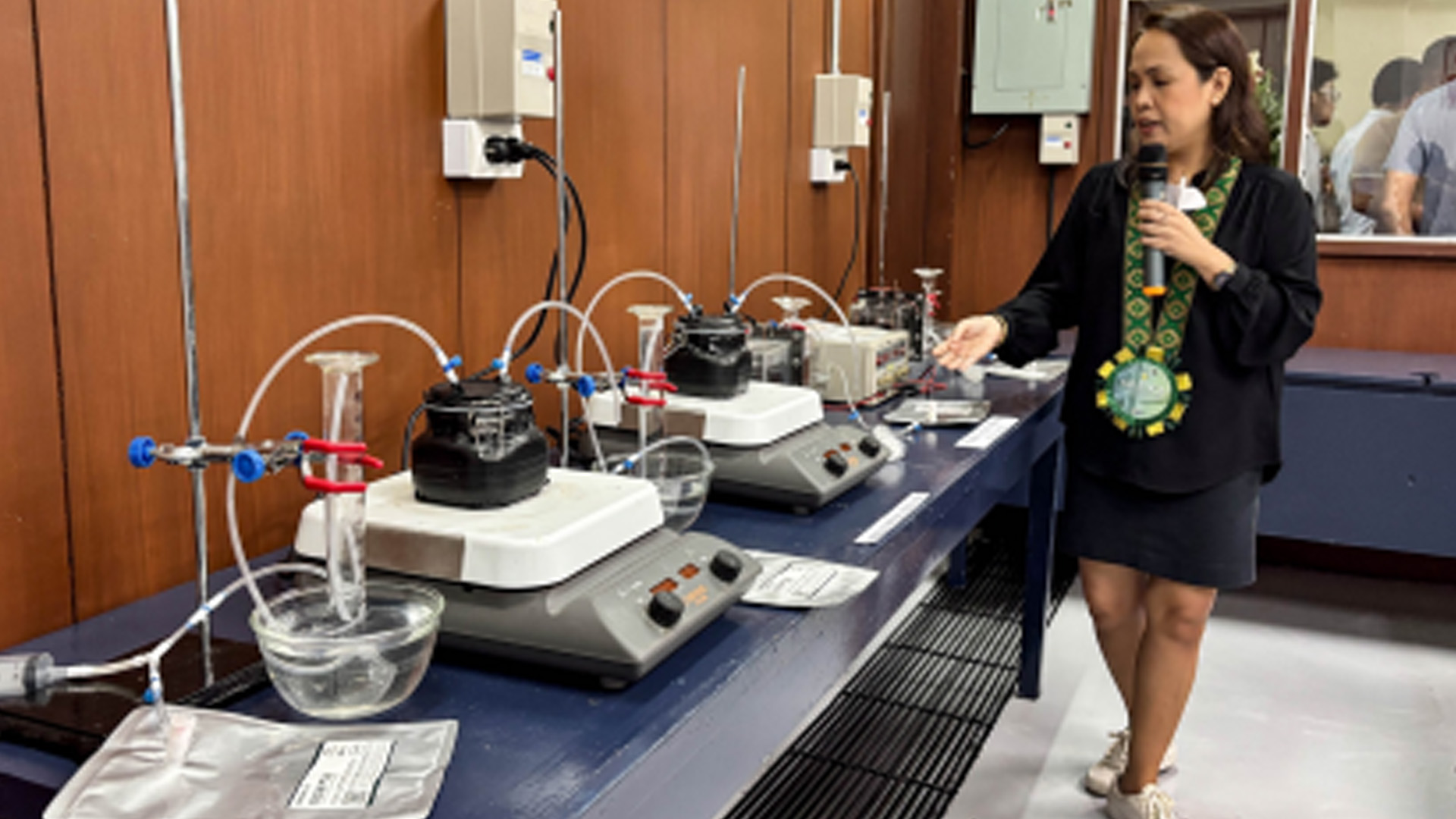







A newly launched research facility here is poised to accelerate renewable energy (RE) development in Mindanao, particularly in waste-to-energy technologies.
The Department of Science and Technology (DOST), in collaboration with Xavier University-Ateneo de Cagayan (XU), opened the PHP278-million “Green BioH2E” Research and Development (R&D) Laboratory on Wednesday. The lab, located at XU’s College of Engineering (COE), is funded by DOST’s Philippine Council for Industry, Energy, and Emerging Technology Research and Development (PCIEERD).
Dr. Shierlyn Paclijan, project leader, said the lab will explore the feasibility of converting waste into energy, with the long-term goal of reducing energy costs for local industries.
“This technology, if viable, can lower utility rates and production costs, making local goods more affordable,” Paclijan said, adding that discussions are underway with the City Local Environment Resources Office to gather wastewater for energy conversion.
The lab’s pilot projects are expected to lay the groundwork for industries to adopt the technology, with a focus on making renewable energy accessible and sustainable for Northern Mindanao.
XU-COE Dean Dr. Hercules Cascon said the lab will serve as a benchmark for the region’s renewable energy efforts, starting from small-scale concepts to full-scale industrial applications.
The new facility is part of Mindanao’s broader push towards a 50:50 renewable energy-to-fossil fuel ratio by 2030, a target set by the Mindanao Renewable Energy Acceleration and Coordination Hub.
Currently, fossil fuels still supply 69% of Mindanao’s energy needs, with coal being the primary source. (PNA)


