



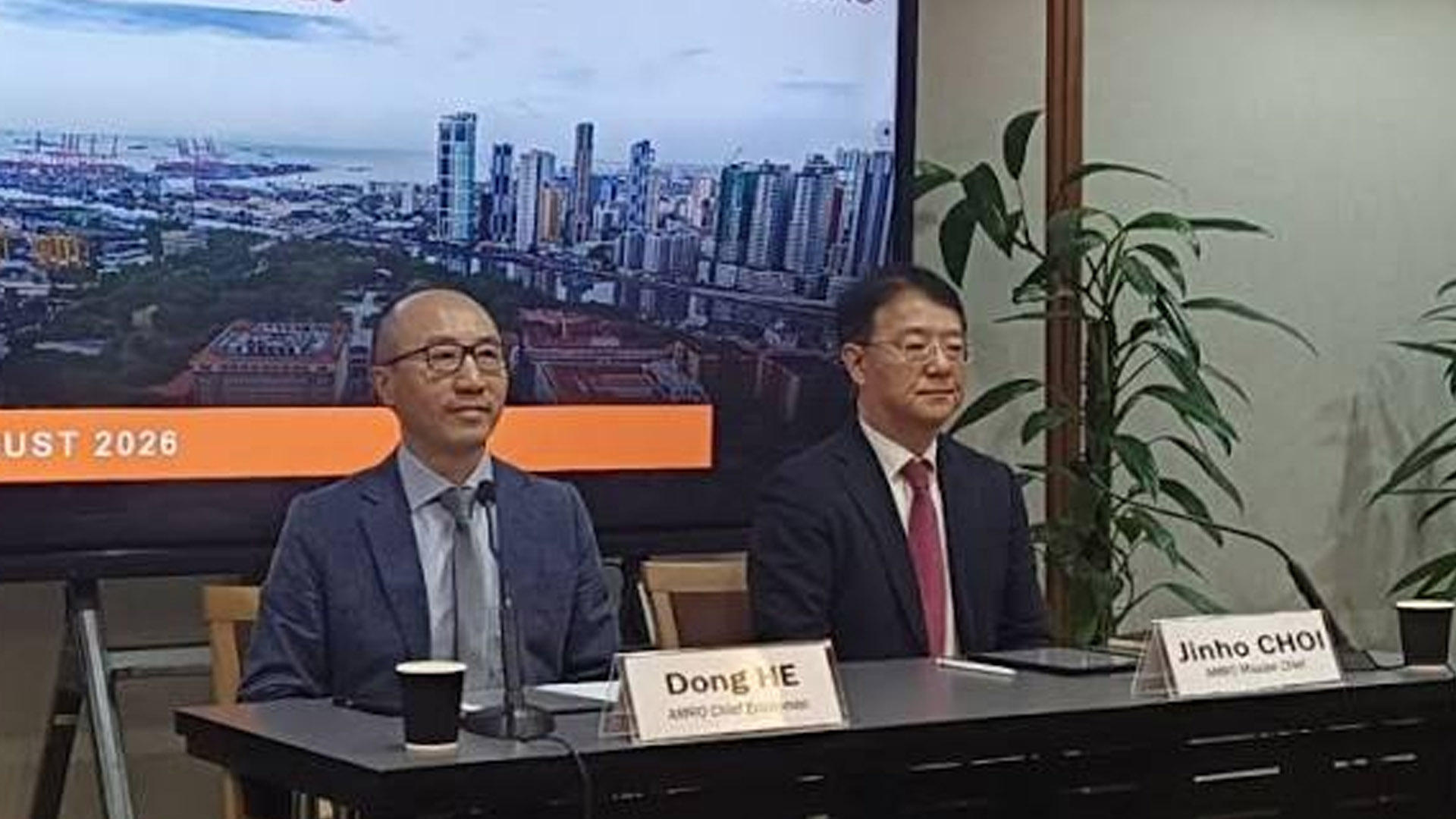







The Philippines continues to benefit from resilient exports and stable remittance inflows but reforms should be implemented to contain inflation and boost economic growth, the ASEAN+3 Macroeconomic Research Office (AMRO) said.
“I think it’s important to recognize that the Philippine economy continues to draw strength from resilient exports and stable remittance inflows,” AMRO chief economist Dong He said in a briefing Thursday following the end of AMRO’s Annual Consultation Visit to the Philippines.
The mission was led by Group Head and Lead Economist Jinho Choi, with AMRO Director/Chief Executive Officer Yasuto Watanabe and He participating in policy meetings with Philippine authorities.
He said the country’s exports is expected to grow by around 10 percent this year.
“We do see fairly solid growth in our forecast. We project around 10 percent growth of exports this year,” he said.
“The global economy, despite all the shocks as a whole, is still quite resilient. And the Philippines can still benefit from remittance flows because if the global economy is doing well, the remittance inflows will continue to be quite strong.”
He said the stable remittance inflows will be a good supporting engine for private consumption.
However, AMRO said the overall growth of the Philippine economy is expected to slow this year.
Philippine economic growth is projected to hit 3.4 percent this year from 4.4 percent in 2025.
For 2027, AMRO expects the Philippine economy to grow by 4.8 percent.
The latest projections are lower than the 4.1 percent for 2026 and 5.5 percent for 2027 earlier forecast of AMRO.
“This year’s growth will be mainly weighed by the weaker private consumption amid higher inflation and sharp contraction in public investment,” Choi said.
Choi, however, expects a gradual recovery in public construction in the second half of the year.
Inflation is projected to settle at 5.4 percent this year, down from AMRO’s earlier 5.7 percent forecast.
The inflation forecast for 2027 was also revised downward to 3.8 percent from 4.1 percent.
AMRO attributed the still elevated inflation projections to the increase in global oil prices, alongside second-round effects on non-energy items, including food and services.
“With growth expected to weaken and inflation to remain elevated this year, certainly above the BSP’s (Bangko Sentral ng Pilipinas) inflation target range, a timely and balanced policy response is needed to prevent the adverse effects of these external and domestic headwinds from becoming persistent,” Choi said.
He said fiscal policy should remain responsive to cyclical downturns by restoring well-governed, infrastructure projects, while maintaining a firm commitment to medium-term fiscal consolidation.
Under monetary policy, Choi said the BSP should remain data-dependent in terms of monetary policy decision-making, adding that further rate hikes would be warranted if core inflation remains elevated and persistent, or inflation expectations show signs of becoming de-anchored.
He said structural reforms are also needed to help the economy adapt to technological change and strengthen its medium-term growth potential.
To take advantage of the opportunities presented by artificial intelligence (AI), Choi said the country’s semiconductor industry should expand into higher-value-added activities, facilitate the transition of the information technology and business process management sector to more knowledge-incentive and AI-complementary services.
“Infrastructure priorities should include continuous strengthening of energy security through a more diversified energy mix and reliable power supply, ensuring that climate resilience initiatives are guided by measurable outcomes,” he said. (PNA)


