



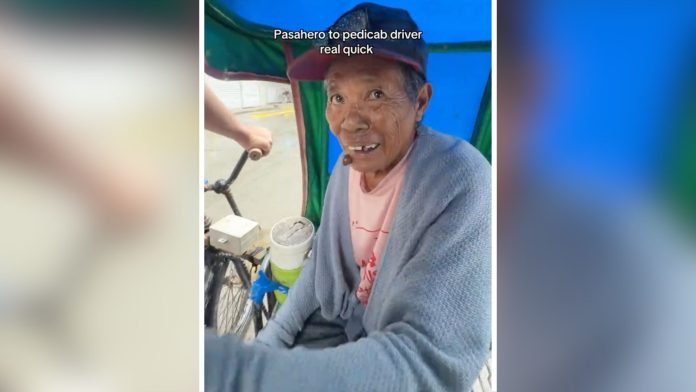






In a video now circulating online, a young male passenger is seen doing something simple but telling: taking over the pedaling of a pedicab from its elderly driver, guiding the vehicle through ankle-deep floodwater while the elderly woman rests in the passenger seat.
The clip opens with an on-screen caption reading “Pasahero to pedicab driver real quick” (passenger to pedicab driver). In a matter of moments. What follows is a POV-style recording from inside the pedicab as the young man grips the handlebars and pedals through a flooded street, water pooling around parked vehicles and rising along the roadside. Throughout the ride, the elderly woman seated in gray and pink, wearing a cap, is seen smiling and resting her hand near the young man’s as he pedals.
It’s a small gesture, but one that captures something many Filipinos recognize instantly: bayanihan, the cultural instinct to step in and help without being asked, especially when someone older or more vulnerable is struggling. Pedicab driving is physically demanding work even on a dry, clear day, pedaling through flooded streets, where the wheels must fight against resistance from standing water and the risk of stalling or slipping is higher, making it considerably harder. For an elderly driver, that additional strain is not a minor inconvenience; it’s a real physical risk. The passenger’s decision to take over, however briefly, meant one less elderly person straining against the current that day.
Pedicab driving is physically demanding work even on a dry, clear day. Pedaling through flooded streets, where the wheels must fight against resistance from standing water and the risk of stalling or slipping is higher — makes it considerably harder. For an elderly driver, that additional strain isn’t a minor inconvenience; it’s a real physical risk, one that can mean exhaustion, a fall, or worse in conditions that many younger, able-bodied commuters would think twice about navigating themselves. The passenger’s decision to take over, however briefly, meant one less elderly person straining against the current that day.
What makes the moment resonate isn’t grand heroism, nobody was rescued from danger, no headline-worthy sacrifice was made. It’s the ordinariness of it: a stranger recognizing a burden that wasn’t his to carry, and choosing to carry it anyway, for a few blocks, in the rain, expecting nothing in return except perhaps to get where he was going a little later than planned. In a rainy season that regularly tests Metro Manila’s roads, infrastructure, and patience, these unscripted, unbothered acts of kindness are a reminder that community resilience isn’t only found in disaster response efforts or organized relief drives — it’s also found in the small decisions ordinary people make when they notice someone else struggling.
The video’s quiet virality speaks to that recognition. Viewers don’t need the moment explained to them; the caption, the visuals, and the elderly woman’s smile do all the talking. It’s bayanihan in its most distilled form, not a movement, not a campaign, just one Filipino helping another.


