









The Department of Agriculture (DA) – Bicol has provided PHP1.5 million in financial assistance to a farmers’ and irrigators’ cooperative in Camarines Sur to expand its agri-food enterprise, while its climate adaptation program continues to monitor farming communities in Camarines Norte amid the threat posed by El Niño.
In a report on Wednesday, DA-Bicol spokesperson Lovella Guarin said the financial grant awarded Tuesday was under the 2026 Kadiwa Financial Grant Assistance Program for the San Juan – San Lorenzo Farmers and Irrigators Agriculture Cooperative (SJSLFIAC) of Minalabac, Camarines Sur.
“Around 92 cooperative members are expected to benefit from the project,” she said.
Guarin said the KADIWA financial assistance program provides grants ranging from PHP500,000 to PHP5 million to qualified farmers’ and fishers’ organizations to strengthen their livelihoods.
“The financial assistance does not need to be repaid but requires beneficiaries to provide a 20-percent equity counterpart based on the total project cost,” he said.
SJSLFIAC chairperson Wilfredo Pilapil said the cooperative would use the assistance for its project, “Minalabac KADIWA Store: A Sustainable Agri-Food Enterprise Expansion and Logistic Optimization,” which includes purchasing a vehicle, freezer, and refrigerator to expand and improve its operations.
Meanwhile, the DA’s Adaptation and Mitigation Initiative in Agriculture (AMIA) Program continues to monitor villages in Labnig, Paracale, and Alayao, Capalonga, in Camarines Norte, where farmers are adopting climate-resilient agricultural practices amid the threat of El Niño.
Based on the AMIA team’s monitoring, the two municipalities continue to receive rainfall, while farmers continue to use climate adaptation measures introduced through the program.
Guarin said farmers were guided in planning their activities and in making farm management decisions.
In Labnig, farmers are preparing for the upcoming corn harvest. Their climate-resilient practices include diversifying farms, planting stress-tolerant crops, such as corn, and using plastic mulch.
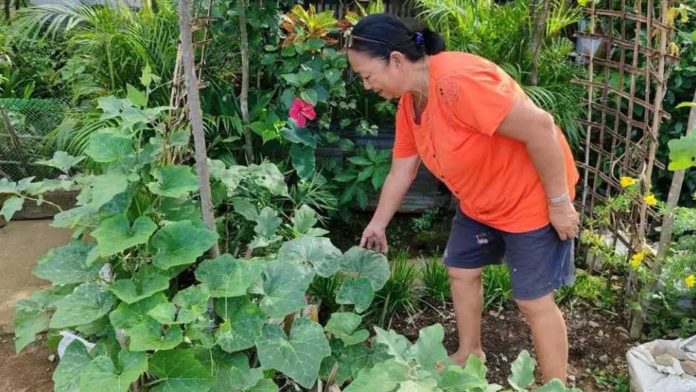
Farmers are also growing various vegetables in their backyards to diversify production and make use of available space, supporting household food security.
In Alayao, a member planted peanuts and mung beans as alternative crops.
He also grows cassava, sweet potatoes, bananas, lemongrass, and pineapples to diversify and sustain farm production amid changing climate conditions.
Through these efforts, the DA-AMIA Program aims to help farming communities adapt to climate variability, sustain agricultural production, and build resilience to climate-related challenges. (PNA)


