



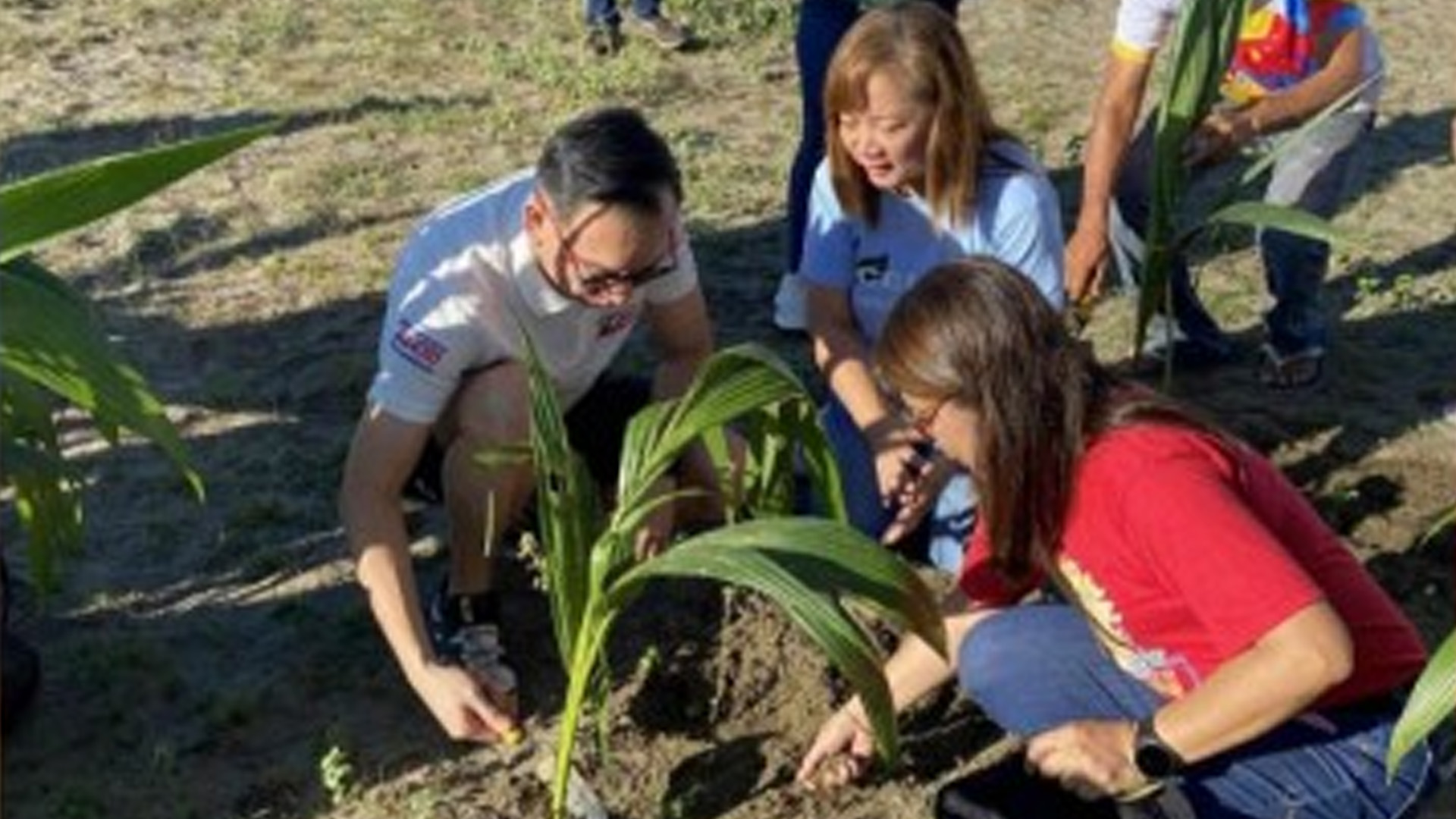







The Philippine Coconut Authority (PCA) is targeting to plant 700,000 coconut tree seedlings in Northern Luzon in 2026, part of the agency’s goal to plant 100 million coconut trees nationwide by 2028.
PCA Regional Manager Mark Roy Macanlalay said the Northern Luzon cluster is composed of the Ilocos Region, Cagayan Valley, and the Cordillera Administrative Region. The agency is giving 23,000 coconut farmers free seedlings to boost coconut production.
“We are also telling our farmers that although we are giving free seedlings, we are also asking for their cooperation, at least for them to be responsible,” Macanlalay said.
The survival rate of planted seedlings in 2024 was 69.2 percent based on the latest data collection. Of the 399,558 coconut seedlings planted in Northern Luzon in 2024, over 276,000 survived.
Macanlalay said challenges in growing coconut seedlings include drought, typhoons, livestock, and grassfires.
“Those are the causes, but the number one is the heat. We are requiring our farmers to plant where there is a nearby water source. It’s really hard to irrigate our farms,” he said, adding that farmers are also asked to manage their livestock and prevent grassfires.
The coconut industry contributes around USD3 billion per year to the country’s agricultural exports. Coconut is used as raw material for various products such as virgin coconut oil and cooking oil. (PNA)


