



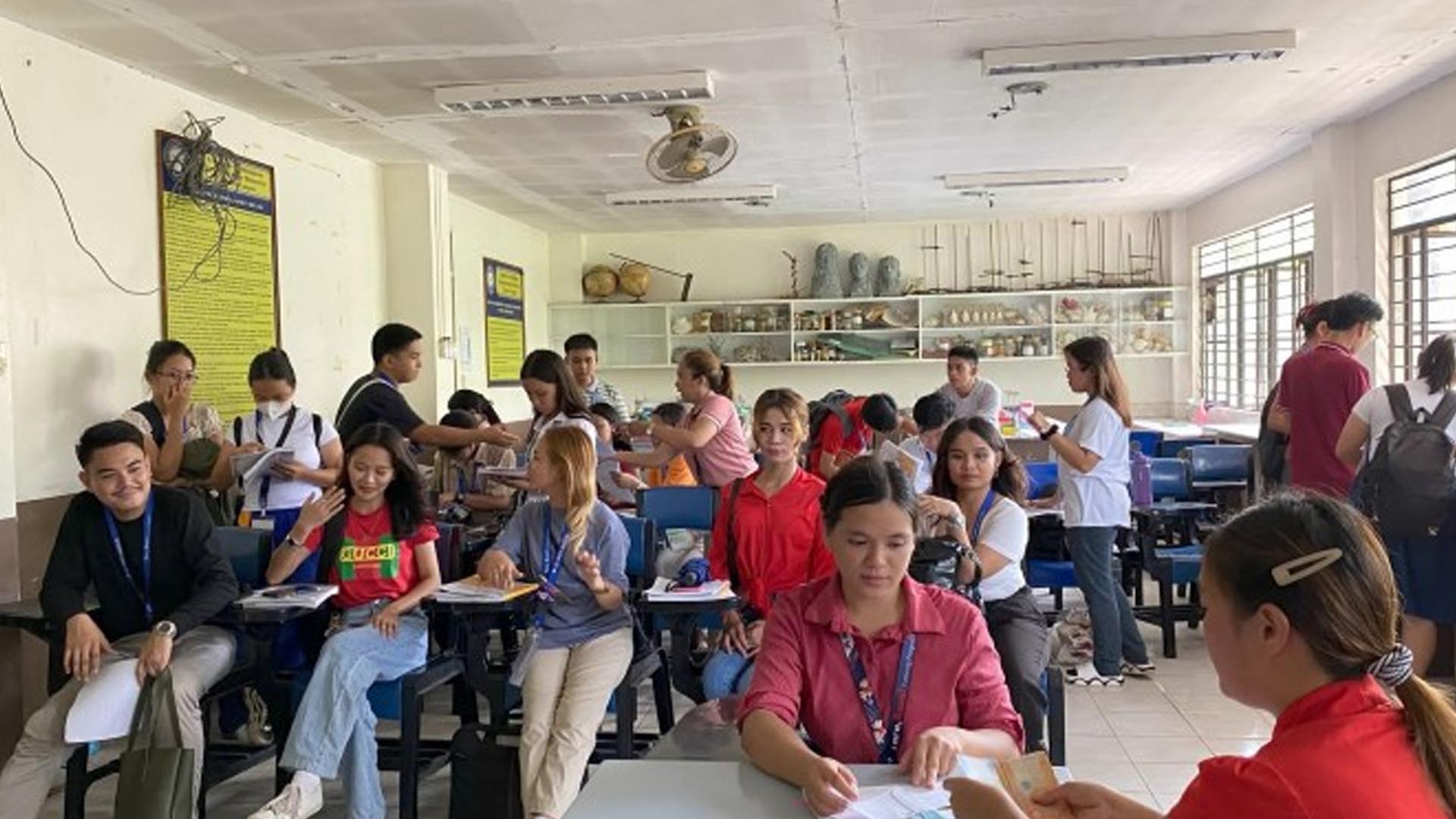






Almost 1,100 youths, grade school learners, and parents in Lingayen town, Pangasinan benefitted from the Department of Social Welfare and Development’s (DSWD) “Tara, Basa!” (Let’s Read) tutoring program.
DSWD Innovations Division officer-in-charge Darwin Chan, in an interview Thursday, said they began the program, which aims to address foundational literacy gaps of young children, in May and was completed on July 12.
It provided cash-for-work opportunities to 100 students who worked as tutors and 50 youth development workers, all from Pangasinan State University and who received PHP468 per day for two- to three-hour tutorials and parenting sessions for 20 days.
“The tutor-to-learner ratio of 1:5 for tutoring sessions enhanced learners’ literacy skills, and a youth development worker-to-parent ratio of 1:10 for Nanay-Tatay sessions focused on supporting parents’ involvement in their children’s literacy and parenting skills,” he said.
Chan said there were originally 500 learner-beneficiaries, but only 476 finished the program, with parents and guardians citing the distance of their residence to the tutoring session venue as the reason for their failure to finish it.
Under the program, parents or guardians were given PHP235 per day for their attendance at the 20-day Nanay-Tatay sessions.
“Initial feedback and monitoring results indicate progress in the reading proficiency of incoming Grade 2 pupils. Many transitioned from being a non-reader or struggling reader to being able to identify letter sounds, decode simple words, and read basic sentences. Tutors and youth development workers reported increased confidence in teaching and engagement, while parents expressed appreciation for the Nanay-Tatay sessions, which empowered them to support their children’s literacy development at home,” Chan said.
He said pre- and post-test results in Filipino show a significant improvement in learners’ reading performance, with those who met expectations, or those who scored 8 to 10 points, increased from 35.5 percent to 70.6 percent.
The number of learners requiring interventions declined across all levels: light intervention dropped from 32.6 percent to 19.7 percent; moderate, from 27.5 percent to 8.8 percent; and full intervention from 4.4 percent to just 0.84 percent.
The proportion of learners needing any form of intervention went down from 74.5 percent to 29.3 percent. (PNA)


