



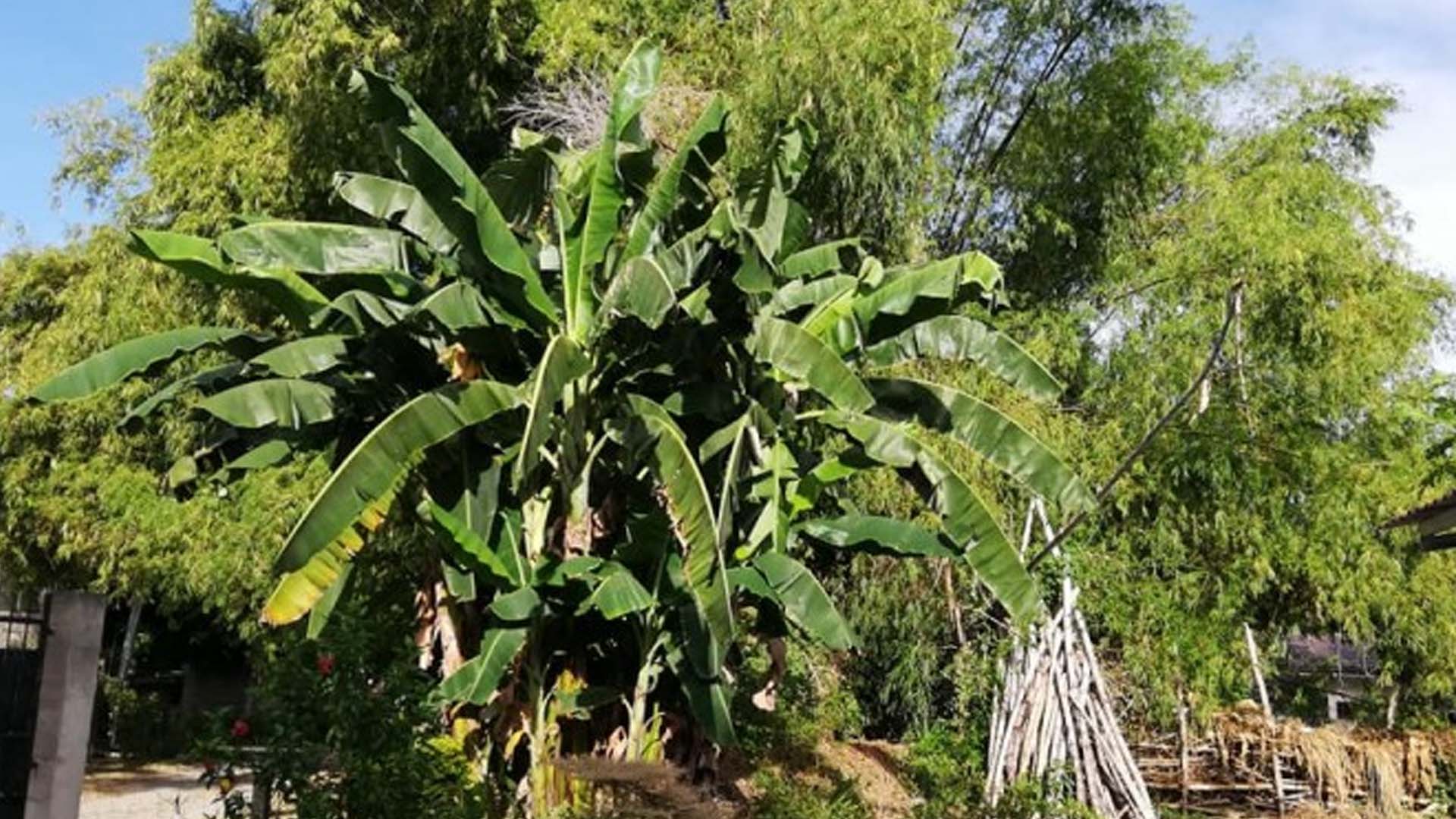







A rapidly growing bamboo industry in Negros Oriental is providing alternative regenerative solutions to farmers, especially in the agro-forestry sector, with untapped potential waiting to be harnessed, an official of the Department of Trade and Industry (DTI) here said Friday.
Jose Julio Somido, Senior Trade and Industry Development Specialist of DTI-Negros Oriental and provincial bamboo focal person, said many people are still unaware of the economic benefits of bamboo, hence the need for proper training, knowledge, and skills buildup.
“Bamboo has always been considered the ‘poor man’s timber’ but it has enormous benefits to humans, the economy, and the environment,” Somido said.
Status of bamboo production
Nationwide, at least 50,000 hectares of bamboo are grown sporadically or in patches, including home-grown bamboo clumps.
Negros Oriental has 650 hectares of bamboo, with 150 hectares planted and grown through the National Greening Project of the Department of Environment and Natural Resources (DENR) from 2021 to 2023, Somido said.
The remaining 500 hectares are either naturally grown or backyard-grown by farmers, he added.
Somido, who sits in the Negros Oriental Bamboo Industry Development Council, said 25,000 to 30,000 poles are harvested annually province-wide.
Of the number, 30 percent are shipped regionally or inter-island while 70 percent is consumed locally by traders and furniture shops, and for personal home use.
One of the bigger volume requirements for bamboo in the province is from the Kawayan Collective Agriculture Cooperative in Dauin town, which promotes sustainable and durable houses made of bamboo.
Local government units (LGUs), such as those of Canlaon City, Bayawan, Bacong, Dauin, and Bindoy, and the private sector are also actively participating in bamboo planting to increase bamboo production in the province, Somido said.
These bamboo plantations and nurseries are mostly sporadic and not contiguous in these LGUs.
One of the challenges, however, is the stringent regulations of the Department of Environment and Natural Resources (DENR) requiring cutting and transport permits for bamboo from one town to another or outside of the province, Somido said.
The larger bamboo producers and companies can afford to pay the fees but this poses a dilemma to the smaller farmers, he added.
Empowering industry stakeholders
The DTI’s role in the bamboo industry is to provide bamboo farmers with training, referrals, information, and education, Somido said, noting that advocacy is key.
At least 80 micro, small, and medium enterprises (MSMEs) were assisted through consultancy, referrals, and information.
Additionally, jobs generated directly or indirectly in the bamboo industry for growers, traders, and processors, totaled 750 in recent years.
“The value chain benefits of the bamboo industry and a demand for investment opportunities is continuously growing and cannot be ignored,” Somido said.
Training was conducted by the DTI and partner agencies, such as the Department of Agriculture, the Department of Agrarian Reform, and the private sector.
Additionally, DTI-Negros Oriental’s Shared Services Facilities program has benefited bamboo farmers in Bayawan City, Amlan, and Manjuyod, who received small tools and equipment for processing, such as cut-off saws, pneumatic nail guns for furniture, power planers, and circular saws. (PNA)