









One can’t argue that the COVID-19 pandemic changed a lot of our plans especially for the year 2020. While it has caused havoc to our lives, it also opened new opportunities and possibilities that we never thought we’d have.
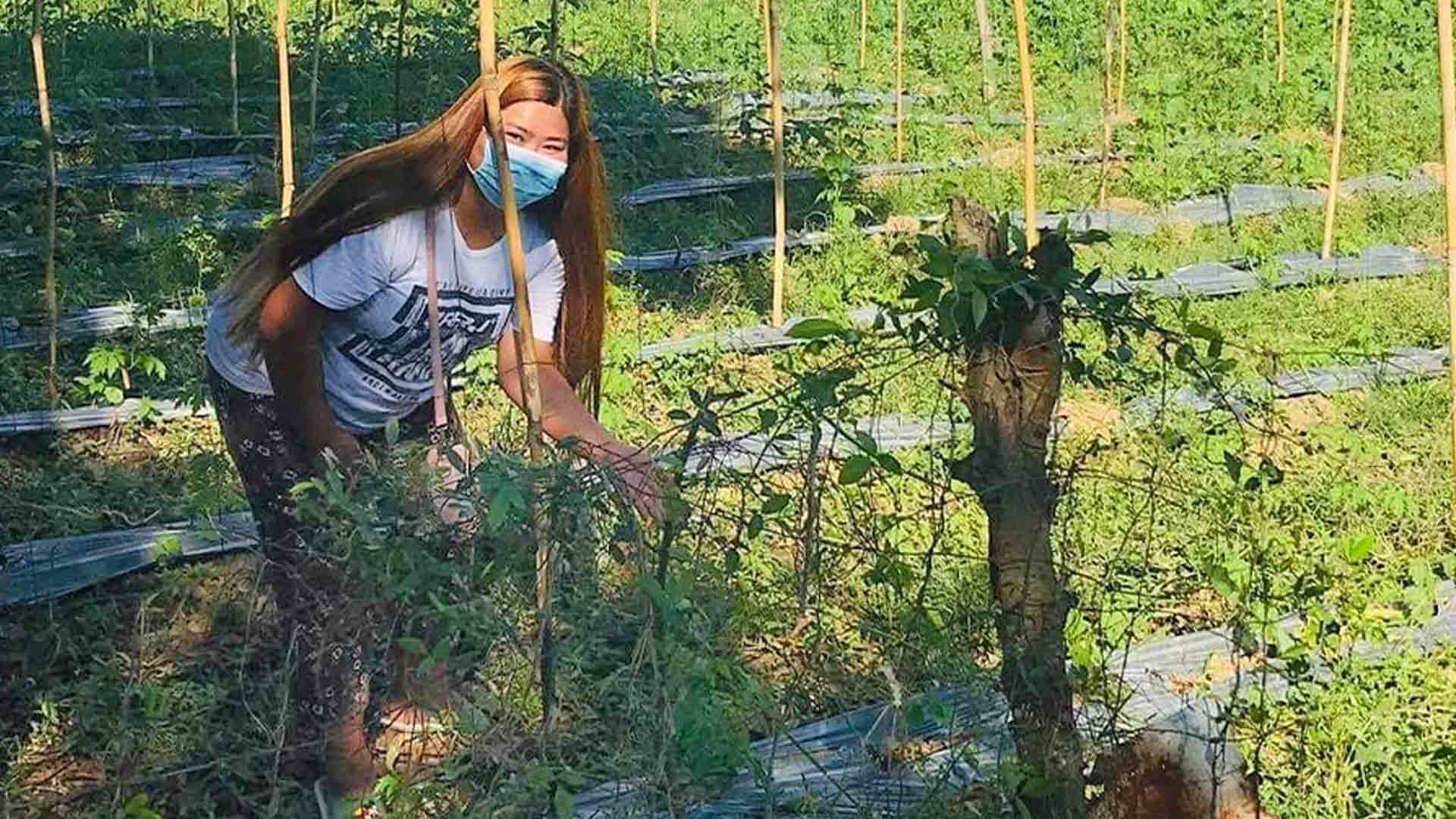
Regine Joyce Esquivel, 23, a graduate of BS Secondary Education major in Industrial Arts from Nueva Ecija was working as sales representative for a cellphone accessories store at SM Megamall—to save some money while waiting for her licensure examination—when the COVID-19 pandemic hit the country. She was able to go back in her province before the lockdown was implemented in March 2020.

Months have passed and the uncertainty of going back to Manila still remains for Regine. It was when she joined the Batch 224-A of SM Foundation’s Kabalikat Sa Kabuhayan (KSK) on Sustainable Agriculture that she found some sort of normalcy in her life.
Following strict health protocols, SMFI, through its KSK program, taught the farmer participants about modern farming technologies that may help them sustain a bountiful harvest.
Far from a classroom setting that Regine envisioned herself she would be working at, she used the available farm land from her parent’s house to practice and apply her learnings from the project.
With her perseverance and dedication, this newfound passion of Regine for agriculture helped them get through the pandemic. Part of her harvest went to the family’s table while the rest were sold to neighbors, relatives, and biyaheros who sell goods in the market.
“I find comfort in agriculture since one can confidently grow crops that would feed the household all year round. You can even sell part of the crops to spend on other essentials, which is also rewarding,” Regine said.
Since her October KSK training, she has already harvested 17 times, once earning as much as P2,250 from her okra and sitao. Regine prefers to plant short term crops that can be harvested weekly.
“I am extremely grateful for the SM Foundation for bringing us the KSK program. They gave us all the training materials we needed for free,” Regine said.
“I still want to become a teacher one day but my passion for farming would still remain. I will continue to use and share with others my newly acquired knowledge in farming. The agri-knowledge that we learned is very vital in sustaining our families, by providing us food security, especially in times like this,” she concluded.
Kabalikat Sa Kabuhayan (KSK) program aims to bring modern and sustainable farming skills in both rural and urban communities to help farmers have food on their table and have potential economic opportunities. To date, the program has trained more than 26,700 farmers from almost 3,360 barangays in 880 cities/municipalities.