



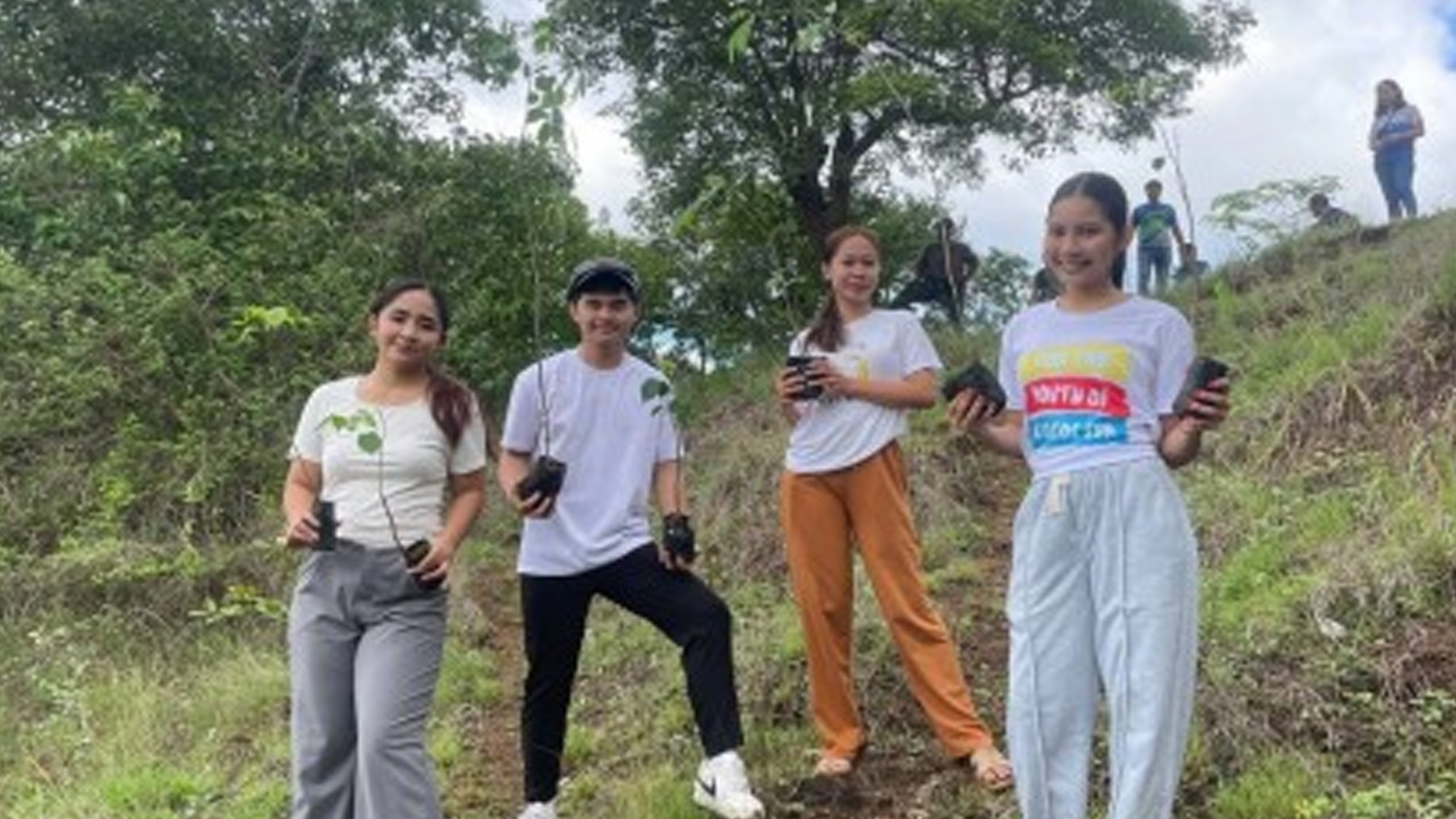







The Department of Environment and Natural Resources (DENR) reported a strong seedling survival rate of 85 percent out of 550,000 tree seedlings planted across the Ilocos Region in 2024 under the National Greening Program (NGP).
The seedlings, consisting mostly of indigenous species like narra, acacia, and bamboo, were planted on more than 320 hectares of land in 2024.
DENR 1 (Ilocos Region) Executive Director Crizaldy Barcelo said areas with low survival due to climate or weather-related factors would undergo replanting.
Barcelo said 170,000 hectares of land have been reforested in the region from 2010 to 2020, or 38 percent covered forest.
“The purpose of NGP is to promote reforestation, biodiversity conservation and improve land and water resources management. In reforestation, we aim to plant within denuded forest lands to bring back covered forest. By diversity conservation, we give emphasis to the planting of indigenous or native species to sustain biodiversity conservation that will serve as habitat to the fauna or wildlife,” he said.
The ultimate objective, he added, is to mitigate the effects of climate change and global warming.
The program also focuses on community engagement. Local people’s organizations are involved in the planting efforts to promote ownership and stewardship of the reforested areas.
In tandem with reforestation, watershed conservation has also become a priority, particularly in response to President Ferdinand R. Marcos Jr.’s call to address water scarcity in the region.
The Ilocos Region has 34 priority watersheds and 11 are classified as critical.
This year, three new Watershed Management Councils were established for the Gama-Nayom River, Sta. Maria River, and Cabugao River to help oversee the health of these crucial water sources and guide conservation interventions. (PNA)


