



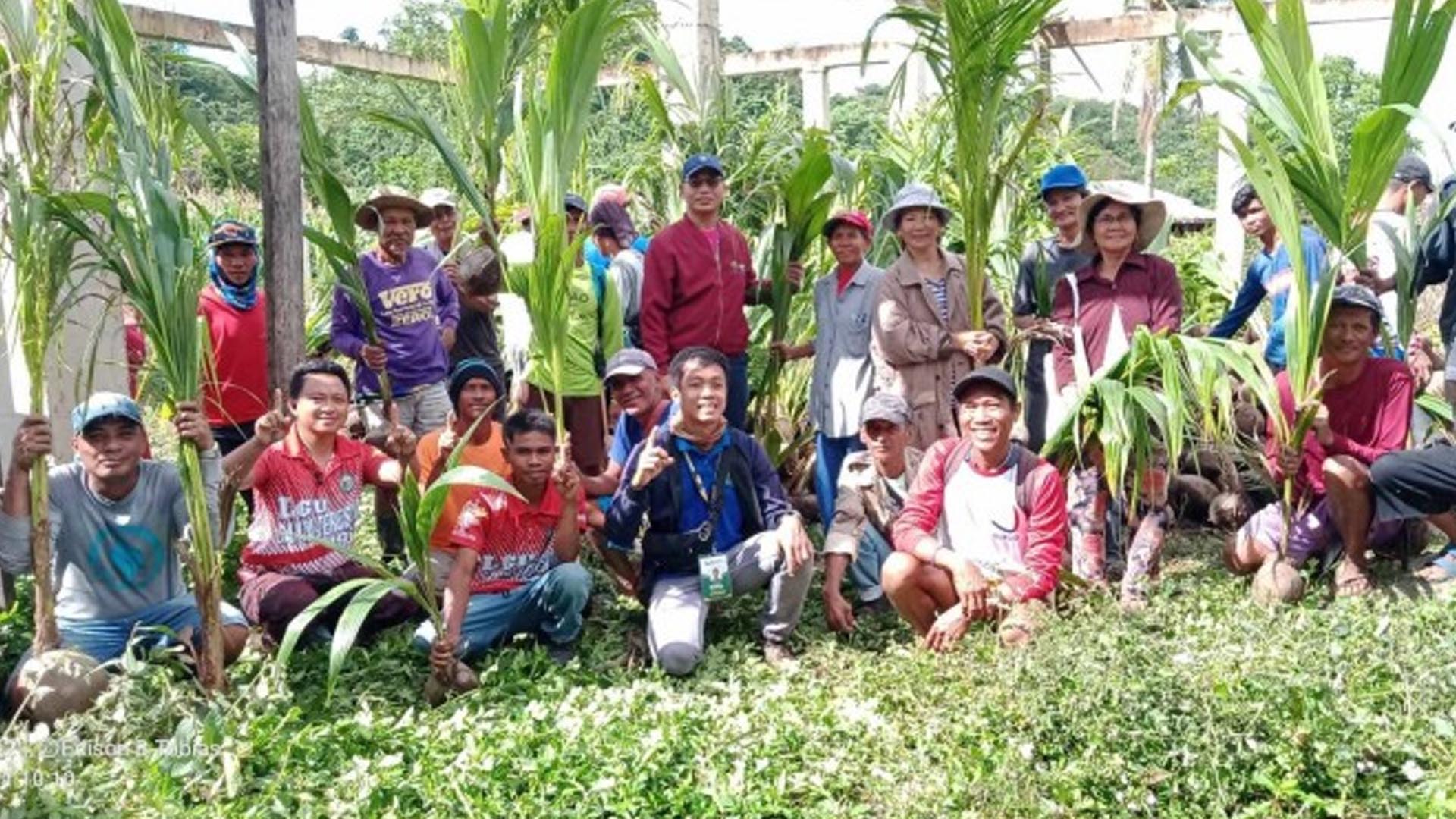







A total of 103,818 coconut seedlings have been planted in Cagayan province since last year and efforts are ongoing to help reach the nationwide target of 100 million coconut trees by 2028.
In a media interview on Wednesday, Noel Compra, area coordinator of the Philippine Coconut Authority (PCA) in Cagayan, said that under the Massive Coconut Planting and Replanting Project (MCPP), the PCA is encouraging farmers’ cooperatives, state universities and colleges, and other public and private partners to join the nationwide replanting and expansion of coconut tree plantations to achieve the 100-million target.
At present, Compra said communal coconut nurseries are strategically located in areas where local cultivars thrive for six months before they are distributed to partners who are willing to invest in the revitalized coconut industry program under the Marcos administration.
“Right now, we are partnering with the different local government units in Regions I, II, and the Cordillera Administrative Region, including colleges and universities and accredited coconut farmers organizations, to promote the planting of high-yielding varieties of coconut for expansion,” he said.
Compra said those who are interested to avail of the free planting materials may contact the PCA, which can link them to established coconut nurseries nearest them.
This year, PCA Cagayan said it is planning to plant close to 70,000 coconut seedlings covering an area of 485 hectares.
The primary target areas are located in the coconut-producing towns of Abulug, Pamplona, Sanchez Mira, Claveria and Sta. Praxedes, and later on expand to the towns of Iguig, Alcala, Aparri, Ballesteros, Camalaniugan, Gattaran, Lasam, Gonzaga and Santa Teresita, among others.
President Ferdinand R. Marcos Jr. has approved a total of PHP3.5 billion this year for the massive planting/replanting and fertilization of coconut as part of the country’s poverty alleviation program.
Called the “tree of life,” the demand for coconut is attributed to the versatile nature of the plant, as every part it, from roots to tips, has practical uses. (PNA)


