



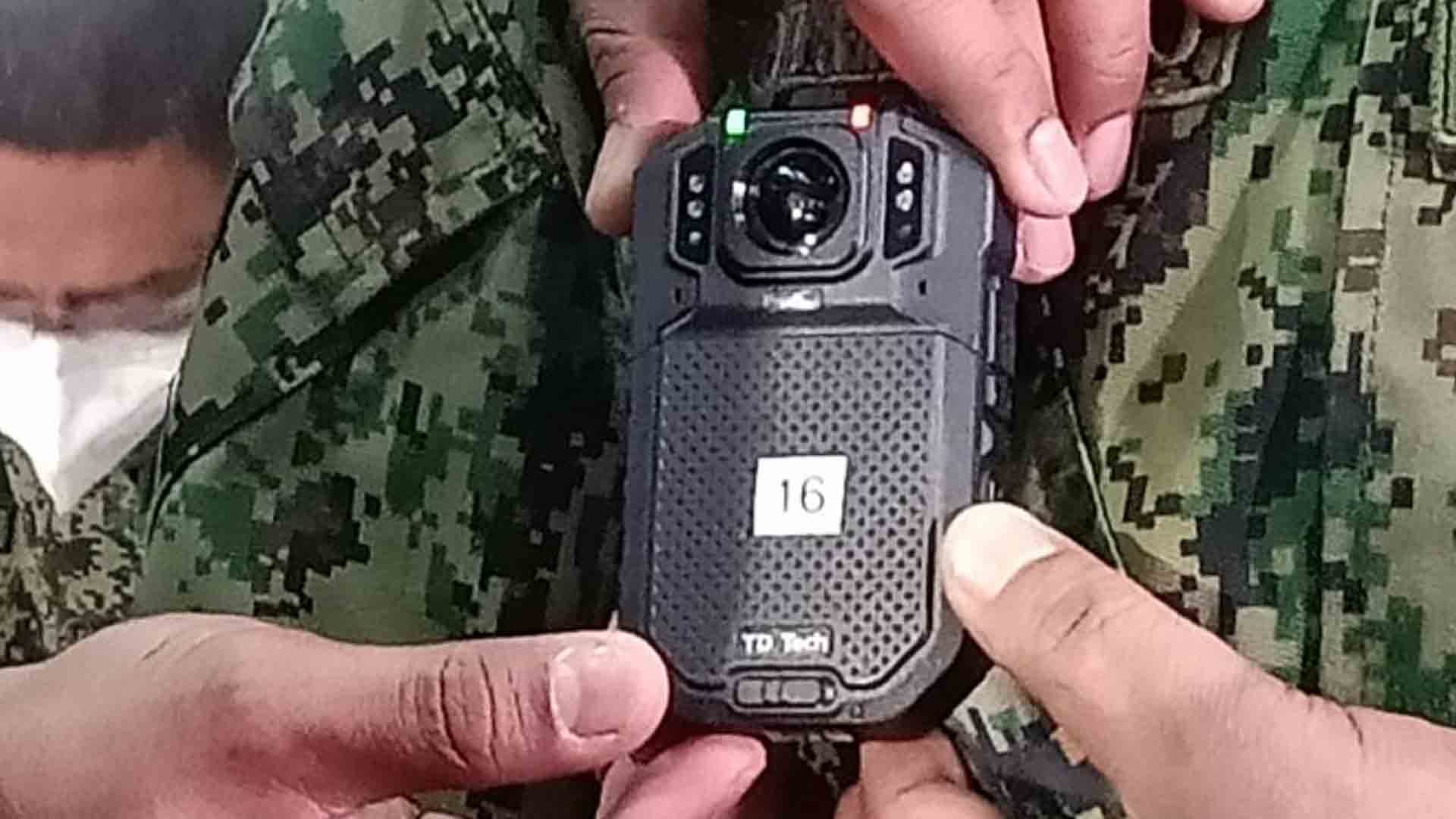






The Philippine National Police (PNP) on Tuesday announced the mandatory use of body-worn cameras (BWCs) or alternative recording devices (ARDs) during police operations.
In a statement, PNP chief Gen. Guillermo Eleazar said this is stated in the Aug. 2 memorandum issued by the Directorate for Operations setting general protocols for the use of the BWCs or ARDs in the execution of search and arrest warrants as well as warrantless arrests.
He added that the memorandum was addressed to all police regional office directors and national operational support unit directors for strict compliance.
Eleazar also pointed out that the memorandum specifies that the gadgets are never to be turned off at any time while the execution of a search and arrest warrant or a warrantless arrest is going on.
He said that in cases of valid warrantless arrests, the BWC or ARD will be used “as far as it is practicable”.
“The memorandum also requires police operatives to, upon return of warrant, submit a copy of the video to the court along with an affidavit attesting to the facts and authenticity of the recording,” Eleazar said.
He also assured that enhanced operational guidelines and policies on the use of BWCs and ARDs will soon be disseminated to all police offices and units so all police personnel will be guided accordingly on the proper utilization of the devices.
The memorandum also requires police personnel to submit an explanation if they fail to comply with the mandatory use of BWCs or ARDs in their operations.
“Hindi pa sapat ang aming (We still do not have enough) body-worn cameras but in the spirit of transparency and accountability, I trust that our commanders will find ways to comply with the Supreme Court (SC)’s guidelines on the use of body-worn cameras,” Eleazar added.
The SC last month issued a resolution detailing how the PNP can utilize the BWCs during operations.
The PNP has so far distributed 2,696 BWCs to around 171 police stations and units nationwide. Eleazar said another 30,000 units are needed for distribution to around 1,500 to 1,700 PNP units. (PNA)


