



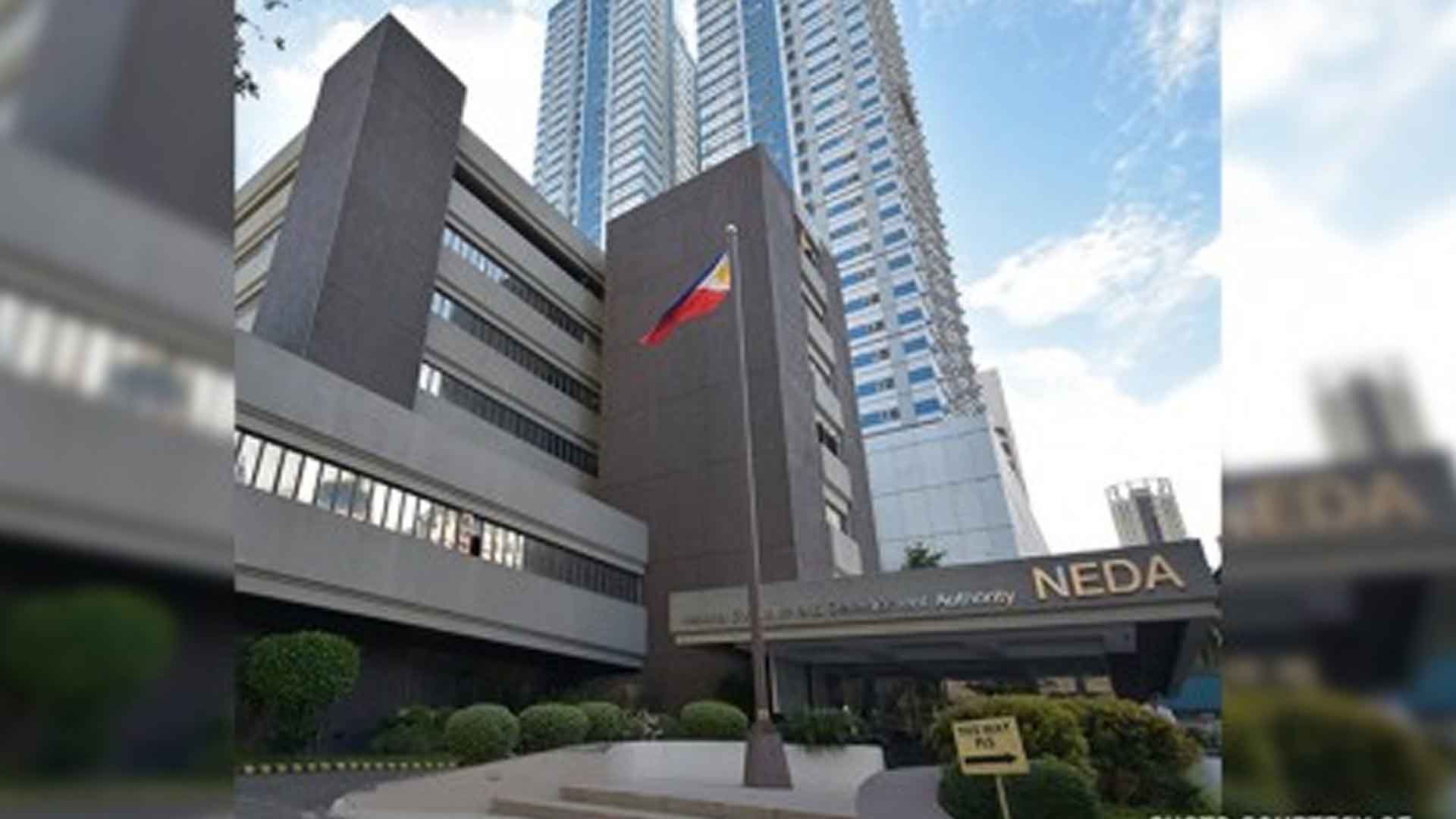






The labor market is improving, but the government needs to continue its efforts in containing the spread of the coronavirus disease 2019 (Covid-19) pandemic and supporting affected workers and firms to revive the economy, the National Economic and Development Authority (NEDA) said Thursday.
As reported by the Philippine Statistics Authority (PSA), the July round of the Labor Force Survey (LFS) recorded a 7.5-million increase in employment compared to April, with all sub-sectors experiencing employment gains except for arts, entertainment, and recreation.
All 17 regions showed employment improvements from the previous quarter.
Notably, employment in agriculture and forestry increased by 2.1 million from April, with higher agricultural output.
Within the industry sector, employment growth was seen in construction with 1.2 million additional employment as the Build Build, Build program and other construction activities resumed, as well as in manufacturing with 671,000 additional employment.
The July survey figures show a direct link between the level of quarantine restriction and labor market outcomes.
In the first half of May 2020, more than three-fourths of the economy was placed under enhanced community quarantine (ECQ).
As a result, gross domestic product (GDP) and unemployment worsened to record levels. In contrast, in the first half of July 2020, only 2.1 percent of the economy was placed under ECQ. The result is a significant reduction in the unemployment rate and the return of some 7.5 million jobs.
Likewise, the underemployment rate improved to 17.3 percent in July from 18.9 percent in April, as the increase in underemployed workers was outpaced by the overall increase in employment.
Despite the easing of quarantine restrictions throughout the country, the NEDA chief emphasized the importance of following proper social distancing protocols, abiding by local ordinances, and wearing of personal protective equipment such as face masks, as these remain important to lessen the risk of spreading the virus.
He said that in the coming months, better GDP and job numbers will hinge on how open the economy is.
This entails a better strategy to “Prevent, Detect, Isolate, Treat, and Recover (PDITR).” It also requires a safe and sufficient number of public transportation that, if needed, is supported by service contract subsidies, he said.
“Without the public transport system back sufficiently, many people cannot go back to work. To illustrate, under GCQ (general community quarantine), the share of the NCR (National Capital Region) economy that is allowed to open is 58.2 percent, but without sufficient public transport, it falls to 35.5 percent,” Chua added.
He said the recent passage of Bayanihan II will mobilize much needed resources to provide relief and assistance to households and business workers, communities and firms, by continuing to provide temporary employment programs, cash subsidies, extended grace periods, and financing for micro, small and medium enterprises (MSMEs).
These programs can be complemented by the swift passage of the Government Financial Institutions Unified Initiatives to Distressed Enterprises for Economic Recovery (GUIDE), Financial Institutions Strategic Transfer (FIST), and Corporate Recovery and Tax Incentives for Enterprises (CREATE) bills, he said.
Chua said the 2021 budget will take the leading role in the recovery and resiliency program.
The Build, Build, Build infrastructure program is also targeted to accelerate countryside development, regional connectivity, and job generation.
From 4.2 percent of GDP in 2020, infrastructure spending will grow to 5.4 percent of GDP in 2021, creating in the process some 1.1 million full time equivalent jobs, and with a multiplier of around 2, will help the country achieve the 6.5 to 7.5 percent GDP growth target next year.
“Through our collective efforts, I believe that we will be able to recover as one, come out stronger, more resilient, and become better as a country and as individuals,” Chua said. (PNA)


