










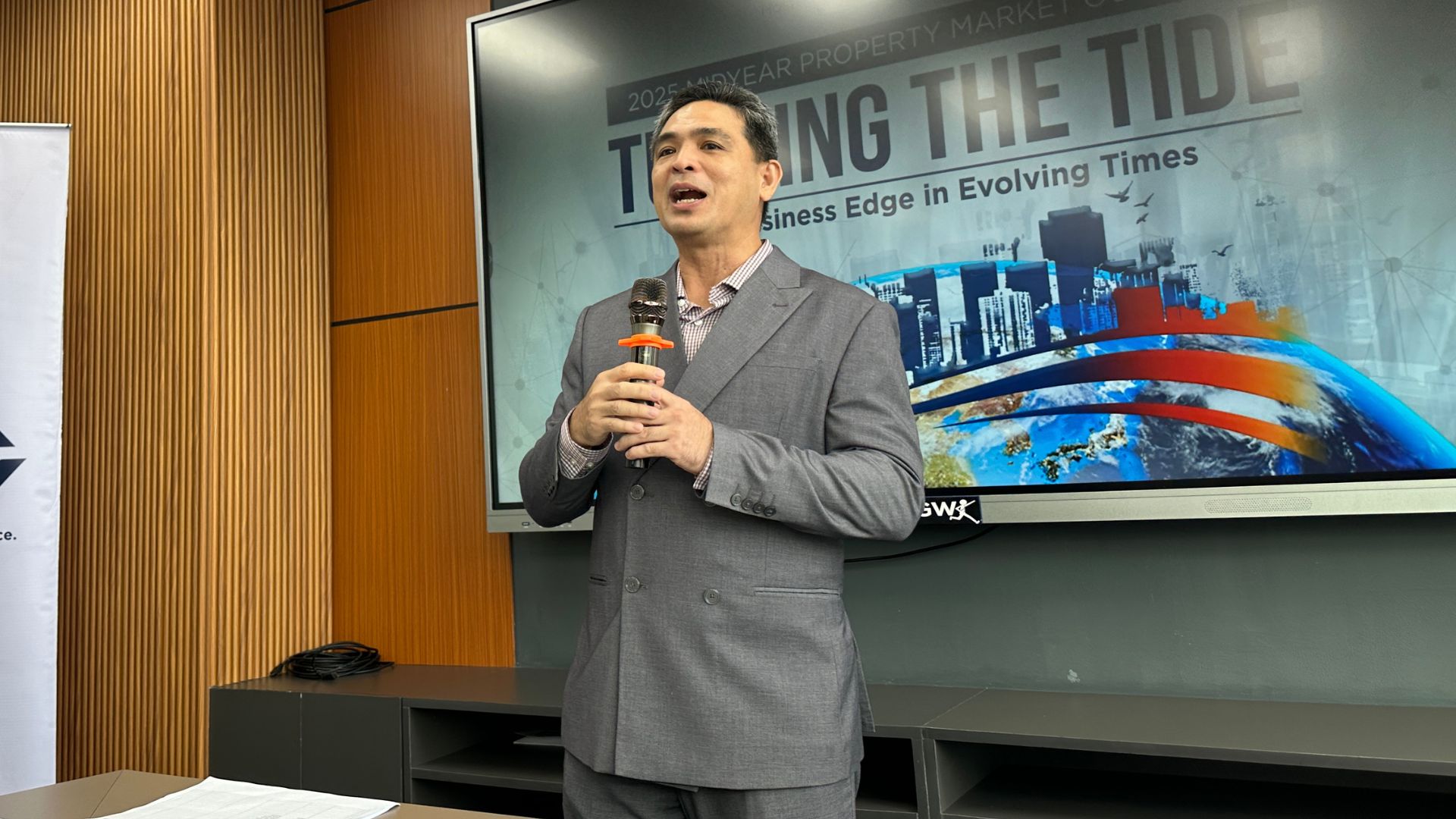
The Philippine real estate market demonstrated resilience in the first half of 2025 despite global headwinds, positioning itself for cautious but targeted growth in the months ahead.
While the economy slowed, registering 5.4 percent GDP growth in the first quarter, easing inflation and sustained consumer expenditure provided breathing room. Inflation averaged just 1.8 percent—well below the Bangko Sentral ng Pilipinas’ 2–4 percent target—allowing the central bank to cut policy rates and support domestic consumption. These conditions helped create a stable backdrop for real estate activity amid geopolitical and trade uncertainty.
Office Market: Shifts Across NCR and Growth in Provinces
Metro Manila’s office sector remained tenant-driven but showed pockets of improvement. BGC, Makati, and Ortigas posted modest occupancy gains due to BPO and government expansions, while Bay Area and Alabang continued to grapple with vacancies from POGO exits and BPO rightsizing. Rental rates declined across NCR, but regional hubs outperformed: Davao posted a 12.7 percent rental increase and maintained the country’s highest occupancy at 90 percent, while Cebu and Clark saw steady gains backed by infrastructure and talent availability.

Government relocations and BPO expansions continue to underpin demand, with provincial hubs such as Iloilo and Bacolod emerging as new centers of activity. Flexible work setups and smaller space requirements are also shaping leasing strategies, particularly in Davao and Cebu.
Industrial Market: Warehousing Surge and Manufacturing Opportunities
The industrial segment recorded one of its strongest half-year performances, with nationwide warehouse demand up 80 percent to nearly 692,000 square meters. Bulacan led the surge, supported by retail and logistics, while Cavite and Batangas saw diverging trends—Batangas attracting manufacturing demand due to port access, and Cavite strengthening as a logistics hub.
Laguna’s industrial occupancy remained high at nearly 98 percent, while Cebu also posted similar levels, underscoring the tight supply across established corridors. New supply pipelines in Tarlac, Pampanga, and Pangasinan are expected to ease future bottlenecks.
Manufacturing demand, particularly from green technology producers, also gained traction, with interest driven by global supply chain diversification and incentives under the CREATE Law and PEZA ecozone programs. This positions the Philippines as an emerging hub for clean and export-oriented industrial activity.

Retail Market: Expansions Reinforce Consumer-Driven Growth
Retail activity remained robust, driven primarily by food and beverage operators, which accounted for 37 percent of demand, more than half of which came from outside Metro Manila. Beyond malls, operators pursued standalone formats and neighborhood-oriented sites, with drive-thru facilities and community integration emerging as key considerations.
Lifestyle and general merchandising demand, supported by a growing middle class, reinforced the sector’s momentum. The interplay between online and offline channels is reshaping physical retail, with omnichannel models and experiential store formats becoming mainstream.
Davao emerged as a standout retail destination, capturing nearly half of provincial retail demand in the first half, buoyed by its strong demographics, rising incomes, and demand for health and wellness concepts.
Mid-Year Outlook: Cautious Optimism with Emerging Corridors

The first half of 2025 showed that Philippine real estate is adapting to a shifting landscape. Office demand is supported by government relocations and provincial BPO growth, industrial activity is fueled by record warehousing and green tech manufacturing, and retail is expanding through diverse formats and suburban reach.
Looking to the second half, emerging demand corridors in Clark, Cebu, Davao, Iloilo, Bacolod, Tarlac, and Pangasinan are expected to drive growth. Decentralization, flexible space formats, and innovation-led demand are set to define the next wave of opportunities across sectors.


