



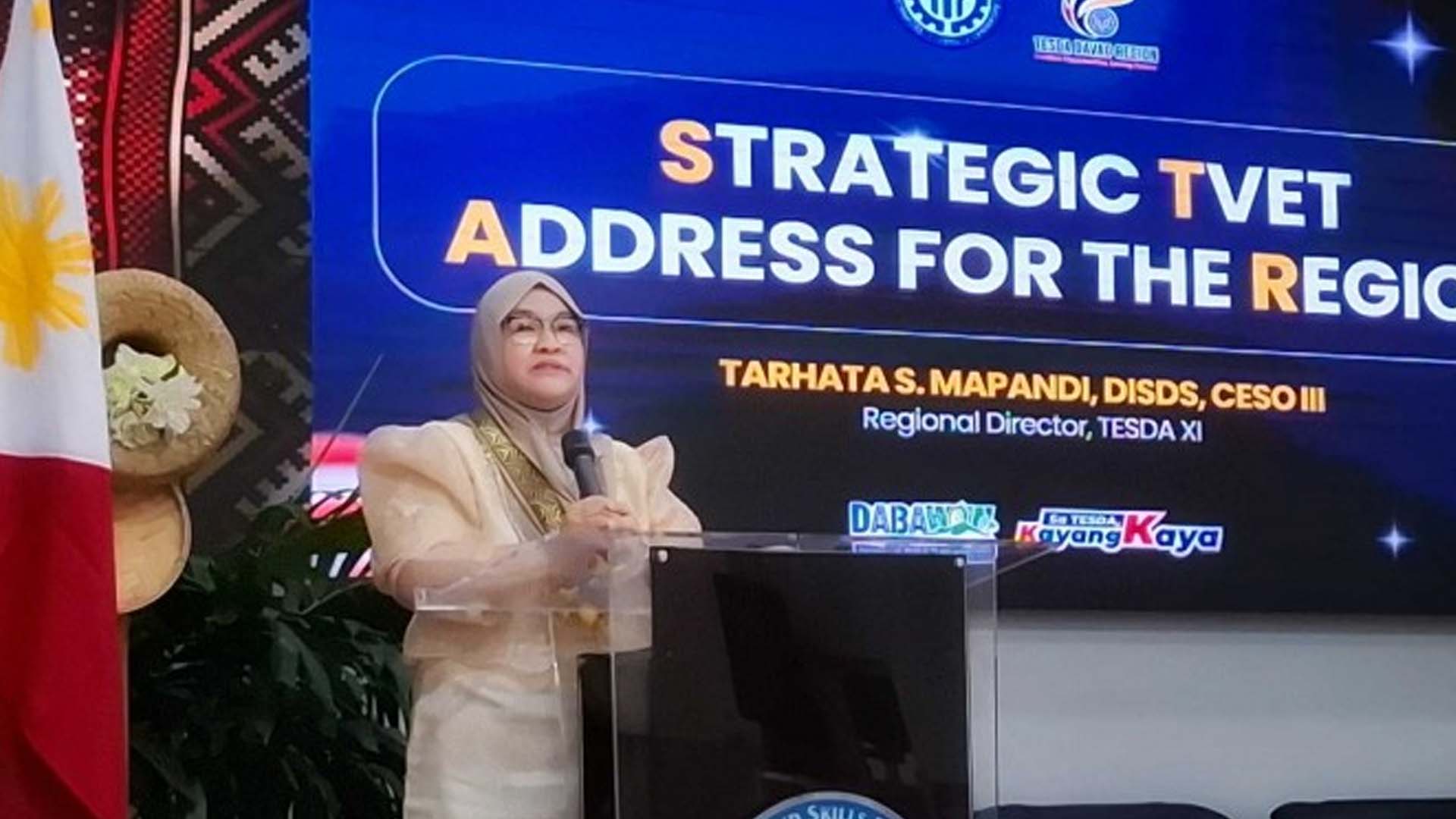






The Technical Education and Skills Development Authority in Davao Region (TESDA-11) continues to position the Technical and Vocational Education and Training TVET) as a key driver of opportunities and growth in the region.
Tarhata Mapandi, TESDA-11 regional director, said they aim to increase their learners’ completion rate from 87 percent to 93 percent this year.
“We will increase our scholars, especially in the diploma programs, and TESDA offers many scholarships,” she said in an interview on Tuesday.
Mapandi said the future direction of TVET in the region is anchored on a strong policy environment that promotes integration, accountability, and impact.
“National reforms guide how TVET connects education, training, employment, entrepreneurship, and inclusive growth, ensuring continuity beyond annual targets,” she said.
She noted that in the region, they need to ensure that all training aligns not only with the curriculum but also with industry requirements and those of micro, small, and medium-sized enterprises.
“We claim that we are home to a world-class workforce – that’s our aim. We will develop strong programs in Davao Region related to TVET,” she said.
By strengthening standards, learning pathways, and assessment systems, she ensured TVET remains credible, flexible, and responsive to current and future workforce needs.
“We created a banner program – trained and hired locally yet globally competitive and ready. We must be consistent to keep our graduates totally competitive,” Mapandi said.
Through enterprise-based training, workplace learning, and trainers’ industry immersion, she said their programs align with industry practices.
“These approaches strengthen pathways to employment and create opportunities for entrepreneurship, ensuring that skills development leads to meaningful economic participation,” she added. (PNA)


